
Blog

Jack Foraker

Jack honed his keen sense for the weight of words as a writing teacher and copywriter for law and tech firms. An avid reader and adventurous cook, he knows the right ingredients to make a recipe, and a story, a success.

Storyteller
Two 2A stories made Google Cloud’s top reads of 2025 

02/03/2026

Two 2A stories made Google Cloud’s top reads of 2025 

By Jack Foraker

Two 2A stories made Google Cloud’s top reads of 2025 

Image by Emily Zheng

We’re proud to say that two customer stories we wrote made Google Cloud’s list of most-read blogs in 2025! Given how much Google Cloud published—and launched—last year, it was encouraging to see our Target and Waze customer stories resonate so strongly. Turns out, people are as interested in smarter retail search and traffic data as we are!

Both stories focus on practical, real-world use of Google Cloud products. To us, that’s the whole point. Even in a year packed with attention-grabbing AI news, B2B audiences still want to understand how cloud and AI show up in real systems, real workflows, and real decisions. Customer stories do that in a way few other marketing assets can.

Going great with Google

We’ve worked closely with Google Cloud for years, and part of that partnership is understanding how their customer stories are meant to work:

  • Clear without oversimplifying
  • Technically credible without being inaccessible
  • Grounded in what actually happened

When those pieces are in place, even a deep dive into databases or infrastructure can hold a reader’s attention.

That’s the approach we bring to every customer story we write at 2A. We focus on the details that matter and write in a way that reflects the customer’s voice. When stories are handled like that, they feel real. And hey, sometimes they even end up on a cool list.

Illustration of a web browser window containing multiple colorful chat bubbles. Green and purple message boxes appear to represent conversations between different users, each marked by small circular profile icons. The background is dark blue, giving contrast to the bright, stylized chat elements.

12/04/2025

What to ask when hiring a B2B partner marketer 

By Nora Bright, Jack Foraker

Illustration of a web browser window containing multiple colorful chat bubbles. Green and purple message boxes appear to represent conversations between different users, each marked by small circular profile icons. The background is dark blue, giving contrast to the bright, stylized chat elements.

Image by Nicole Todd

Partner marketing demands strong marketing instincts paired with the ability to align goals across companies. It’s also more niche than traditional B2B marketing, meaning the talent pool for potential hires is smaller. 

Yet partner programs continue to grow and evolve, and tech companies need candidates who can make an impact fast. Ask the right questions during the interview stage to find someone who understands the nuances of partnership work and how to drive results that support broader go-to-market goals. 

Here are the questions that can help you find your next great partner marketer. 

1. How do you decide which partners or campaigns are worth investing in? 

Most partner teams have more potential collaborators than bandwidth. This question helps you understand how candidates prioritize their efforts. You want someone who uses concrete metrics to qualify partner marketing opportunities and tactfully deprioritizes lower-value partnerships toward those that actually move the needle. 

2. Tell me about a time you had to align internal teams and partners around a campaign. What were the points of friction and how did you resolve them? 

Alignment is one of the toughest realities of partner marketing—and absolutely essential to a successful candidate. It’s even more crucial when partners don’t have mature marketing practices of their own. Different companies bring different goals and timelines, so cross-company friction is normal. A strong candidate will show you they can set clear expectations, resolve conflicts, and translate priorities across internal and external teams. 

3. Walk me through your most successful co-marketing campaign? What made it successful? 

Successful partner campaigns require coordination, creativity, and solid project management. A good answer should hit on how they worked across teams and measured success in a tangible way. 

4. How do you structure your partner marketing efforts to support pipeline and sales goals? 

Partner marketers work close to revenue, and the best ones know how their programs influence pipeline. Look for someone who collaborates with sales, tracks performance with clear metrics, and builds campaigns designed to create real opportunities. If they also mention co-selling motions or partner enablement, it’s a strong sign they understand how marketing fits into the broader revenue engine. 

5. How do you keep organized when managing campaigns with multiple stakeholders? 

Partner work multiplies tasks and approval chains, so organization is critical. A strong candidate should have a system that works for them, with clear methods for managing assets, deadlines, and communication, plus a way to keep both internal teams and partners in sync. 

6. How do you stay ahead of trends in the partner world? 

Partner ecosystems evolve quickly. You want someone who keeps up with updates from the major clouds—such as new competencies, incentives, sales plays, and marketplace changes—and stays plugged into co-marketing and co-selling best practices. Look for mentions of industry groups, like Partner Marketing Visionaries or Partnership Leaders. A marketer who brings curiosity to the role will spot opportunities that otherwise might be missed. 

7. How do you use tools, automation, or AI to work efficiently? 

Lean partner teams need people who work smartly. Good candidates will share practical examples of tools or automations that help them manage complexity, save time, and stay focused on the work that drives the entire business forward. 

Finding the right partner marketer doesn’t have to be overwhelming. With the right interview approach, you’ll quickly get a sense for who has the experience and instincts to succeed in your co-marketing ecosystem. 

And if you’d rather skip the resume juggling, 2A Recruiting and Staffing can help introduce you to vetted candidates who will make a difference on day one. 

Collage-style image of two grayscale hands exchanging a bright yellow star, set against a black background with purple geometric shapes including circles, squares, and triangles.

11/20/2025

Creative partnership turns good ideas into standout assets 

By Mike Lahoda, Jack Foraker

Collage-style image of two grayscale hands exchanging a bright yellow star, set against a black background with purple geometric shapes including circles, squares, and triangles.

Image by Emily Zheng

Back in 2016, writer Kyle Chayka coined the term AirSpace to describe the distinct look that every coffee shop—whether independent or corporate, in Seattle or Tokyo—had somehow settled into. You’ve probably already seen it: The coffee shop has minimalist furniture and industrial lighting and free WiFi. The internet, he argued, gave everyone access to the same ideas and inspirations, which was homogenizing our tastes. This got us thinking: Is poorly applied generative AI having a similar effect on marketing today?

We use AI every day at 2A, and we regularly help clients promote their own AI solutions. But when every brand has access to the same tools, sameness can creep into the messaging without a careful hand. And when content feels interchangeable, it’s easier to forget.  

To fix that, you need marketing assistance that goes beyond the brief and acts as a creative partner. 

Co-creating the concept 

Strong assets start with a conversation: We like to kick off a project by asking what message will move the audience and what form will deliver it most effectively.  

This can often mean spending extra time with subject-matter experts (SMEs) for insights that might otherwise stay buried in a slide deck. We helped Dataiku—recently recognized in the 2025 Forbes Cloud 100—create industry-specific ebooks that did exactly this. By interviewing multiple SMEs, we uncovered quotable insights about how AI was reshaping industries from manufacturing to finance. This grounded the content in real expertise rather than broad trends, which gave the ebooks a voice and specificity that was very relevant to Dataiku’s audience.  

Upfront discovery work shapes the content, but it also defines structure, tone, and audience. When we facilitate early discussions, clients often find new clarity about what their story should be—and what makes it worth telling now. The result isn’t a faster version of the expected deliverable, but a stronger and more thoughtful one that reflects expertise rather than algorithmic polish. 

Designing for impact 

Once the story takes shape, the challenge becomes visual: How do you make complex information easy to grasp while keeping it on brand? Many marketing assets begin with dense resources. Our role as a creative partner is to find the structure—and the spark—that helps the message shine through clearly. 

For Microsoft recently, that meant transforming a slide deck full of marketplace and process details into a cohesive sales enablement ebook. We built the ebook concept around a cookbook, framing each stage of building a marketplace channel practice as a “recipe”—complete with ingredients and methods. This approach replaced cluttered visuals with a clear, modular layout that guided readers step by step in an engaging and approachable way.  

Moving beyond the box 

When creative ideas are built through collaboration between subject experts, creatives, and AI tools, the final asset feels different. It carries a sense of intent—a point of view that connects with audiences because it was shaped by real dialogue.  

That’s our goal for every project: to help clients create B2B marketing content that’s engaging and effective. You’re already the expert on your audience. A creative partner brings the storytelling, design, and market knowledge to make sure whatever you put in front of them sticks. 

Graphic design featuring the phrase ‘Power of 3’ with a large number three and upward arrow, symbolizing growth and the strength of three key elements.

11/07/2025

Power of 3: Multi-partner messaging drives results 

By Liz Mangini, Jack Foraker

Graphic design featuring the phrase ‘Power of 3’ with a large number three and upward arrow, symbolizing growth and the strength of three key elements.

Image by Suzanne Calkins

In cloud and SaaS marketing, no one wins alone. Partnerships are everywhere—and only getting more intricate as technology continues evolving. At 2A, we’re increasingly seeing cloud providers team up with three (or more) partners for co-sell motions and joint GTM efforts. 

It’s a smart play: Power-of-3 messaging and deliverables amplify reach, showcase end-to-end value, and create a unified story that sellers can rally around. It’s also crucial as organizations push AI initiatives and expand industry solutions. But three brands means three tones, three agendas, and three sets of priorities. What should be a simple, powerful story can easily become complicated and hard to follow without the right marketing support. 

Start with clarity 

At the end of the day, customers want clarity. Sellers need consistent, repeatable messaging that shows how partnerships solve real business challenges. Throw three parties together, and it’s easy to end up with three competing messages. 

The challenge we see most often with power-of-3 messaging is that each partner wants equal visibility and weight. That’s understandable, but it can easily lead to imbalance or dilution. One brand ends up driving the story while the others fade into the background. To avoid this, partners need to approach messaging with shared intent from the start:  

  • What outcome are we solving for, together? 
  • What does each partner contribute to that outcome?  

When this alignment happens, a unified story can start to emerge.  

Turn clarity into collaboration 

Once partners are aligned, storytelling becomes strategy. At 2A, we help cloud providers and partners do the heavy lifting at this stage. We lovingly call it “Tetris-ing” the story. Each partner comes with its own set of proof points and priorities. Our job is to pull those pieces into one cohesive value proposition that feels seamless, not stitched together. We know how to balance visibility between partners and weave together cross-departmental expertise. Once you’ve turned three brand voices into one clear message, the next step is to bring it to life. 

From collaboration to sales momentum 

With foundational messaging in place, it’s easy to spin up new assets and campaigns—things like ebooks, pitch decks, solution briefs, or sales kits. That’s the real win of power-of-3 messaging: It shortens the time between collaboration and pipeline momentum for all three partners. 

At 2A, we help partners find their shared voice so they can sell, scale, and lead together. And we can do it in pairs or triads—or hey, even a quad squad. 

Illustration of burger ingredients—a bottom bun, patty, tomato slice, lettuce, and top bun—arranged in a row on a blue checkered background. A hand holds a magnifying glass over the vegetables, showing a heart with a medical cross inside, symbolizing healthy food choices.

09/18/2025

The recipe for building a better, industry-specific burger 

By Jack Foraker, Michelle Najarian

Illustration of burger ingredients—a bottom bun, patty, tomato slice, lettuce, and top bun—arranged in a row on a blue checkered background. A hand holds a magnifying glass over the vegetables, showing a heart with a medical cross inside, symbolizing healthy food choices.

Image by Nicole Todd

When it comes to tailoring marketing materials for specific industries (think healthcare, manufacturing, or financial services), there’s a quick-fix trap many teams use: find and replace. Swap “customer” for “patient.” Change “supply chain” to “retail.” Call it a day. 

There’s just one problem: your audience can tell when you’re not quite speaking their language. 

The results of this find-and-replace approach are serviceable, but we’ve seen them fall flat in the market—where every B2B product seems to be talking to everyone. Industry audiences expect more than cosmetic changes. They want tools and tech that make them better at their job. A healthcare CMO isn’t looking for a generic promise of efficiency; they want to know how your solution helps providers save time with electronic records or streamlined patient interactions. A financial services audience might be less interested in speeding up internal processes and more interested in how you maintain regulatory compliance. Without that level of specificity, your content risks sounding broad, like it’s for everyone. And when it’s for everyone, it’s forgettable. 

Try building a better burger 

The better approach is to create scalable assets that can flex across industries without losing its human edge. We think of it as building a hamburger: the buns are always the same, but the fillings and condiments can be easily swapped out to suit specific preferences. Extra cheese? Veggie burger? Just like different eaters have distinct tastes and dietary needs, different industries have unique expectations, priorities, and challenges. 

In practical terms, this means the structure of your datasheet, ebook, or webinar can remain consistent across industries, while the middle layers—the use cases, proof points, customer stories, and more—can be tailored for each vertical. 

  • Bun: Intro that sets the scene and defines the customer’s challenge
  • Burger: Use cases and proof point specific to the industry
  • Toppings: Real-world customer success stories
  • Bun: Conclusion that distills the value of your product 

This repeatability gives marketers the best of both worlds: efficiency in production and authenticity in messaging. Instead of rushing to retrofit broad assets at the last minute, you’ve got a strategic messaging plan that scales and resonates. 

Assets that adapt to every audience 

It pays to speak the industry lingo. We’ve seen this firsthand. By interviewing subject matter experts, tailoring messaging to sub-personas, and recognizing how different verticals prioritize outcomes, audiences can better see themselves in the marketing. 

We’ve seen clients get a lot of mileage out of our industry-ready approach, and the messaging and positioning frameworks (MPFs) behind it, for this exact reason. An MPF ensures each message reflects the right challenges, vocabulary, and value drivers for the audience, while scalable assets can be created quickly across verticals.  

There’s power in speaking someone’s language like this. It builds trust and gives buyers the confidence to advocate for your solution inside their organizations. For marketers, that means moving beyond quick fixes and investing in a repeatable—dare we say delicious?—framework that balances efficiency with authenticity. And, for us at 2A, it means helping teams create materials that both reach and resonate with industry audiences. 

Illustration of a stylized web page layout with colorful profile cards, checklists, and various hand cutouts pointing or placing profile elements. The background is a textured beige with yellow and blue accent shapes, suggesting the theme of recruitment or selecting candidates.

05/06/2025

Why working with a recruiting agency is worth the cost 

By Nora Bright, Jack Foraker

Illustration of a stylized web page layout with colorful profile cards, checklists, and various hand cutouts pointing or placing profile elements. The background is a textured beige with yellow and blue accent shapes, suggesting the theme of recruitment or selecting candidates.

Image by Nicole Todd

Finding great talent is tough and getting tougher. Job postings are flooded with unqualified candidates, hiring team resources are stretched thin, and managers have to juggle hiring on top of their day-to-day responsibilities. On the other side of the screen, job seekers are faring no better: They’re often one of thousands of applicants for an open position, which can lead to a hiring process that feels cold and impersonal. 

As a consulting agency that also provides recruiting and staffing services, we see the hiring process from both sides at 2A. We know hiring is always an investment—of time, resources, and money. So it’s no wonder that companies turn to recruiting agencies to help surface stronger candidates faster and make sure they invest in the right people from the start.  

Here’s why working with one is the smartest (and ultimately most cost-effective) move to make: 

Access top talent and industry knowledge  

Recruiting agencies often specialize in a particular industry or function, and if you choose the right firm, they’ll understand the roles you’re hiring for and the skills that matter. Because we specialize in marketing and creative roles in tech, we have a strong pulse on the roles as well as the job market: who’s hiring, who’s moving, and what it takes to compete as an employer. We also have deep networks packed with top marketers, designers, program managers, and more. That includes the kind of passive candidates who aren’t scrolling job boards but are open to the right offer.  

Save serious time 

Hiring is a full-time job in and of itself. (Ask us how we know.) Reviewing resumes, managing outreach, and scheduling and conducting candidate screens adds up fast. A recruiter takes the first and most time-consuming stages of hiring off your plate, which means your team can focus on growing your business instead of chasing candidates. 

Get expert guidance 

The best recruiters stay closely involved throughout the process. We’ll make sure your communication is clear, your candidates stay warm, and your offers are competitive.  

Sell your opportunity 

Top candidates (the candidates you want) have options. A strong recruiter knows how to tell your company’s story in a compelling way, so candidates will be more excited to explore your team—and be more likely to say yes to an offer. 

In the end, that’s what 2A Recruiting & Staffing is about: making it easier to find standout people. We connect you with vetted marketing and creative talent, so you have more time to focus on your goals—not sorting through resumes. 

Ready to find your next great hire? We should chat

A collage of red

04/11/2025

Hiring a B2B tech events pro? Ask these 6 interview questions! 

By Nora Bright, Jack Foraker

A collage of red

Image by Emily Zheng

Goodbye, Zoom webinars and kitchen-table conferences. B2B tech events are back in person, and expectations have never been higher. Attendees want more than swag bags and bad coffee: They’re seeking real connections, fresh insights, and a compelling reason to step away from their screens. 

To make the most of events, you need a professional who knows how to attract the right crowd, spark meaningful engagement, and turn a conference into a driver of business value—for you and your attendees. The key to finding that person? Asking the right questions during their interview. 

Here are six must-ask questions when hiring your next B2B tech events manager: 

1. How have you tailored events to meet the needs of different audiences like developers and executives? 

B2B tech isn’t a monolith. Developers might prefer events with technical deep dives, while executives may value curated conversations instead of shouting to be heard in chaotic expo halls. Ask for specific examples of how they’ve adapted event formats and strategies to create real value for attendees. Strong candidates will demonstrate a customer-first mindset, understanding not only who is attending but also what they need. 

2. What makes an event successful? 

Hint: The answer is not “a packed room.” While attendance is great, that alone doesn’t translate into business impact. Look for a candidate who can define clear, measurable goals—think engagement, pipeline growth, or ROI—and has a strategy to achieve them. 

3. How do you structure an event to generate leads? 

Events are about more than brand awareness. Find someone who values them as the key business drivers they are. Your next events manager should be able to explain how they’ve structured past events to encourage meaningful interactions, from well-placed networking opportunities to strategic follow-ups that turn interest into action. 

4. How do you collaborate with marketing and sales? 

No one plans corporate events for the thrill of it—they’re part of a larger business strategy. The best candidates know how to work with marketing teams to drive attendance and help sales teams ensure leads are captured and nurtured. Ask how they would align departments on priorities (no easy task). You want someone who approaches collaboration thoughtfully and has ideas that will keep your team focused on shared goals. 

5. What innovations in event technology are you excited about? 

B2B tech audiences want more than PowerPoint slides. A strong candidate should be eager to incorporate the latest technology, and ideally they’ll already have some hands-on experience. Whether it’s AI-powered networking, AR/VR demos, or event apps—your next events manager should be able to speak to how they’ve kept events current, relevant, and engaging. 

6. How do you design events that maximize engagement and networking? 

Attendees may come for the content, but they stay for the connections. A thoughtful event strategist will create seamless networking opportunities—whether through curated matchmaking or unique social gatherings that go beyond the standard cocktail hour. 

Skip the hiring hassle 

Successful events need a lot more than someone to manage logistics. At their best, events create new connections and drive business. But finding the right hire takes time (and hours of resume-sifting). 

That’s what our Embedded Consulting practice is for. We’ve already vetted top talent, so you can skip the search and start planning your next great event sooner. 

Let’s find your next events pro.

A collage-style digital illustration featuring a checklist with green boxes and checkmarks, a magnifying glass examining a user profile icon, and a hand cursor clicking a “Creativity” button. Smaller profile icons and arrows suggest a hiring or selection process. The background has subtle circular patterns.

02/28/2025

Find the B2B marketer you’re looking for with these questions

By Nora Bright, Jack Foraker

A collage-style digital illustration featuring a checklist with green boxes and checkmarks, a magnifying glass examining a user profile icon, and a hand cursor clicking a “Creativity” button. Smaller profile icons and arrows suggest a hiring or selection process. The background has subtle circular patterns.

Image by Nicole Todd

B2B tech is a noisy, crowded space. When that tech comes with a lot of hype, it’s even noisier and more crowded. To be noticed requires creativity, strategic thinking, and an ability to convert jargon into something people actually want to talk about. (Does the world really need another webinar on cross-platform synergies?)  

The best B2B marketers are creative but pragmatic, strategic without being stuck in the weeds, forward-thinking but not flinging ideas at the wall. The challenge, of course, is how to identify a candidate who can make your marketing stand out.  

If you’re on the lookout, here are some questions to ask during the interview process that will help separate the visionaries from the buzzword enthusiasts. 

Can they turn ideas into results? 

Start by asking for examples of how they’ve successfully made a splash. Maybe they spearheaded a campaign that repositioned a product from “nice to have” to “must-have.” How did they build their strategy and get buy-in from stakeholders on their ideas? Most importantly: What were the results? Standing out requires new approaches to marketing, and those won’t always be successful. The right candidate can talk through what they did and why it worked. (And, if it didn’t work, what they learned along the way.) 

Can they sell a good idea? 

A live case interview or take-home project can reveal a lot about the way a candidate thinks outside the box. Ask them to develop a campaign or go-to-market strategy for a hypothetical product. Look for an approach that is considered yet creative: Does their strategy stand out against traditional B2B marketing expectations? Can they pitch left-field ideas effectively to win over a leadership team? Better yet, do you actually want to run with their plans? (Hire them first!) 

Do they know what’s happening in the B2B landscape? 

Trends shift fast in B2B marketing, and making a splash means staying in the loop. After all, how will you know if you’re doing something different if you don’t know what everyone else is doing? Ask your candidate which marketing campaigns they admire and why. Their answer will point to what they see creative success as—and whether they’re plugged into the industry in a way that will help your brand stand apart. 

Are you setting them up for success? 

Even the best marketer needs the right tools and support to deliver results. Be ready with clear expectations, open communication, and a culture that fosters ideas and innovation. That’s why you hired them, right? If you’re looking for tips on how to get the most out of your contract talent, we wrote about that here. 

And if you’d rather ask candidates the important questions than sift through resumes, we can help. 2A Recruiting and Staffing practice carefully vets B2B marketers so you interview only the best. Let’s find your next great hire. 

If all the world’s a stage, Marita is directing the production 

11/13/2024

If all the world’s a stage, Marita is directing the production 

By Jack Foraker

If all the world’s a stage, Marita is directing the production 

Image by Jenni Lydell

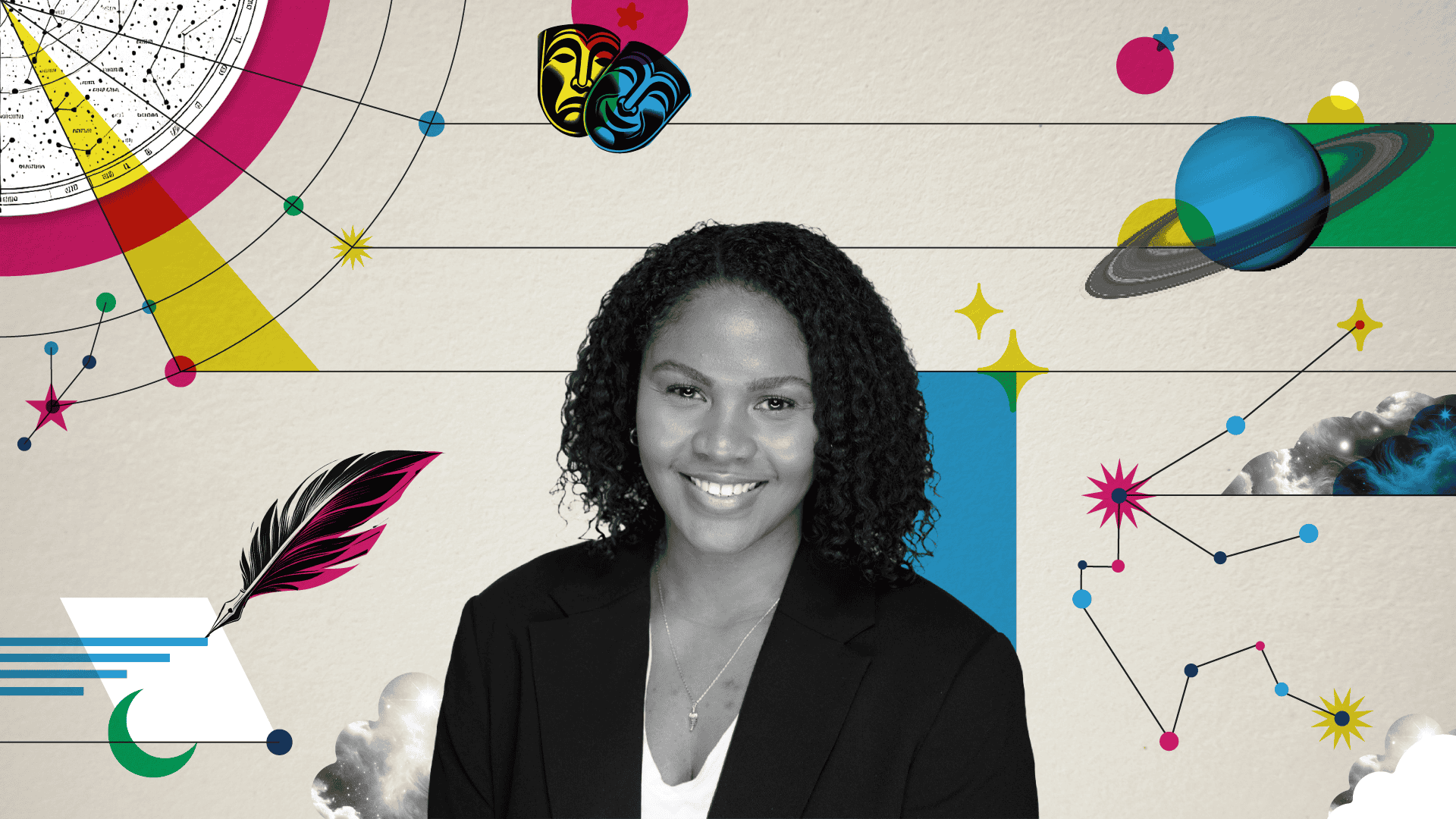
Program and traffic manager Marita keeps consulting, design, and storytelling at 2A running like a well-rehearsed show. Just as she charts the stars in astrology, Marita blends strategy with her arts background. She ensures every client project is aligned, both cosmically and creatively—one task, one timeline, and one perfectly curated Figma board at a time. 

Act I: Setting the stage 

Our story begins in college, where Marita majored in theater. As a playwright, she draws inspiration from legends such as Anna Deavere Smith, August Wilson, Henrik Ibsen, and Suzan-Lori Parks. Through her studies, Marita learned that theater production is about much more than a well-crafted scene: everything that happens behind the scenes is just as essential. 

While Marita continues to enjoy theater (and hopes to one day stage her own adaptation of Ibsen’s An Enemy of the People), at that time, she knew there were future acts to follow—acts that would take her talents beyond the stage. Little did she know that her theater experiences would neatly set the stage for all kinds of future productions. 

Act II: Scene change to project management 

After a few years as a teaching artist, Marita moved into arts leadership and nonprofit project management. She learned that the skills she’d honed during her theater tenure were just as applicable offstage. The job titles may have changed, but the core of her work remained the same. 

“In theater,” she said, “you’re managing an actual production. But when you’re building an asset in the business world, they call that a production, too. You still have to manage a budget, a timeline, reporting, and tracking. It’s the same process, just a different medium.” 

Marita then joined the corporate world of management consulting, where she had the opportunity to bring together consultants, designers, and writers to build creative assets. She worked with world-renowned brands and nonprofits, including Goodwill, Nike, Starbucks, and Color of Change

She loved the visibility her role provided into every step of the creative process, serving as a crucial link between teams. As she coordinated the production of off-site meetings, keynotes, and client assets, Marita combined an artistic eye with project management expertise. The only thing better than a beautiful deliverable? A beautiful deliverable that’s delivered early

Act III: Keeping creatives and clients cosmically aligned 

With her interest in astrology, Marita brings a unique sense of insight to program management at 2A. Just as astrology tracks the movement of stars and planets, Marita carefully considers every moving part of a project to ensure that teams and clients are perfectly aligned. Her ability to connect the dots across timelines, project goals, and client needs means no detail goes untracked. For every 2A deliverable she manages, Marita directs production so that results align with the big picture. 

Whether you’re launching a new campaign or crafting your next case study, Marita will guide your project with the precision and clarity it deserves, sans drama. The show must go on, after all. And with Marita behind the scenes, the stars of success are aligned.

Dre brings technical expertise—and DIY spirit—to her creative process 

04/16/2024

Dre brings technical expertise—and DIY spirit—to her creative process 

By Jack Foraker

Dre brings technical expertise—and DIY spirit—to her creative process 

Image by Brandon Conboy

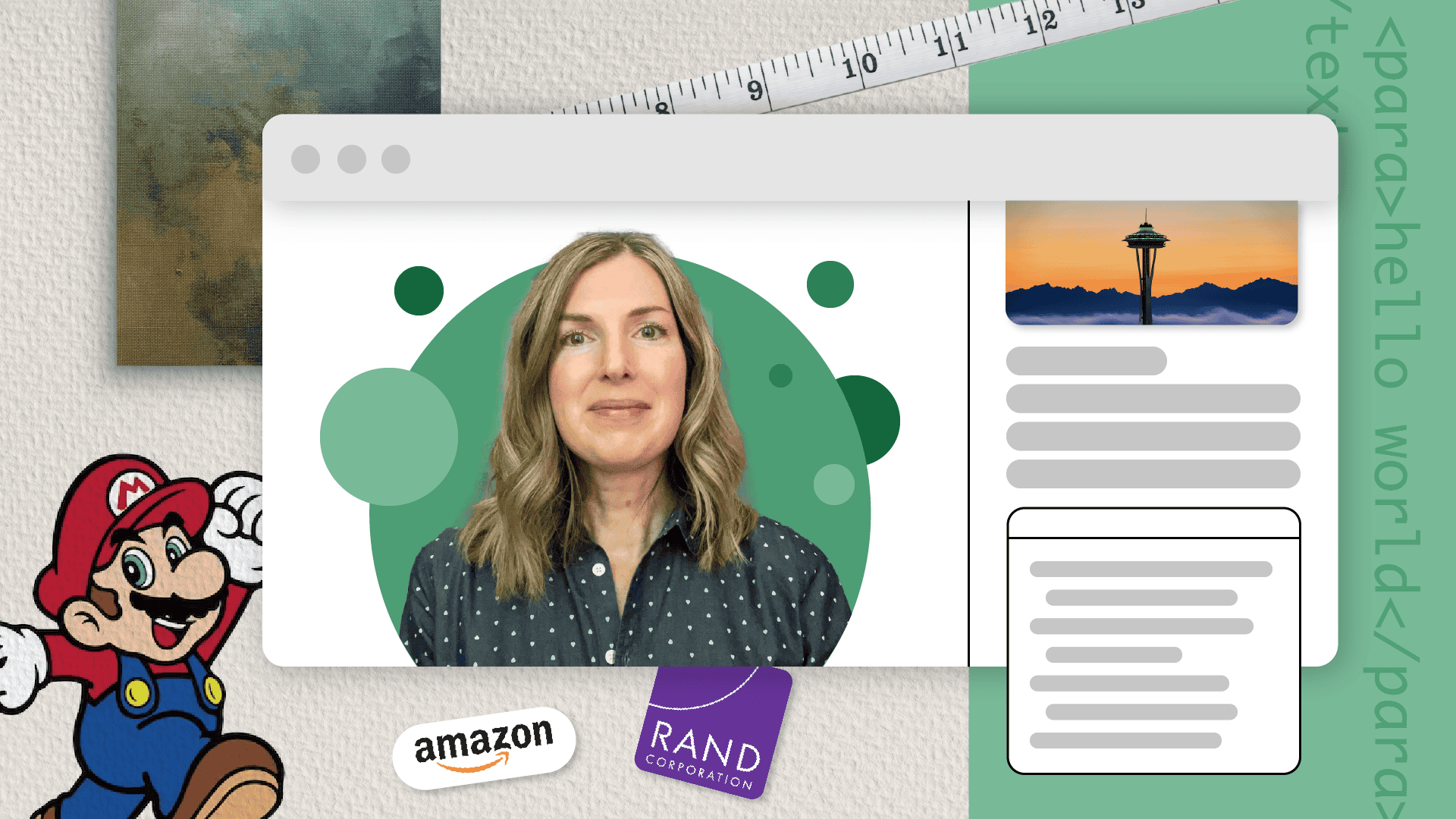
Storyteller Dre has a knack for embedding client stories with technological expertise—and for being in the right place at the right time. As an English major, Dre happened to live below a floor of computer science folks in her college dorms. This proximity helped uncover her aptitude for not only Jane Austen novels, but also operating systems. Naturally, she tacked on a minor in computer science. Also while in college, Dre worked at a coffee shop in downtown Eugene, Oregon, which was conveniently located opposite a small magazine publisher. After getting to know the publisher’s employees (and their morning coffee orders), she landed a job as their newest assistant editor and web developer. 

Bringing language arts to coding languages, and vice versa 

After a stint in Los Angeles working for the RAND Corporation (yes, that one) and Frank Gehry (yes, that one), Dre returned to the Pacific Northwest to pursue digital marketing in the tech industry. She worked at Amazon, which was seeking someone who could write both advertising copy and XML. Then she switched to Nintendo, where the company gained over six years of her talents. In that time, Dre expanded Nintendo’s West Coast marketing team, enhancing the brand’s web presence with dynamic announcements and immersive digital experiences. 

But something was still missing. While her day-to-day work was fun and challenging, Dre sought a role that would return her to writing. So, she transitioned from digital marketing to technology storytelling—or rather, at 2A, she found a role that combines both. These days, you’ll find Dre creating client assets that link compelling copy with deep technical expertise. 

And when she’s not behind the keyboard? 

Outside work, Dre’s hobbies lean toward the DIY, from writing an arts-and-crafts column in a local Seattle magazine to acrylic painting and retiling her bathroom. “I like projects where I can say, let me just see if I can do this and then keep trying until I figure out how to do it,” she says.

Dre brings that same DIY spirit to all projects. Whether you’re after the perfect drywall mount or creative collateral that captures your vision, Dre has an answer. And if she doesn’t, she isn’t afraid to dig into the nitty gritty to find it for you.