08/28/2025

Mmmm…chips, dips, and cooling GPU sips 

By Jane Dornemann

Image credit: Chris Feige

Gossip (for nerds) 

  • Microsoft has become the second company in the world to achieve a market valuation of $4T—yeah, that’s a T. Microsoft as a whole saw 18% YoY growth, which emboldened the company, for the first time ever, to break out its earnings by division. Azure brought in $75B for the year
  • Of course, we all know how it feels to have that kind of casual cash burning a hole in your pocket. Personally, I’d get in on the Labubu craze. Instead, Microsoft chose to spend $30B on capital for AI in one quarter. 
  • Microsoft also released a new report that listed the top jobs expected to be replaced by AI. In the top five: interpreters and translators; historians; passenger attendants; service sales representatives; and writers and authors. Not on the list: dog trainers! Job security and puppies? Let’s do this.
  • Amazon’s Q2 earnings were less impressive than Microsoft’s and Google’s, with the cloud division growing 17.5% over the last few months. CEO Andy Jassy said there’s a Wall Street narrative that AWS is falling behind in AI. The rest of Jassy’s statement shows a company that’s doing this thoughtfully and acknowledges that it’s still “so early” for generative AI. Amazon has a well-known bring-your-dog-to-work policy. So those puppies I mentioned earlier? They may also be a distraction… 
  • AWS is dipping out of a third data center in Louisa, VA. And you thought those NIMBYs airing their grievances on Nextdoor were all talk!
  • AWS is also working on cooling technology for Nvidia’s GPUs, using a new system called IRHX
  • AWS gave $1B in cloud credits to the Trump administration. They say rich people love a good deal, and that’s one hefty coupon. 

Wheelin’ and dealin’ 

  • Move over potatoes, Idaho is here for nuclear energy! AWS is working with the Idaho National Laboratory to advance energy research and development using AWS. Why? The tech giant joins Microsoft in looking for more sustainable ways to power AI data centers. “Power is AI’s single biggest constraint,” says Jassy. 
  • GitLab is teaming up with AWS for the next three years to make its single-tenant GitLab Dedicated platform more accessible. This will help regulated industries and public sector teams remain compliant in the cloud. At the same time, GitHub’s CEO stepped down and Microsoft moved GitHub into its CoreAI division. 

New stuff 

  • AWS is making two new models from OpenAI available on its platform. If you can’t beat ‘em, join ‘em! 
  • Microsoft and Databricks created a new integration so that Microsoft Fabric users can access Azure Databricks tables directly and query the latest data without copying or moving anything. 
  • Microsoft has integrated Chat GPT 5 into its full portfolio of AI-powered tools. And while some users call the newest generation of the GPT “emotionally distant,” I’d honestly feel bad ordering someone I really vibed with to do all my busy work. Frenemies, mmkay? 
  • AWS has opened a marketplace only for AI and agents, so expect to see a flood of partners earning their AWS AI Competencies to gain access. 
A collage-style illustration featuring two hands interacting with abstract AI elements. One hand points to a yellow “Edit” button, while the other makes an “OK” gesture. Surrounding them are connected graphics: a blue text input box labeled “Begin prompt,” a pink AI microchip icon, and a colorful block of text representing generated content. Wavy blue lines and geometric shapes connect the elements on a beige textured background.

08/21/2025

How to maximize generative AI for partner marketing 

By Liz Mangini, Jane Dornemann

A collage-style illustration featuring two hands interacting with abstract AI elements. One hand points to a yellow “Edit” button, while the other makes an “OK” gesture. Surrounding them are connected graphics: a blue text input box labeled “Begin prompt,” a pink AI microchip icon, and a colorful block of text representing generated content. Wavy blue lines and geometric shapes connect the elements on a beige textured background.

Marketing budgets are tight, and the excitement around generative AI and agentic AI is palpable. Yet, in practice, applying it is often more complicated than it first appears. Launching a joint go-to-market (GTM) campaign with partners is a prime example. In a perfect world, both parties could brainstorm content ideas, then feed AI brand guidelines and transcripts to generate emails, one-pagers, and webinar decks. But joint marketing efforts come with an extra layer of relationship context that AI can’t quite decipher. How can generative AI get multiple partners to agree on a messaging direction when they don’t? What can it do for collaborative offerings that come with a bit of competition for the spotlight? 

There’s a lot of highly human, nuanced negotiation that happens in co-marketing—it’s a bit like therapy. So, we set out to see where we can best apply generative AI to important activities across joint GTM efforts, and where we can’t. Here’s what we learned about where AI shines and where it falls flat. 

Working through messaging hierarchies 

Falls flat 
Two or more brands with competing offerings and stories have different priorities, and generative AI struggles to grasp those dynamics. It can’t resolve alignment or make judgment calls on which messaging tier should take precedence. 

Shines
Only after humans create a joint messaging framework can AI help. Once the hierarchy is established, generative AI can apply that framework consistently in content generation. 

Ensuring content sticks to all brand and legal guidelines 

Falls flat
Generative and agentic AI often leave out important brand or legal guidelines—especially when navigating 100-page brand guides. They miss nuances, like Oxford comma usage, shifting partner rules, or strict naming guidelines, enforced by hyperscalers like AWS, Microsoft Azure, and Google Cloud.  

Shines 
If you’ve built an AI agent in-house, you can train it over time to retain and enforce the rules. AI can serve as a second set of eyes when it comes to compliance, such as running completed content through the agent to catch violations and suggest corrections, ensuring co-branded assets stay publishable and eligible for marketing development funds (MDF). 

Distilling shared value propositions 

Falls flat 
Multi-partner GTM motions require telling a joint story that highlights the “better together” value. Generative AI can’t conduct interviews, facilitate stakeholder discussions, or navigate political tensions between product and marketing teams. It also can’t pull insights from sales calls or uncover the discovery work needed to align on shared value. 

Shines 
Generative AI can describe features and benefits once humans define the shared value—such as articulating how two services complement each other. It’s effective at polishing and amplifying agreed-upon value statements, but not at generating them from scratch. 

Drafting GTM content 

Falls flat 
Relying on generative AI to draft long-form copy from research alone often produces content that lacks authenticity. It can’t capture the nuance of customer pain points or the storytelling required for a strong narrative. 

Shines 
Generative and agentic AI excel at supporting research, surfacing data points (with sources if prompted), and refining human-written drafts. Once you have a strong narrative, AI can repurpose messaging for derivative assets, like social copy, web blurbs, or social cards, and adjust content for different personas and industries when provided with strong, research-based prompts. 

Why the hybrid model works best 

It’s undeniable that generative and agentic AI offer valuable scalability and efficiency, but they are limited when it comes to understanding complex human interactions, creativity, and context within a multi-partner GTM strategy. That’s why we’ve made AI a support tool rather than a replacement for human oversight.  
 
By combining AI’s speed and efficiency in refinement and content creation with human-generated baseline content, you can accelerate the GTM process. Add AI to a mix of strategic insight and the creative expertise of experienced marketers, and you can use both to deliver high-quality, aligned, and impactful content that meets everyone’s needs in a multi-partner ecosystem. 

07/25/2025

AI prompts are the new parting gift 

By Jane Dornemann

Image credit: Chris Feige
Gossip (for nerds) 
  • Microsoft is having a rough month for PR. First, Gizmodo reports, “Microsoft Is Firing About 9,000 People Because Business Is Great.” As the company’s profits and stock hit historic highs, it let go of just under 4% of its workforce globally. Sales, customer service, and software engineering were all affected. Some developers are allegedly being replaced by the AI they helped build.
  • For the newly jobless, a Microsoft executive suggests they console themselves with AI—he even gave them prompts.
  • Microsoft isn’t the only cloud company cutting staff. AWS laid off hundreds in July. However, like Microsoft, it’s not just AI and automation driving these layoffs. While official reports are hard to find, there is much chatter here and elsewhere that the bigger influence is offshoring jobs to India and the Philippines, in part prompted by the shaky status of the H-1B visa program that brought those workers here to the US.
  • Microsoft’s Maia AI chip is delayed by at least six months and even then, once it goes into production, it’s expected to fall short of NVIDIA’s Blackwell chip. I believe what you felt reading that is called schadenfreude
  • Analysts say Microsoft has so far captured the largest amount of generative AI spend in the market. Nearly 60% of CIOs plan to increase Azure spending next year, with 97% planning to adopt AI tools.
  • What does the next fiscal year hold for Microsoft? The cloud giant will increase investments in migrating companies from VMware platform to Azure; boost partner funding and incentives across Copilot, Azure, and Microsoft 365; and will introduce several new partner specializations and designations. 
Wheelin’ and dealin’  

Meta and AWS are collaborating on a program that will provide six months of technical support from their engineers, plus our favorite form of currency, AWS cloud credits, to 30 startups building AI tools using Llama AI. I have no doubt Meta will use these tools responsibly. If you have a conversation about monkeys and then get a bunch of monkey videos on your Facebook page, that is purely a coincidence, I don’t know what to tell you.  

Professional pivots 
  • The VP and general manager of generative AI at Amazon has peaced out to work for Siemens. He led AI product strategy at AWS but surely an AI agent can do his job, no? A fun fact in the article: In its efforts to lure OpenAI employees away, Meta has been offering $100M sign-on bonuses. That was not a typo.
  • Snowflake snatched away the AWS Managing Director of Industries and Solutions. Also out the door after 17 years is Kevin Miller, the AWS Global Data Center VP. 
New stuff  
  • New solutions and services from AWS this month include OracleDatabase@AWS, which is generally available in some US Regions; AWS Builder Center, a new online hub where AWS users can share ideas, access learning resources, join community programs, and vote on feature requests; and Kiro, which will help developers write code from AI.
  • Ten years ago, I was getting these terrible ice pick headaches deep in my dome piece and I went to the doctor, and he was like it’s probably scalp pain. I said no, it isn’t. Then he said oh it’s probably anxiety. I said no, it isn’t. Then I got a CT scan and it was a brain tumor! True story! So when Microsoft says a study showed its AI can diagnose 400% better than doctors, not only do I believe them, but I would add to the list of other things that can out-diagnose many doctors: balls of lint, naked mole rats, rocks.
  • While Microsoft AI is diagnosing you instead of a doctor, AWS can help with surgery. AWS, NVIDIA, and Johnson & Johnson have launched the Polyphonic AI Fund for Surgery, a grant program for building AI tools aimed at improving care before, during, and after operations. (Just don’t sprinkle any of that J&J powder on my organs. Or their hip implants. Or their birth control. Or Risperdal. Actually, yes to the Risperdal.)
  • The AWS Summit in New York was home to several announcements, starting with Amazon Bedrock AgentCore. It’s a modular, enterprise-grade platform that enables organizations to deploy, manage, and scale secure AI agents at production-level. The underlying advantage is that it “bridges the critical gap between proof of concept and production for AI agents.”
  • Other announcements of note: A $100M investment in agentic AI developments through the AWS Generative AI Innovation Center and a new AI agent Marketplace, in partnership with Anthropic. An update to Copilot Vision for Windows will allow the tool to see everything that’s on your screen, including browser windows.
  • Microsoft, OpenAI, and Anthropic created The National Academy of AI Instruction to train 400,000 K-12 teachers on AI over the next five years, with a flagship campus in NYC.
  • Project Rainier from AWS is a colossal, highly efficient “AI supercomputer” that links hundreds of thousands of custom Trainium2 chips across multiple data centers. This will give AI developers like Anthropic about 5x more power (isn’t that exactly what tech companies need right now?) to train next generation models. 
  • Blaxel thinks AWS and Microsoft don’t have the right infrastructure to handle AI agents at scale—and it’s already seeing significant traction. Palantir is also going toe-to-toe with AWS by offering an integrated platform for building sophisticated data and AI applications.  
Ma’am, I’m going to have to call security 
  • SharePoint servers, including those belonging to governments around the world, healthcare providers, and energy companies, came under attack and a “broad level of compromise” this month when hackers took advantage of an “undisclosed digital weakness” discovered by a third-party security firm. At least 50 servers have been successfully compromised, leading Palo Alto Networks to describe this ongoing issue as a “high-severity, high-urgency threat.” 
  • To get around a government requirement that only US citizens with security clearances may access Defense Department data, Microsoft used a workaround: “digital escorts” that carried out tasks from engineers in China on sensitive Pentagon cloud systems—even though many of these escorts didn’t understand how to catch potential threats.  

06/17/2025

From layoffs to life advisors: AI plays both sides 

By Jane Dornemann

Image credit: Chris Feige
Gossip (for nerds) 
  • Following an extremely strong quarterly earnings report, Microsoft laid off 3% of its workforce in mid-May—about 6,000 workers (with a focus on managers)—to accommodate its AI investments. Nearly two-thirds of those employees were based in Washington state. The company’s stock has since reached a near-record high
  • For years, AWS was trying to build out a 5G network so its customers could have private mobile networks, but the pursuit has been officially abandoned
  • A Microsoft software engineer interrupted Satya Nadella during his Build keynote to protest Microsoft’s AI, software, and cloud sales to the Israeli military, the first of several outbursts on the subject during Build. The employee was fired and Microsoft has blocked any emails using words like “Palestine,” “genocide,” and “Gaza.” Microsoft claimed that while it did indeed provide IDF with AI software for war, it can’t confirm its tech is being used to kill Palestinians because IDF will not disclose details. CNBC reports that tech companies are increasing security at events after a similar protest occurred at Google I/O because of Project Nimbus
  • The AWS Summit in DC on June 10 and 11 saw AWS folks rubbing elbows with policymakers and other government leaders. AWS maintained its focus on generative AI, but the government is still working on a secure and sovereign cloud infrastructure. 
  • If you don’t know what “AI washing” is, you should. A great example is Builder.ai, a Microsoft-backed startup that claimed AI could build your app. But the “AI chatbots” that customers thought they were interacting with to build apps were actually human developers in India. 
  • The CEO of Microsoft’s AI division plans to win over Gen Z by having AI tools emotionally connect with the generation by acting as “life advisors.”
  • Even though it seems like Microsoft is moving toward using agents to replace the professionals who created agents in the first place, Azure’s CTO says not to worry, AI can’t replace human coders for complex software projects
Wheelin’ and dealin’ 
  • Microsoft is launching a startup with oil and gas giant BP called GridFree AI. It will help businesses rapidly build and power datacenters with a modular power foundry that uses gasoline, battery storage, and cooling. 
  • SAP and AWS are launching an AI co-innovation program to help businesses embed generative AI into their ERPs using cloud credits and technical resources. 
  • Pepsi, the lesser of the two leading colas, is putting its deep inferiority to Coca-Cola aside to focus on bringing agentic AI to its operations with AWS. The technology will address everything from supply chain optimization to personalized customer experiences. 
  • Elon Musk and Microsoft just got a whole lot closer. The cloud giant has added Musk’s xAI’s Grok 3 model to the Azure AI Foundry platform. Also new to the Azure AI Foundry is Sora, an AI-powered text-to-video generation model that may or may not be in the same ballpark as Google’s Veo 3. Sora has also been integrated into Bing, but nobody noticed—and you know why. 
  • Boomi signed a new partnership with AWS to help joint customers speed up SAP migrations and build AI agents for use cases across business. 
  • Microsoft will rank various AI models by safety in an effort to build trust with customers using three metrics: quality, cost, and throughput. 
  • Crowdstrike, Palo Alto Networks, Google, and Microsoft are joining together to create a taxonomy for threat groups, which will reduce complications associated with intelligence sharing. 
Professional pivots 

Databricks has hired Stephen Orban, formerly VP of the marketplaces at AWS and Google, to build out its partnerships and marketplace. And the general manager of quantum technologies at AWS has taken a leap to Google as a Distinguished Engineer. 

World domination 
  • Saudi Arabia created a company called HUMAIN so it could partner with AWS to accelerate AI adoption in the country by building an “AI Zone.” AWS is investing $5.3B in Saudi Arabia. Taiwan will see a $5B AWS investment on datacenters and Chile gets $4B. In the US, AWS will create 500 new jobs following its $10B investment in a North Carolina datacenter to power AI. It will also invest $20B in Pennsylvania. However, AWS has hit pause on plans for a datacenter in Minnesota because the governor doesn’t want to give one of the world’s richest companies a tax break or fast-track permitting. 
  • Microsoft didn’t make the delivery deadline for its special Azure version for the European Union, the proposed solution to an antitrust dispute. Which company made the deadline? AWS. The AWS EU Sovereign Cloud will launch this year in Germany, which one can safely assume gives it a huge advantage over Azure in the region. The effort cost €7.8B.
  • Switzerland will gain a $400M investment from Microsoft to expand and upgrade two datacenters. 
New stuff 
  • At Build 2025, Microsoft announced Agent Service as part of its AI Foundry. It allows users to design, deploy, and scale production-grade agents. This is connected to the company’s strategy to improve agent memories so they can work better together. Also in agent news, Microsoft will add an intelligent coding agent backed by Anthropic to its GitHub service. 
  • AWS Transform is now generally available. It uses AI agents to migrate and modernize infrastructure, applications, and code.
  • Here are eight announcements from Google I/O that impressed an AI expert. Now you don’t have to clean up your inbox, shop for things you need, or have conversations using your own face and body. Up next: Google Lungs, because why breathe? 
  • Anthropic’s newest Claude 4 models are now available in Amazon Bedrock so teams can do “hours of work in minutes.” 
  • Microsoft Discovery, which uses AI agents that are specifically designed to help scientists and engineers, will accelerate research—and already has. It discovered a new coolant chemical in 200 hours, which Microsoft said could have taken years otherwise. 
  • Beyond bringing more chemicals into the world, Microsoft has a cancer-care management agent. It’s an agent orchestrator, which is a system that allows multiple agents to work together.
  • In fact, Microsoft loves agents so much it created a separate Agent Store marketplace, which serves both technical and non-technical users.
Ma’am, I’m going to have to call security 

AWS earned a new certification from the US Department of Defense so it can do more cybersecurity work for the military. 

A megaphone held by a hand emits winding, looping paths that intersect with colorful geometric nodes (squares, circles, diamonds) on a deep blue background, symbolizing communication and connection points.

06/05/2025

Keeping your sales team in the loop: 3 effective approaches 

By Jane Dornemann

A megaphone held by a hand emits winding, looping paths that intersect with colorful geometric nodes (squares, circles, diamonds) on a deep blue background, symbolizing communication and connection points.

Let’s face it: Keeping your sales team aligned is crucial as your organization grows. That’s because there’s a lot going on. Your product is gaining new capabilities, the company is launching new tools, strategies pivot, and in the meantime, your sales folks are gathering valuable customer insights that should be shared with everyone. 

After a product launches and you share all the standard sales enablement tools (product pitch deck, battlecard, datasheet, conversation guide, etc.), you need to keep momentum going and keep your product top of mind. Sales teams are typically juggling multiple offerings and priorities, so maintaining visibility for your solution requires ongoing efforts beyond the initial rollout. 

If your team isn’t up to date on product changes and aligned on messaging, you’ll likely see decreased sales and confusing communication with customers. 

We love these three ways for keeping everyone on the same page: newsletters, webinars, and demos. Each has its own perks and required effort. 

When sharing info with your sales team, focus on: 

  • What they need to know to sell effectively (benefits, differentiators)
  • New resources they can use (pitch decks, email templates, scripts)
  • New selling opportunities (market fit, industries, target personas) 
Newsletters keep your sellers in the know 

Newsletters can help you meet a variety of objectives such as finding new leads, sharing successful sales strategies through customer wins, and updating sellers on the latest product enhancements, features, and sales tools. 

Win wires are great for sharing internal deal info and building momentum. They help your team discover new use cases and include details about co-selling and upselling strategies. 

For quarterly or monthly newsletters, stick to a template. Consistency matters! At 2A, we build templates for our clients that make structuring and producing content easier. 

Include metrics on who’s buying what, product updates, and selling tips. Our internal newsletter at 2A (called Cloud cover) includes new leads shared through our Teams channel. For the external version, we remove the leads section before sharing our research with customers. 

Pro tip: Ask your sales team to contribute before publishing—they usually have gold nuggets to share. 

Webinars offer a deep dive with experts 

Want something more interactive? Webinars with Q&A sessions are perfect for discussing product changes. They’re essential for new sellers and ideal before big launches or when addressing company issues affecting sales. 

One of our clients runs webinars with partners to explain program changes and answer questions. You can pre-record, edit, and then “air” it with a Q&A. (We like using Riverside for editing.) These recordings can be chopped into bite-sized clips to share in Slack or Teams, or at sales meetings as mini refreshers. 

If you go with live webinars, record them for on-demand viewing later. To boost attendance, schedule two to three sessions so people can join when it fits their schedule. 

Pro tip: Ask for questions beforehand to tailor your content to what people actually want to know. 

Demos make product features make sense 

Nothing helps sellers understand value props faster than seeing a product in action. Demos are perfect for visualizing new features and provide deeper understanding than newsletters or webinars. 

Keep demos pre-recorded and brief—under a minute is ideal. Avoid silent demos (recordings without any explanation). Instead, include context with voiceovers or on-screen text. 

Pro tip: For a budget-friendly approach, use AI voice software (we use Murph AI), which can even be translated into different languages. 

Looking to create internal resources for your sales team? We produce these three assets, as well as playbooks, pitch decks, and more. Contact us for a consultation. 

Stylized graphic of an eye with a play button in the center, surrounded by abstract video icons, arrows, and shapes on a dark blue background. Text reads

05/30/2025

Crowded conference? Animations like this will bring visitors to your booth

By Jane Dornemann

Stylized graphic of an eye with a play button in the center, surrounded by abstract video icons, arrows, and shapes on a dark blue background. Text reads

Image by Suzanne Calkins

Eighty percent of tradeshow attendees are decision makers, and 85% of them have buying authority in their company. In short: it’s important that you capture attendees’ limited time. 

You want your booth to stand out at the big event, so you’ve got cool swag and great graphics—and you’re demo-ready. But how do you pull in passersby? A screen showcasing your digital logo or static CTA simply won’t do it—but a strategically produced animation can. 

Why are animations great for event booths? 

Anyone can loop stock video, but that won’t bring your brand to life. You only have seconds to get (and keep) people’s attention, which means your animation needs to be several things at once: eye-catching, informative, and on brand. Because making this happen involves different types of talent, we sourced the best advice from our storytellers, designers, animators, and marketing consultants to help you start thinking about your next booth animation. 

The words 

Chunk it up. Events are loud, so ditch the soundtrack and focus on text. Each frame with text should make sense on its own to people who see it and walk by, but animations should also tell a cohesive story for those who stay and watch. One more challenge: It must make sense in a loop. Think in terms of five-second frames and be realistic about what most people read and absorb in that time. 

Less is more. Focus on a main point with no more than three supporting benefits or proof points. Trying to shove every fact and every single differentiator into a 30-second or one-minute animation will throw off the text-to-visuals ratio and overwhelm your visitor. Go for short, tagline-style phrases that are simple to digest but still pack a punch. 

The visuals 

Be big, bold, and slow. Using simple, big, and bold graphics keeps your animation easy to perceive from farther away. As for motion, booth animations should be slower paced but also eye-catching. Make sure the graphics stay on screen long enough for people to digest it as they walk by. 

Think distinct. Visuals should be attention grabbing—bright colors and visual contrasts that will entice someone to stop and look. Think chunky neon green text on black. Find a way to surprise people (within your brand guidelines, of course). 

Stay silent. Unlike other marketing animations, this one shouldn’t have audio since the booth area is too loud. This creates more flexibility: With no voiceover and a simpler script, there’s more opportunity to design the copy into visuals. 

The strategy 

Know where you stand. To inform the direction of your animation, look at what market research says about people’s familiarity with your brand. A startup that’s introducing itself to the world will want different animation content than a household brand that’s launching a new product. 

Feel the pain. Speak to your target customers’ biggest pain points. Don’t get into the weeds about technical details or all the different ways someone can use your product or service. Stay focused on the high-level benefits that your customers care about most—and back it up with data, if you can. Everyone loves a good data point! 

Plan ahead. Sometimes quick turns are unavoidable, and we can handle that. But, ideally, you want to allow four to eight weeks to produce a stellar animation. 

Reduce, reuse, recycle. Don’t forget, showing off your new animation doesn’t have to end when the event does. If you followed our storytellers’ advice, it will be easy to divide the animation into chunks that you can use in social media campaigns, turn into gifs, and include in your lead-generation follow-up emails. 

Looking to create an animation that will keep the show going? Contact us for a consultation. 

05/16/2025

Cloud-y with a chance of datacenters 

By Jane Dornemann

Image credit: Chris Feige

Gossip (for nerds) 
  • AWS fell short on cloud revenue for the third straight quarter despite a 17% increase in revenue (less than the increase from the quarter before). 
  • Quarterly earnings for Microsoft came with good news—earnings rose 13% and profits rose 18%, which Nadella attributed to cloud growth. This news led stock to rise by 6%, which does nothing for me when I buy a can of peaches for $5. Microsoft reduced its spending on AI by $1B this past quarter. (Probably to buy canned peaches.) But keep in mind, the tariffs haven’t hit Microsoft where it hurts—yet. That’s coming
  • That’s why AWS is prepping sales and technical teams to answer customer concerns about how the tariffs will affect prices, data privacy, and foreign business relations. Read a summary here, though it is dangerously optimistic and fluffy. The tech leaders quoted at the end aren’t buying the “everything will be fine” sentiment. 
  • A year after hiring AI bigshot Mustafa Suleyman to lead Microsoft’s AI department, Copilot adoption is lagging behind ChatGPT. 
  • CIOs are in the mood to negotiate contracts with cloud providers following AWS price revisions and Google Cloud discounts. Cloud companies are willing to do this if it means becoming an organization’s vendor of choice for AI integration, which locks in a long-term commitment. 
  • The article is paywalled, but word is that AWS customers are dissatisfied with the AWS service for accessing models like Anthropic and Bedrock, and they’ve started looking for alternatives. Maybe AWS pulled an Amazon Prime, where you pay for one-day shipping and free movies and then get neither? 
  • Half of Microsoft customers would move to AWS if the former’s licensing costs weren’t so restrictive, says AWS to the UK government. 
  • The “frontier firm,” according to Microsoft, is the new…regular firm. It’s structured around on-demand intelligence and powered by “hybrid” teams of humans paired with agents. We shall become “agent bosses” that manage AI agents, not people. And the people who were once managed, well, good luck to them! 
Wheelin’ and dealin’ 
  • AWS and academic publisher Wiley have partnered to create an open-source AI agent that allows researchers to perform full-text searches across life sciences literature, reducing research tasks from days to minutes by integrating Wiley’s authoritative content with technology from Amazon Bedrock Agents. 
  • Bill Gates and Jeff Bezos are backing a mining startup in the Democratic Republic of Congo. As you may recall, the mining industry is known for its reliance on child labor and dangerous, exploitative worker practices. Apparently, the startup will use AI to identify untapped minerals—like the “massive lithium deposit [it’s] eyeing.” The startup hails from the NIMBY paradise of Berkeley, CA. 
  • But why settle for a hill of corporate evil when you can have a mountain of it? Microsoft is preparing to host Elon Musk’s Grok AI model in the company’s Azure AI Foundry, and will potentially infuse it across Microsoft apps and services. 
  • Industrial IoT company Litmus is partnering with Microsoft to deliver edge-to-cloud solutions that take real-time data from connected industrial devices. 
  • Nasdaq and AWS are creating a blueprint for moving stock exchanges to cloud infrastructure, starting with three international stock exchanges. 
  • ClearScale will work with AWS as part of the Small Business Acceleration Initiative program to help small and medium businesses access cloud tools, new technologies, and AI guidance for digital transformations. 
  • Clario and AWS are collaborating on the partner’s generative AI platform for processing clinical trial documents and data, hoping to accelerate drug development timelines. 
World domination 
  • Microsoft is making a big commitment to its European presence, with an expansion plan for 16 datacenters, doubling the current capacity. There are obvious political undertones in Microsoft’s formal statement
  • Activists blockaded an AWS datacenter in Quebec, protesting Amazon’s layoffs of over 4,000 workers and demanding the company return public funds. 
New stuff 
  • GitLab Duo with Amazon Q is now generally available. GitLab’s integration with Amazon Q Developer connects AI agents for application developers with GitLab’s generative AI tools to support the entire software development cycle. 
  • Microsoft has brought People Skills to Copilot for HR departments. It acts as a skills-inference and management agent that lets companies identify and monitor the skills of their employees. 
  • IBM has launched a specialized Microsoft Practice within its consulting arm. It will help businesses with personalized transformations involving Copilot, Azure OpenAI, Azure Cloud, Fabric, and Sentinel. 
  • Anthropic has formed a new team to recruit AWS customers that want to use its AI products. The team will help customers accelerate adoption through scalable programs. 
  • Deloitte has launched AI Advantage for CFOs, a comprehensive AI-powered finance platform built in collaboration with AWS and Anthropic, which combines Finance Automation Agents and AI finance analysis capabilities to transform finance operations across industries. 
  • Meta’s Llama 4 models—Scout 17B and Maverick 17B—are now available on AWS via Amazon Bedrock and Amazon SageMaker JumpStart. They offer advanced multimodal capabilities, including image and text processing, and efficient performance through a mixture-of-experts architecture. 
  • AWS has launched Mistral AI’s Pixtral Large as a fully managed serverless model in Amazon Bedrock, offering advanced visual and linguistic capabilities across multiple regions. 
  • Amazon Nova Sonic is a new foundation model in Amazon Bedrock that unifies speech understanding and generation to help developers create natural, human-like voice conversations in AI applications with better performance and lower costs. 
  • AWS released its Well-Architected Generative AI Lens, providing architectural best practices and a framework for evaluating generative AI workloads built on AWS, covering model selection, prompt engineering, customization, and integration. 
  • The ‘Move to AI’ Modernization Pathway is a new program from AWS that will help organizations systematically identify and implement AI opportunities within their existing application portfolios. 
Ma’am, I’m going to have to call security 

Hackers stole thousands of Amazon S3 keys as part of a (honestly brilliant) ransomware campaign. Some users are STILL unaware that their keys have been compromised, but it doesn’t matter because it’s “virtually impossible” to undo the damage. The tactics represent a “‘significant escalation in cloud ransomware tactics.’” Read the article to learn how they did it. 

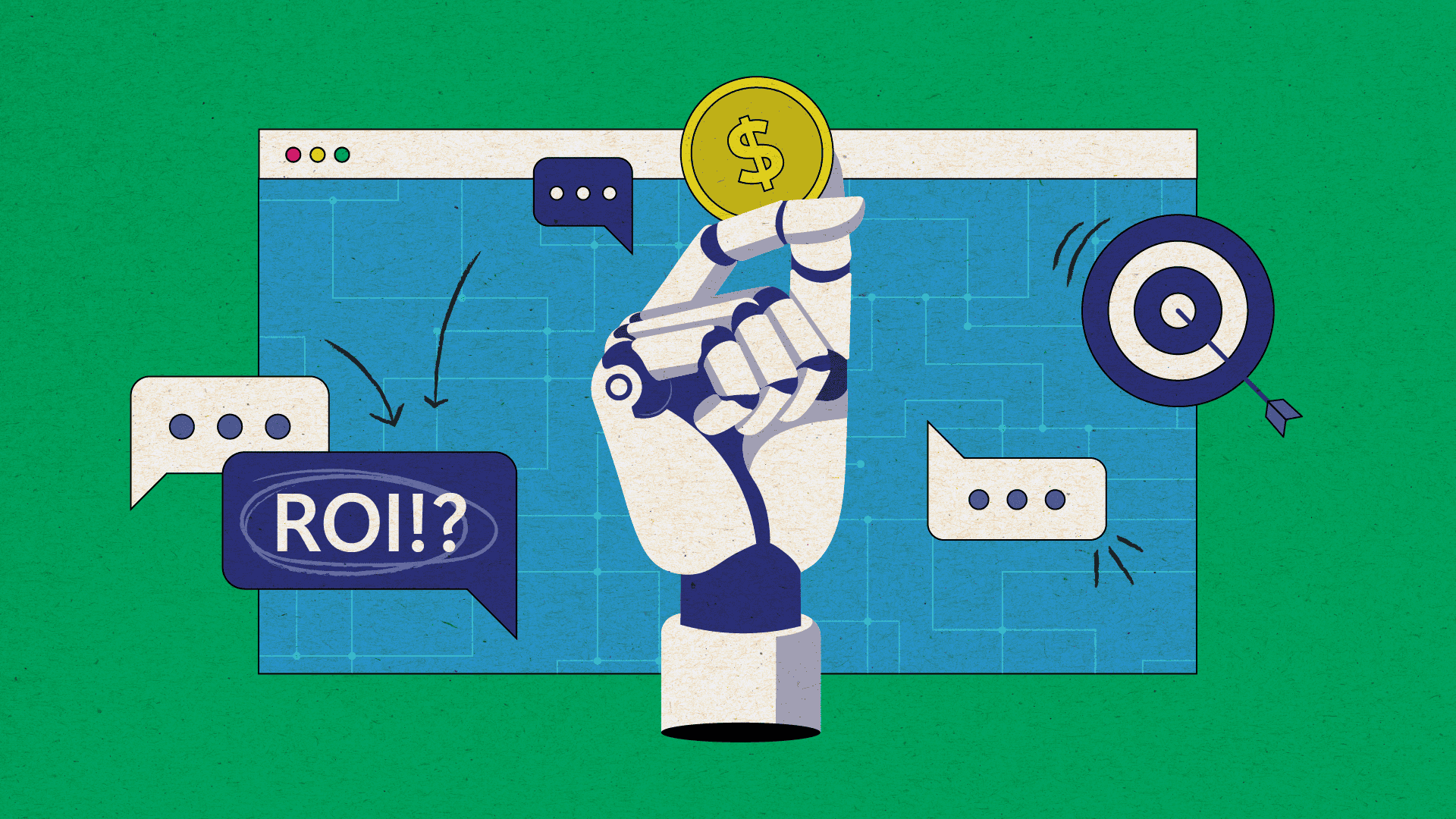
Illustration of a robotic hand holding a gold coin in front of a web browser window. Surrounding the hand are speech bubbles, one with the text

04/17/2025

How to market your agentic AI to the end user 

By Jane Dornemann

Illustration of a robotic hand holding a gold coin in front of a web browser window. Surrounding the hand are speech bubbles, one with the text

Image by Nicole Todd

More than two years following the debut of generative AI, companies that brought the technology to their workforces want a return on their investment. Wait—if so cool, why no ROI? Because employees aren’t adopting it effectively

A survey from Accenture found that 55% of employees said they’d gain the confidence to use generative AI tools if they had clear guidance and comprehensive training. Perhaps that would close the 20% gap between how C-suite leaders and their employees understand the potential value of AI “to a great extent.” 

So, we have an adoption problem. And as marketers shift their focus to agentic AI, this low adoption rate can make it challenging for prospects to continue on their AI journey. If organizations don’t generate an ROI, they’re less likely to consider the value of agentic AI—and might be skeptical about its ability to uncover invaluable sales leads or enter new markets. 

Fear not! 2A is here to help you grow your generative AI accounts by targeting the end user in a way that will drive ROI. Here are a few things you (and we) can do: 

Produce case studies for everyone. Case studies are middle-to-bottom-of-funnel assets, which are great for helping business and technology decision-makers see a clear path to employee use and ROI. Because we’re talking about technology, it’s easy to default to focusing on the IT and development, or “backend,” aspect of adoption. With agentic AI, we need to think differently. Using new technology to yield real change in a business depends as much on the front of house, so don’t be afraid to be less technical in an agentic AI case study. Spotlight Alex from accounting when he gets to his desk in the morning. It will show leadership how the technology is applied in day-to-day operations that affect the bottom line (versus the journey to a successful integration) and give potential buyers a sense of how it materializes in and improves workflows. Beyond the C-suite, these case studies are shareable with the end user so they can also understand the value and usability of agentic AI for as many use cases as possible. 

Customize end-user guides. Pair your pitch with end-user guides to help employees start using your agentic AI solution, which you can distribute once the customer is on board. These guides should keep it simple, avoid technical jargon, and focus on what users need to get started. For example, instead of explaining the science behind large language models, start with why the tool matters: “You can ask your agent a question or give it a command,” or “You’ll get better results if you provide your agent with a sample of what you’re looking for.” Use real examples to illustrate key points, and consider a tiered approach, such as basic guides for beginners and advanced ones for power users. Most importantly, customize these guides by industry with content marketers who understand sector-specific terms, pain points, and goals for different roles within an industry’s organization. 

Create multimedia explainers. You should also cater to different learning styles. Instead of dull, monotone training videos, create animated explainers with recurring characters that increase employee completion rates (research backs this up). Offer bite-sized videos or infographics for visual learners, podcasts for auditory learners, and step-by-step solution sheets for do-it-yourselfers. Adding interactivity—like quizzes or hands-on exercises—helps reinforce learning. By making content engaging, digestible, and worth their time, users are more likely to adopt and retain key information. 

We love this guide we created on AWS agentic AI for banking in the cloud. 

Now that you have some ideas about marketing your agentic AI to the end user, here’s a helpful tip to keep in mind: Emphasize what agentic AI can’t do. Understandably, end users don’t want AI to take their jobs. When people hear what agentic AI can do, the first concern isn’t going to be, “How will I learn how to use it?” but instead, “Will this replace me?” That can hurt adoption. The reality is that most agentic AI solutions are meant to make human jobs easier, so it’s important to dispel the myth that end users are training their replacements. To help communicate this, be sure to include the pivotal role of the human and note what agentic AI can’t do in your end-user materials. This will not only allay fears but also help the end user better understand how to integrate this technology into their workflows (and how they can’t). 

At 2A, we love brainstorming, building, and designing end-user materials—and we’re ready to help you boost conversion with this oft-forgotten ingredient for marketing magic. Contact us to get started. 

04/15/2025

The clouds are getting crowded with AI agents 

By Jane Dornemann

Image credit: Chris Feige
Wheelin’ and dealin’ 
  • Genetic medicine company ElevateBio is collaborating with AWS to accelerate drug development using CRISPR gene editing therapeutics. 
  • A bunch of energy companies created the Open Power AI Consortium to develop AI tools that will improve grid reliability, with Microsoft and AWS as founding members. Part of what is driving this is concern over utility demands for powering AI. This is like when Brazil cut down eight miles of rainforest to build a highway to its climate summit.  
  • Cloud-based vegetation management sounds like what a stoner does all weekend but it’s actually a real thing from Hitachi, and it will now get a boost from AWS. Because guess what—we need more reliable energy infrastructure. The lights keep going out on our tomatoes because we all need to ask ChatGPT to give us a picture of a cat wearing cowboy boots and stuff.
  • Both Microsoft and AWS have entered deals with Siemens, the global technology conglomerate. Siemens will develop its Industrial Foundation Model on Azure and has been working on a digital building platform with AWS. 
  • When I worked for a PR agency our top customer was Adobe, and I had to go to the Adobe Summit every year in Vegas, and one time the hotel messed up booking so I had to share a room with my boss and I thought she was asleep but she wasn’t, and in the dark she suddenly asked if I wanted to gamble and I said YES so we changed out of our PJs and went to play Blackjack. Except she just wanted ME to play, not her, so I did, and I was up like $200 and ready to walk away but she pressured me to keep going and I lost it all on the next hand and then we went back to bed. But anyway, this year at Adobe Summit the company announced it’s going to build new integrations with AWS generative AI services, Amazon Connect, and Amazon Ads. 
  • Adobe didn’t only announce integrations with AWS generative AI tools at Adobe Summit. It will also extend its integrations with Microsoft by activating Adobe Marketing Agent in Teams, PowerPoint, Word, and Microsoft 365 Copilot. 
World domination 
  • AWS signed an agreement with Germany’s Federal Office for Information Security, which will involve developing new standards for cloud environments and helping European businesses meet requirements via AWS European Sovereign Cloud.
  • Denmark’s Danske Bank is migrating all its applications, data, and infrastructure to AWS. 
New stuff  
  • Amazon Q in QuickSight has new scenario analysis capabilities that support non-technical people in building data models and asking exploratory “what if” questions, like “What if we CRISPRed a bunch of lizards to build a fleet of dinosaurs for a luxury dinosaur taxi service, do you think business would finally designate dinosaur parking spaces, yes or no?”
  • Working with AWS and Anthropic, Deloitte launched AI Advantage. It provides intelligent analytics and insights, along with an agent that automates finance tasks, using Amazon Bedrock and Anthropic’s LLMs. 
  • Microsoft showed the world what’s come out of its Azure AI Foundry thus far. It released agent framework, which simplifies the orchestration of multi-agent systems. And, there’s AI Red Teaming, an AI that systematically probes (ooooh, say more) other AI models to flag safety risks. 
  • Oh, did you think we were done with agents for today? No. Microsoft’s Researcher agent addresses multi-step research at work while its Analyst agent “thinks like a skilled data scientist” to get insights in minutes.  
  • Connected to work at the AI Foundry, NVIDIA has several things going with Microsoft, including the AgentIQ toolkit for real-time agent monitoring and optimization.  
  • On a different day, Microsoft announced multiple new capabilities for its Security Copilot agents—they can provide threat intelligence briefings, optimize conditional access, and more. 
  • AWS has made multi-agent collaboration in Amazon Bedrock generally available. This will make it easier for developers to churn out and manage AI agents that work together to carry out complex tasks…like training dinosaurs to drive. 
  • At Google Cloud Next, Google announced new features to its Agentspace that will lower the barrier to adoption. No-code agent creation pulls in users of all technical levels and the new Tensor Processing Unit and AI Hypercomputer both boost the cloud provider’s presence in AI hardware and software. Several other announcements, including agent-to-agent communication protocol, show that Google’s AI investments are paying off. 
Ma’am, I’m going to have to call security 
  • Google is set to acquire cybersecurity company Wiz in a $32B deal that the tech giant will use to make its cloud platform more secure. The company also announced new security agents
Professional pivots  
  • The VP of AI/ML services for AWS, who oversaw solutions like Amazon Bedrock and Amazon SageMaker, has left after a year. Personally, I am less baffled by his one-year tenure than I am by the fact that he spells out hashtag in his LinkedIn profile before using an actual hashtag.  
  • The general manager of generative AI at AWS is leaving to launch his own company. PLEASE PLEASE let it be a dinosaur parking logistics company. 
Gossip (for nerds) 
  • An ex-senior product manager is suing AWS for discrimination, claiming she was laid off because of her gender and age. When AWS laid off people in 2023, it reduced the percentage of women in leadership positions from 62.5% to 28.6%. In a 2024 re-org, 60% of those laid off were over 40. 
  • Microsoft is backing out of many of its data center commitments on a global level. Indonesia, the UK, and Australia locations have been halted, and in the U.S. plans for Illinois, North Dakota, Wisconsin, and Ohio are paused. It’s unclear why, but this article suggests that Microsoft isn’t seeing enough demand to justify the new centers versus other reasons like rising construction costs. This article says, “Trump’s tariffs are likely to have a hugely negative impact on the US tech sector.” GREAT. 
  • While the big three U.S. cloud platforms dominate, they don’t own it all. Europe has its own cloud providers, and they say they have two advantages: a friendlier interface and onboarding process, and less dubious privacy rules than their American counterparts. I feel like there’s a third advantage, but I just can’t think of anything that might drive the world away from U.S. cloud providers, can you? I mean, there’s not really anything going on, you know? 
  • Voicing concern about anti-competitive tactics, two U.S. senators want to know more about Microsoft’s and Google’s partnerships with AI companies. 
  • At a 50th anniversary celebration during which Microsoft unveiled new Copilot features around memory, some employees stood up to protest the cloud giant’s contract with Israeli Defense Forces (IDF), interrupting the company CEO in front of thousands of people. Microsoft supplies IDF with AI-powered software used in selecting bomb targets in Gaza. (IDF also uses AWS to store surveillance information). A protesting employee was fired shortly after the event and another resigned.
  • The Microsoft CTO says AI will generate 95% of code in the next five years, but that doesn’t mean a total replacement of human developers. Meanwhile, other outlets report that big tech firms ARE using AI to replace employees. Earlier in the year, Satya Nadella said AI agents would eventually replace all software-as-a-service and that in the future, people will be hired based on the agents they’ve created. I don’t like this game. 
Best Friends Forever 
  • New to AWS Marketplace: Credential security platform Dashlane; Pipe17, an ecommerce software platform; Afiniti’s eXperienceAI, which provides customer experience technology. 
  • New to Microsoft Azure Marketplace: Zenity, which secures AI agents; Happiest Minds’ generative AI investor solution; CTERA’s edge-to-cloud files services; CloudAtlas AI Guardian for ethical AI governance and security; SPIN Analytics’ RISKROBOT, which helps financial institutions model credit risk; ThetaRay’s Sonar, a SaaS transaction monitoring solution for fintechs and banks; accounts payable automation solution Dooap; and Apiboost’s Developer Portal. 
Illustration of a hot air balloon with alternating dark blue and yellow vertical stripes floating among light gray clouds. On the left side, the text 'cloud cover Vol. 36' is displayed in a playful, hand-drawn blue font.

03/14/2025

Tech giants shift gears to new matter and smart cars 

By Jane Dornemann

Illustration of a hot air balloon with alternating dark blue and yellow vertical stripes floating among light gray clouds. On the left side, the text 'cloud cover Vol. 36' is displayed in a playful, hand-drawn blue font.

Image by Suzanne Calkins

Gossip (for nerds) 
  • Even though its cloud division underperformed, quarterly earnings for Amazon surpassed expectations. Profits were up 88% from a year ago! Everyone was on Amazon buying canned goods and oxygen canisters because soon we won’t be able to go outside without having to engage in hand-to-hand combat with the half-zombie half-human who used to be our neighbor while a nuclear bomb explodes in the background. 
  • In Microsoft’s quarterly earnings report, AI revenue was $3B above forecast. However, its cloud earnings fell short (the exact words from UBS analysts were “far worse than expected”), which led stock to dip 5%. 
  • While AWS ramps up data center spending, Microsoft canceled leases with at least two private data center operators. It currently leases data center capacity from various suppliers, but recent cancellations may signal an oversupply (an “AI bubble”) issue—slow customer payoffs and the arrival of DeepSeek are two reasons why demand may be cooling. 
  • So, what does this all mean for next quarter? Microsoft’s CFO says it’ll probably fall short again, citing influences like foreign exchange rates and businesses not dedicating budgets to AI. Also, spitting truth: “Customers feel that ‘sorely needed features, enhancements, and fixes to core products’ have been put to the side ‘in favor of trying to build a Copilot into everything.’” 
  • A Microsoft executive said AI will transform wealth management, making it easier for smaller entities like startups to compete with big banks. This is because of AI’s ability to condense data and reduce costs. Specifically, agentic AI can replace people in jobs like customer advisement and portfolio construction with AI. 
  • Is AWS the technology version of Carrie Bradshaw, who spends all her rent on shoes? The cloud giant is doling out the equivalent of a year’s revenue (~$100B) on infrastructure to support AI. 
  • Have you ever renovated a kitchen? Here’s the tech version of that
  • Microsoft doesn’t want Donald Trump to advance limits on AI chip exports to Chinese companies, and says doing so would be a “strategic misstep.” Oh really, has that happened lately? 
  • According to a report from AWS, European startups are adopting AI much faster than their large enterprise counterparts—creating a “two-tier AI economy.” 
  • Leaked documents revealed that Microsoft is far more involved with the Israeli military and its operations than previously known. 
  • Allegations that DOGE is feeding sensitive Department of Education data to AI using Microsoft Azure is alarming to cybersecurity experts (and everyday people, too). 
  • There are no private memos, OK? Just write like it’s gonna be leaked, because the people need their corporate bread and circuses. In this month’s leaked memo, managers will need to manage more, but also less. 
  • CrowdStrike has made history as the first cloud-native cybersecurity ISV to earn more than $1B in annual sales from AWS Marketplace. Why yes, we DID do marketing work for them. 
Wheelin’ and dealin’ 
  • Mondelēz International, the snacks and confectionary company that produces Oreos and Sour Patch Kids—which are chock full of red dye 3 and make your kids lose their goddamn minds—is moving to AWS. 
  • Investigative analytics software provider Cognyte is integrating its solution to be deployable with Microsoft Azure. This will bring Cognyte tools into Azure to process and analyze unstructured data. Am I ever going to read something about data and not think of The Goonies? Probs not. 
  • Following an investment from Microsoft, Veeam will build AI products. Veeam’s core products focus on cybersecurity. 
  • VC firm General Catalyst is partnering with AWS to co-develop and deploy integrated AI products for healthcare—predictive care insights, diagnostics, patient engagement, and platform interoperability. My favorite part of this article is that they included the misspelling in Matt Garma’s emailed quote. Someone get ahead of this man and send him a there-they’re-their primer. 
  • AWS is going to help Honda transition from hardware-based vehicles to software-based ones using generative AI, IoT, and AWS compute. And, in partnership with AWS, automotive technology company Valeo is building new solutions for software-defined vehicles. 
  • Wow, AWS really is putting the wheeling back into dealing because there is more vroom vroom news. AWS is expanding its presence as the global technology provider for SRO Motorsports Group to “digitally transform the science of racing.” 
  • Educational publisher Pearson is expanding its use of AWS, including AI capabilities, to further personalize learning. 
  • Memorial Sloan Kettering Cancer Center is collaborating with AWS to accelerate breakthroughs in cancer research by applying AI to multimodal data. The deal will also support AI-powered drug discovery efforts. Montefiore Health System is doing similar stuff with AWS. 
  • Clinical AI company Aidoc has entered into a strategic collaboration with AWS, which will start with optimizing Aidoc’s CARE Foundation Model. The FM helps doctors with real-time identification of suspected critical conditions. 
  • Defense contractor Booz Allen Hamilton is working with AWS to “enhance technology for federal agencies.” Great timing. 
  • Snowflake is expanding its partnership with Microsoft to bring OpenAI’s advanced models straight to customers through Snowflake Cortex AI on Microsoft Azure AI Foundry. 
  • Faros AI is collaborating with Microsoft to bring its data platform for optimizing engineering to Azure. 
Ma’am, I’m going to have to call security 
  • A hacker named Codefinger (ewww) is targeting Amazon S3 buckets, and the ransomware campaign is so effective, organizations are reporting that they can’t shut it down without issuing payment. This could potentially affect supply chains. Um…it’s Cadbury crème egg season, so there better not be supply chain problems. 
  • Russian scammers are posing as Microsoft tech support on Microsoft Teams, even doing video calls in some cases and getting employee permission to take over screens! Can you imagine watching someone download malware on your computer screen in real time? Talk about a bad day. 
World domination 
  • Microsoft went into full diva mode with its creation of a NEW FORM OF MATTER. That’s right—its “topological qubit” is not gas, liquid, or solid, and it can be used to drive quantum computing (which Microsoft researchers now believe is years away instead of decades). 
  • The AWS cloud region in Thailand, which includes three Availability Zones, is now up and running. Microsoft is planning to build there but it hasn’t yet. In Singapore, AWS unveiled its Asia-Pacific hub office. 
  • AWS announced a $5M investment in “mega data centers” for Central Mexico
  • The UK has dropped its investigation into a potentially anti-competitive deal between Microsoft and OpenAI—for now, regulators say. 
  • Years after Europe asked for more data sovereignty, Microsoft completed its EU Data Boundary project. This will allow EU countries to remain compliant with local regulations, such as storing data in European Free Trade Association regions. 
  • AWS launched a CloudFront Edge region in Jeddah, Saudi Arabia, and hopes to have a fully operational cloud region by 2026. And Saudia Arabia’s STC Group will work with AWS to speed up AI-powered innovation. 
  • I didn’t know there was any room left in New York City, but apparently there is, because AWS launched a new, upgraded Local Zone Edge location there. 
  • Australia has entered a Whole-of-Government agreement with AWS. And Australian CommBank extended its agreement with AWS to include customer service optimization and AI innovation. 
  • India will see $15B in data infrastructure investments from AWS. Also, India’s Tata Power will use AWS AI and IoT to improve things like predictive maintenance for grid resilience. 
New stuff 
  • AWS previewed its Salesforce Contact Center with Amazon Connect, which helps service reps avoid platform switching and gives them a choice in the digital channels they use. So, now Karens can unload all their repressed existential angst and political fear on someone either through Salesforce or Connect. 
  • It must be Christmas because Santa has visited us all, and in his sleigh is the best present of all: no more Chime. You’d think it would be hard to come up with a gift that every single person on Earth would be happy to receive, but NO, it wasn’t hard.
  • And following suit, Microsoft is retiring Skype and moving users toward Teams. 
  • AWS issued a new rule for third-party SaaS vendors on Marketplace that want a discount: They’ll need to be running 100% on AWS. 
  • Microsoft’s new podcast, Leading the Shift, will feature interviews with experts, customers, and partners on what they’re doing with AI, data, and the cloud. 
  • Are we all ready for Microsoft Build? This reporter expects several Copilot announcements.
  • Welcome the o3-mini reasoning model to the world, now available in Microsoft Azure OpenAI.