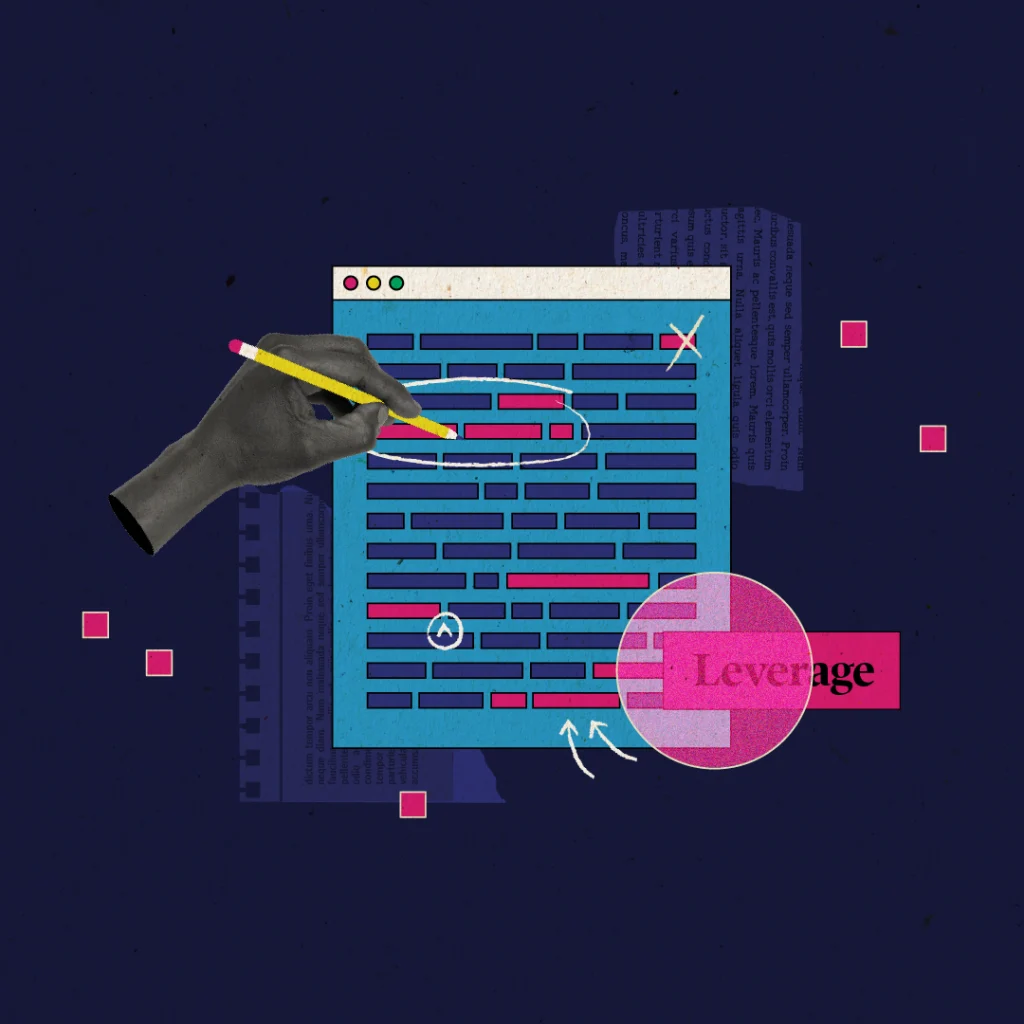
Human vs. AI: How to know if your writing has a pulse
You know the feeling.
The writing checks all the boxes. Grammar? Fine. Structure? Present. But you’re three paragraphs in, and nothing’s landed. You’re not bored, exactly. Just…disconnected. We get it. AI-generated content can feel like the industry equivalent of a knockoff handbag: technically correct but missing the soul. In a sea of auto-generated sameness, people are craving content that sounds like it came from someone who gets them.
That doesn’t mean swearing off AI. It means using it well and knowing how to add the human layer that keeps readers reading.
At 2A, we don’t fear the tech—we use it. Joyfully and strategically. It helps us write faster and get out of our own heads. But we never let it replace the part that matters most: knowing our audience, holding your brand voice, and shaping a story with a bit of soul.
When humans and AI work in harmony…
You can feel it. When someone’s really shaped an idea and turned it over in their minds, it leaves a trace of intention, texture, and warmth. (Yes, B2B tech can have cozy stories.)
Here’s what that might look like:
- A point of view. There’s a pulse behind the prose. Real people have opinions. Great content does, too.
- Intentional rhythm. Sentences vary in length and cadence, so content reads naturally.
- Tone that fits the brand. It doesn’t just say the right things. It sounds like you. (Our tone? Smart, clear, and a little bit spicy.)
- Specificity. The messaging is grounded in real-world examples, offers concrete advice, or speaks from personal experience with a turn of phrase you can’t just copy and paste.
- A sense of story. Even in B2B content, a good narrative structure pulls you through by giving you a reason to keep reading.
- Quotes, references, or punchlines. The kind of stuff you’d only get from a real person with a real perspective.
- A little imperfection. Maybe there’s an odd analogy. Maybe a dad joke sneaks in. That’s flavor.
When AI is left to its own devices…
The humans might just bounce. When the only fingerprints on the draft are digital, it’s obvious:
- Repetitive phrasing. You know the ones: “Whether you’re an enterprise or SMB…” or “With the ever-evolving digital landscape…” You’ve read them hundreds of times. You’ve skipped them hundreds of times.
- Keyword soup. Scalable, secure, seamless, innovative, robust, transformative… yawn.
- Over-structured sentence patterns. Every sentence begins with a prepositional clause, ends with an em dash, and sounds like it’s trying to win an award for formality.
- Zero personality. It exists. It says a thing. You read it. But it could’ve come from anyone, and might as well be for no one. (It definitely wasn’t from us.)
- No story, just summary. You’ll get bullets and benefits, but not a sense of why it matters.
Use AI, just don’t stop there
We use AI all the time: to kickstart drafts, poke holes in our logic, suggest a dozen options we hadn’t thought of, or help us pressure-test structure and voice. But the magic doesn’t come from the model. When our storytellers use AI, they follow up by shaping structure, adding brand voice, and replacing autopilot phrasing with something real. 2A relies on human ears, human judgment, and human standards.
Want content that sounds like you? Let’s talk. We promise not to write “leverage” in the first 100 words. (Probably.)
Nerd Corner with Dr. Ash
Corpus bias: When the data used to train a model doesn’t reflect the full range of voices, perspectives, or language patterns that exist in the real world.
Most large corpora (the datasets AI models train on) skew toward what’s been published the most: dominant voices, formal registers, U.S.-centric norms. The result? Outputs that feel generic, repetitive, or off-brand.
That’s why the human layer matters. A model can predict the next word. You can decide if it actually belongs.