Katy is a digger, of information and earth. It just depends if her clients want an ebook or some endive. She helps companies across industries find their voices and speak the language of their audience. She’s also fluent in tomatoes.
We name stuff funny. We call our monthly meeting that showcases cool projects Circle Time, the special Friday once a month when the office is closed, FriYAY, and the slide outline made up of little squares, chiclets. So, it’s probably no surprise that we call our company values, Words we work by (WWWB).
We think of WWWB as our North Star—the guiding light we use to help us keep what’s great about 2A while we grow. Our WWWB also allow us to build a collective identity as a team so new people come on board faster.
Curious yet? Please say yes, we would really love to share them.
We’re helpful: When it comes to work, we’re not afraid to roll up our sleeves. Whether it’s colleagues or clients, we all pitch in to get it done and help everyone thrive. We know that teamwork makes the dream work >>
We’re serious about our work: We show up to do the work, and we commit to doing it well. We give each project the effort it needs. We’ll show you how serious we are >>
We tack toward improvement: There’s always room to get better, and that’s where we’re headed. We experiment, learn, and prioritize to challenge our path. We’re still a work in progress >>
We work to build trust: A foundation of trust with a diverse community of colleagues and clients makes our days and our work better. We’re curious and proactive about building trust. We love a good trust fall >>
The secret to 2A’s high-quality work and engaging culture lies in our WWWB. Because really, Where Would We Be without them?
So you’re in a new [business] relationship and you want to shout it from the rooftops. Congrats! That honeymoon phase always feels good. Now, before you jump to the nearest balcony to reenact Romeo and Juliet, let’s think through the perfect sonnet you should deliver. You’ll need something that captures the better-together essence of your new partnership and makes your joint customers swoon.
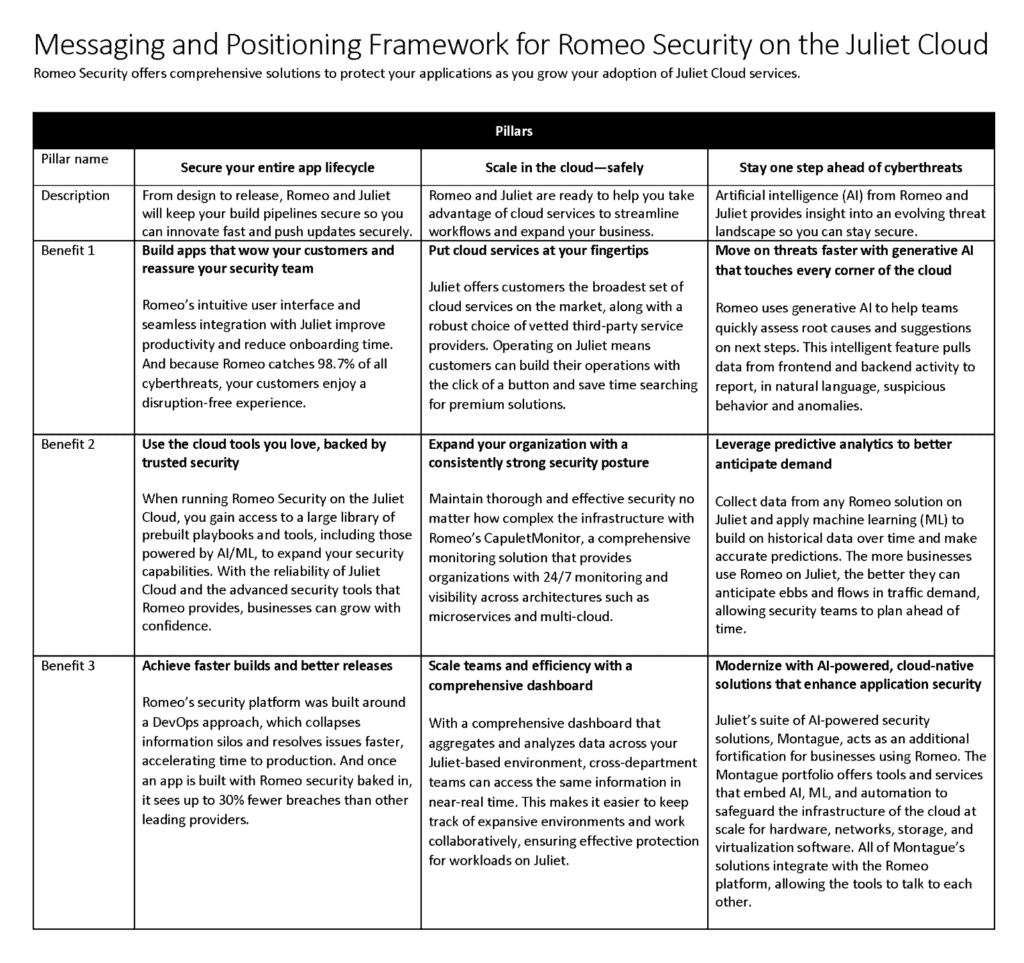
As a B2B marketing agency, we recommend starting with a messaging and positioning framework (MPF) to get the main points just right. An MPF is a perfect way to strip down your story to reveal the top-line benefits customers will experience from your dynamic duo. Then we transform those benefits into pure poetry that would make Neruda proud. The end result is a document that includes key talking points and copy blocks you can pop into any joint marketing content. See for yourself:
Doing an MPF as the basis for your content strategy makes sure everyone—on both sides of the partnership—agrees on your differentiators and describes the value uniformly. This way, customers hear a persuasive, consistent message from all angles.
Pop quiz time
Now that you’re sold on MPFs, take our partnership quiz! You’ll find out which kind of better-together story is best for you and yours. Many of the joint MPFs we create are for ISV partners who want to describe the value of their alliance with a major cloud provider. There are a few ways to do this, and the pillar structure varies a bit, based on how different solutions support one another.
Bonus—there’s no wrong answer 😊
Which one best describes you and your partner?
A) Feeling one sided but enjoying the attention: This framework adapts the partner’s existing messaging by popping in the cloud provider where it makes sense. Think of this one as light on the cloud, heavy on the partner. It slots in cloud benefits where they make sense, giving customers a glimpse into the value of the combined partnership. It’s a good approach if the relationship is a little fraught or tricky to talk about.
B) Dating but not ready to move in together: This includes one pillar for the partner, one for the cloud provider, and one for both. This structure plays it safe by giving each side a chance to share existing messaging. The combined pillar explains their joint value and elaborates where possible. If the partnership were new, this approach would be a good fit.
C) Thinking of proposing tomorrow: This uses a structure where each pillar explains the partnership through a major customer benefit. This approach works well when there are a lot of juicy details about how the partner and cloud provider work together. They’ve likely co-developed integrations or POCs and have a roadmap for future work. They generally already have joint customers and it’s easier to pin down the differentiators of their partnership.
The results are in!
If you chose A, B, or C, you’re in luck! Our storytellers and consultants would love to learn more about your partnership and spin up an MPF for you. Reach out to learn more. Happy partnering!
There’s a reason why salsa is so popular. (And it’s not just because people love to say salsa. 😉) All those chopped up pieces combine to deliver spicy, tangy harmony in every bite.
Did you know there’s a video equivalent of salsa? And, just like your favorite snack, it brings together lots of amazing bits in a bite-sized package with a little kick. It’s called a sizzle reel. And the one Brian just created for 2A is so yummy, you gotta have a taste.
Let’s hear how this video chef created such a scrumptious sizzle reel.
Katy: I love the opening imagery with the sun and eyeball. What was your inspiration for that scene?
Brian: I wanted to really explore what I could do with the 2A color palette while using illustration and bold, dynamic transitions. The eyeball was an homage to 2A’s first sizzle reel, which was the first time it appeared in our work, and including it was a way to maintain continuity. The eyeball later made an appearance on our 2A hoodies.
Katy: There are so many different clips in this sizzle reel, and you wove them together seamlessly. How did you balance such a wide variety of footage?
Brian: I wanted to highlight some of the flashiest moments while still giving the reel spaces to breathe. Too much visual density can be overwhelming! It was also important to represent the different kinds of work we do—fully animated videos with characters, hybrid video and animations, UI explainers, and so forth.
Katy: Many of our 2A animations are 2-ish minutes long. How did you choose just a few seconds from those longer examples?
Brian: Because we could only choose a few seconds, a lot of it came down to finding ones with those stand-out moments. I also gave priority to animations with bold transitions (such as a rapid zoom in or out, or a left-to-right movement) that could be matched up with a complementary transition from another animation.
Katy: Which 2A animations didn’t make the cut, and how did you make that decision?
Brian: There was a clip from a Microsoft Viva animation featuring a paper plane that unfortunately didn’t make the cut. The animation itself was worth showcasing, but between the paper folding up into a plane, winding up, and then releasing, it was too many beats to cover in a short time. It would have slowed the overall pace too much.
Katy: What’s your favorite part of the sizzle reel?
Brian: The first few seconds right after the intro are paced very well, with bold, seamless transitions that also showcase a diverse sample of our work. The transitions around 0:13–0:15 also flow really well, in my opinion!
Katy: This sizzle reel includes so many of our best animations that we created for clients. What is it about animations that make them great marketing tools?
Brian: Marketing is largely about storytelling: Animated explainers remain incredibly popular because they grab and hold people’s attention, making them much more receptive to the stories we want to tell. Plus, when we see a well-crafted animation, the positive emotional response we get from it inevitably transfers, in some part, to the subject of the animation.
Katy: How would 2A’s clients use a sizzle reel?
Brian: When clients have several animations that showcase the same topic, we can create a sizzle reel for them by compiling the best moments into one short segment—like this one we created for Microsoft Viva. Our clients often use sizzle reels to generate hype before their keynote or meeting. They’re perfect for building anticipation and getting the audience excited about what comes next.
What’s better than donating to a charitable organization? Watching your donation tap into its mega superpowers!
For three months this year, 2A’s giving group led a mega match effort to rally our 2A team and grow our donations to worthy causes. Essentially, 2A Hulk-ified its matching policy by not only matching donations, but also tacking on an extra donation when enough employees joined in. All told—through our donations, matches, and mega multipliers—we donated $3,300 to 23 organizations around the world.
Here’s the plot: On 8/8, we needed eight intrepid employees to step up and make donations. And they did! Their actions first unlocked 2A’s standard match and then came our mega match multiplier, which was an additional donation made to an organization the group decided on—the Maui Food Bank. After that, the shockwaves of support only grew stronger. On 9/9, nine employees channeled their inner green giant, and 2A powered up that multiplier for another round of smashing good support. The Hulk effect resulted in an additional donation to the International Rescue Committee. And finally, 10/10 was the grand finale! Ten employees flexed their philanthropic muscles, and the donations went Hulktastic! Our final mega match multiplier went to World Central Kitchen.
All told, our donations left an impact that echoed like Hulk’s roar.
As the giving season really gets underway this year, think about releasing your inner superpowers for the greater good.
Need some giving inspiration? Here’s where the 2A team donated recently:
Ask any major player in the cloud space about partners, and they’ll tell you a robust partner network is key to success. But for smaller tech companies, the value of partnering up isn’t always clear. Sometimes it can look like you’re giving away too much to your competitors, or making an investment that will take a long time to pay off.
At 2A, we extoll the value of partnerships at least 10 times a day—building messaging guides, playbooks, case studies, pitch decks, and ebooks that illustrate how customers benefit from a better-together scenario. That is to say, we know a good partner program when we see it.
Take, for instance, Hikari. The company formed as a spin-off from Ireland-based EMIT to help customers get more value out of their data. The secret to Hikari’s skyrocketing success wasn’t only its bet on low-code technology. It was Founder and Executive Chairman Eamon Moore’s vision for a partner network that launched Hikari into the big leagues.
Moore’s first introduction to a new partner paradigm happened after EMIT won the Microsoft Global Partner of the Year for SMB Cloud Solutions in 2016. “It opened my eyes to a new way of thinking about partner networks. Here was a global group of companies interested in helping each other out—acting as a sounding board for one another. These discussions inspired myself and the team to think about how to adapt to new trends, and they provided tremendous insight into where we could deliver value to each other,” Moore said.
Once Hikari spun off from EMIT, it partnered with ProcessUs, a firm specializing in Microsoft Power Apps across Ireland and the Netherlands. The companies worked together to deliver low-code solutions that pulled different sources into the Power BI dashboards Hikari built, giving customers better visibility into their data at the touch of a button.
Business took off. There was clear value in combining the skills of both companies to help customers get more from their cloud data. Then Hikari decided to double down and bring Power Apps capabilities in house. The firm acquired ProcessUs, and the combined team set out to scale the new and improved Hikari.
From his work at EMIT, Moore knew many SMB customers view their Modern Work partner as a trusted IT advisor. While a particular partner might focus on cloud migration or security, their customers still ask them about everything technology related—from a photocopier to a PC to AI. Which puts a lot of pressure on small partners. “At the end of the day, if you try to be a jack of all trades, you’ll be the master of none,” said Moore. “It’s critical to do what you do really well and stick to it—especially when you’re a company our size.”
Moore reached out to Microsoft and pitched the idea of setting up Hikari to serve Modern Work resellers. Under his proposed model, resellers would work with Hikari to determine if a low-code solution would help achieve their customer’s business objectives. If so, Hikari would support the partner with customer education and solution development.
Microsoft introduced Hikari to TD SYNNEX, a distributor of IT products and services, that serves thousands of partners across Western Europe. Together they created a P2P model serving resellers who act as the trusted advisors of SMB organizations. Hikari started by helping TD SYNNEX partners with low-code workshops, assessments, proofs of concept, and service development. Over time, it has pivoted to offering a Power Platform Centre of Excellence for partners to ramp up their low-code skills.
“We believe in the power of the network—the partner network, the Microsoft network, the distributor network,” Moore said. “We all have important, strategic customers that we want to hang on to. We don’t want a competitor knocking on their door and selling them on the idea that they can do everything while we can’t. Partner-to-partner (P2P) relationships help you maintain your existing customer relationships and increase your status as a trusted advisor by bringing in great partners to round out your offerings.”
Hikari is just one of many companies out there that has created a flourishing partner network. For an overview on how to grow your own B2B technology partner program, download our guide.
Lately I’ve been reading If You Give a Mouse a Cookie on a nightly basis. Each time I open the book and tell my almost-3 year old about the critter’s shenanigans, I’m transported to the library of my elementary school. I can remember so clearly sitting cross-legged looking up at the librarian as she read the same words aloud. The fact that our public library still has plenty of copies of this 1985 book is a testament to the power of nostalgia. Parents who grew up reading about the mouse and his cookie have a little flashback when reading the same stories to their kids.
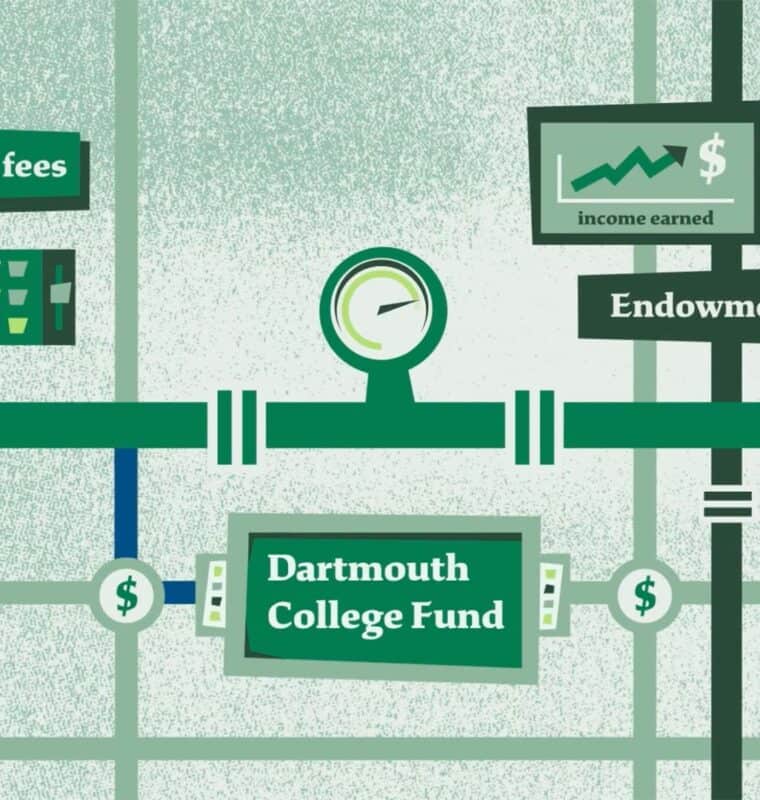
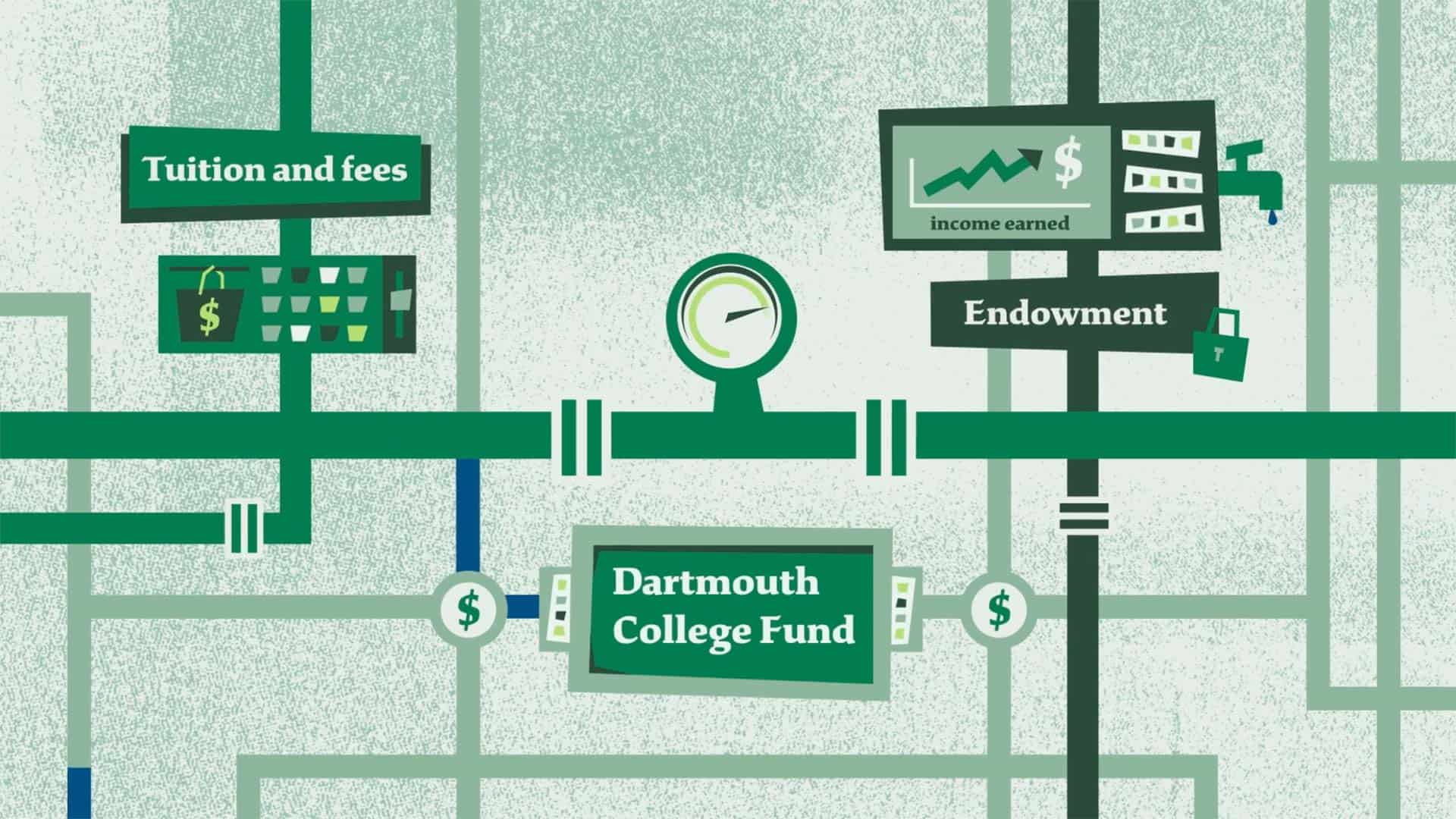
Nostalgia is a powerful force, especially when woven into marketing. In the world of higher education, nostalgia works wonders for alumni fundraising. Take our Funding with Rhyme and Reason animation we created for the Dartmouth College Fund (DCF). Not only does it elicit memories of being a carefree 20-something on campus, but the rhyming whimsy takes it a step further—injecting a Saturday-morning-cartoon vibe.
In this case, the ask of 2A was to reinvent DCF’s Wacky Business Model animation, which made unfortunate parallels between Dartmouth and begging for money. The animation also didn’t quite land why tuition funding is so complex.
Our first instinct was to write a song and perform it like a Schoolhouse Rock! episode. Then we realized we’re not folk singers. Instead, using singalongs as a springboard, we walked viewers through a complicated funding equation with a little water theme to tie it all together. A reservoir, pipes, and barrels played a serious role in explaining why giving is still important for a school with a large endowment. Meanwhile, the animation’s rhyming roots keep it light and upbeat.
So the next time you want to tap into your audience’s nostalgia—we’re here for you, to create something new, and we’ll work hard, too, this much is true.
As a marketer, having your work go viral is like chasing down the double rainbow, discovering its pot of gold, and diving in as if you were Scrouge McDuck. Few have felt that glorious feeling, but those who do will never forget it. Liz Mangini is in that select group.
A lifelong writer turned 2A marketing consultant, Liz not only lends her viral magic to our clients, but she also delivers a consulting experience as thrilling as a DuckTales adventure. She provides a Huey-Dewey-and-Louie trifecta that can’t miss. Here’s what it’s like to work with Liz:
Huey—the brave one with panache
Liz is fearless. She’s always up to try something new, which is why she’s dabbled in real estate, construction, higher education, healthcare, hospitality, entertainment, and finally technology. Throughout her long career, writing and marketing has been the common thread. After graduating with a degree in communications, Liz went on to support marketing at a hospital and later founded the Body Image Blog where she wrote posts related to body positivity and self-esteem. No matter what she’s focused on, Liz is driven to help other people succeed. It’s what motivated her to ghost write for c-suite executives at Microsoft and promote small businesses as a writer for Fidalgo Living Magazine.
Dewey—the clever one with great ideas
While running the Body Image Blog, Liz perfected the art of turning great ideas into viral content. Within just one year, the blog reached over one million viewers, as several posts took off and racked up the views. Her Q&A post with model Lizzie Miller quickly spread throughout the blogosphere. She also interviewed big names like Laurel Touby and was invited to Leeza Gibbons’ radio show, Hollywood Confidential to discuss her blog. As attention from the press mounted, Redbook even reached out to see if Liz would write an article for the magazine.
After the University of Washington caught word of her popularity, the school asked if Liz would lead a social media workshop to teach students how to spread their content. She was such a hit that the UW also asked her to serve as an advisory board member for the editing program.
Louie—the charismatic one you can’t get enough of
By the time she landed at Inviso, Liz had so many varied experiences under her belt that she could connect with just about anyone. In that role she also moved away from writing toward marketing consulting. As a natural-born people person, Liz felt right at home helping clients achieve their goals and supporting new hires to build their skills.
It takes a trifecta of elements—a Huey, Dewey, and Louie, if you will—to create the perfect consultant. With Liz at 2A, clients get a fearless writer, creative thinker, and relationship builder bent on success.
Work with Liz to see how she can help you make your next blog, eBook, and case study go viral!
Have you ever met a playwright? I hear there aren’t as many as there used to be. So, if you’re fortunate enough to cross paths with one, consider carving out a moment to chat. If Mai Sennaar is any indication, they’re fascinating.
At 2A we’re always looking to grow our crew of creative minds, so we jumped at the chance to add Mai’s talent to the mix. Mai wowed us with the fact that she ran her own production company and wrote, directed, and produced several plays. Her first production, The Broken Window Theory, starred a Tony Award winner. In addition, her play The Arsonist was performed at both the Smithsonian Affiliate Museum of the African Diaspora in San Francisco and the Berkeley Art Museum.
A natural-born creative with an immense ability to wield words, Mai takes the storyteller position to new heights. Much like one of her plays, Mai’s work at 2A builds the story arc, pulls the audience in, and influences the reader’s point of view.
At Tisch she learned the ancient art of storytelling and practiced building stories to follow a narrative arc. Euripides and Sophocles taught her the origins of dramatic writing, and mentors like Richard Wesley encouraged her own burgeoning voice. After graduating, Mai wrote The Fall of the Kings, which debuted at the Andrew Freedman Home in the Bronx.
Pulling the audience in
Mai knows how to expertly uncover cherished soundbites so characters can woo an audience and marketers can connect with customers. Just before joining 2A, Mai worked for the U.S. Senate democrats as a digital creative director, writing commercials to promote mid-term election candidates. In that role she faced a new challenge of marrying scripted and unscripted moments into a piece that won over viewers. Today, she uses those same skills to write compelling blogs and build customer-evidence videos.
Mai also has a knack for interviewing, which she honed through her work for the Council on Legal Education Opportunity (CLEO) in Washington DC. She interviewed dozens of high-profile individuals and published the conversations in the CLEO Edge magazine to attract more people of color to the legal profession. At 2A she puts her Q-and-A skills to use during customer interviews for case studies.
Influencing your point of view
No matter what she pens, Mai shines when she’s tasked with influencing the audience. Her plays have a way of making you pause and evaluate, while her case studies and videos compel customers to act. Wherever she goes, Mai lets her values lead her. Her most fulfilling experiences have been when her writing has mobilized people who were disenfranchised. When her work was performed for a New York City high school group, they told Mai how they’d connected with her characters, especially around issues like gentrification and displaced families. Seeing those students relate to her work was one of her high points as a writer.
At 2A she’s found a place where she can tackle new writing challenges and push the boundaries of storytelling. We can’t wait to see where she’ll take us next.
My dad was a bit strict when I was a kid. In high school I either had to join a sports team or get a job so I’d be occupied after school and less likely to get into trouble. By college I figured this rule no longer applied and was excited at the prospect of nearly two months at home doing nothing. The time between my finals ending and my summer job starting could be filled with episodes of The Wendy Williams Show and napping in the sun.
But alas, he was on to me. He told me I had to find something to fill those few weeks. This presented a challenge, as not many companies are willing to hire a completely untrained 18 year old for less than two months. So I got creative. I looked at summer study abroad programs and discovered I could spend that time on the island of Rhodes in Greece. Napping in the sun here we come!
When I returned to the states, I had a few Greek phrases in my pocket, like σας ευχαριστώ (thank you) and πόσο κάνη ένας σαλάτα (how much is one salad). I also knew the alphabet well enough to read the fraternity and sorority houses on campus.
I wish I could say my Greek faded away unnoticed, but lately the alphabet has been making a comeback into my lexicon. This time, though, the alphabet doesn’t remind me of snorkeling and cliff jumping, it just gives me the heebie jeebies that COVID-19 is a comin’.
As COVID zooms through the Greek alphabet, we’re trying not to freak out, and instead put our energy toward helping our friends and neighbors. In lieu of a year-end gift for 2A’s clients, we donated on their behalf to organizations that are making a real difference in our community. Thanks for helping us support Black Girls Code, Duwamish River Community Coalition, and FEEST Seattle.
And who knows, maybe 2022 is the year that Greek surrenders its variants in favor of sandy beaches and street food.
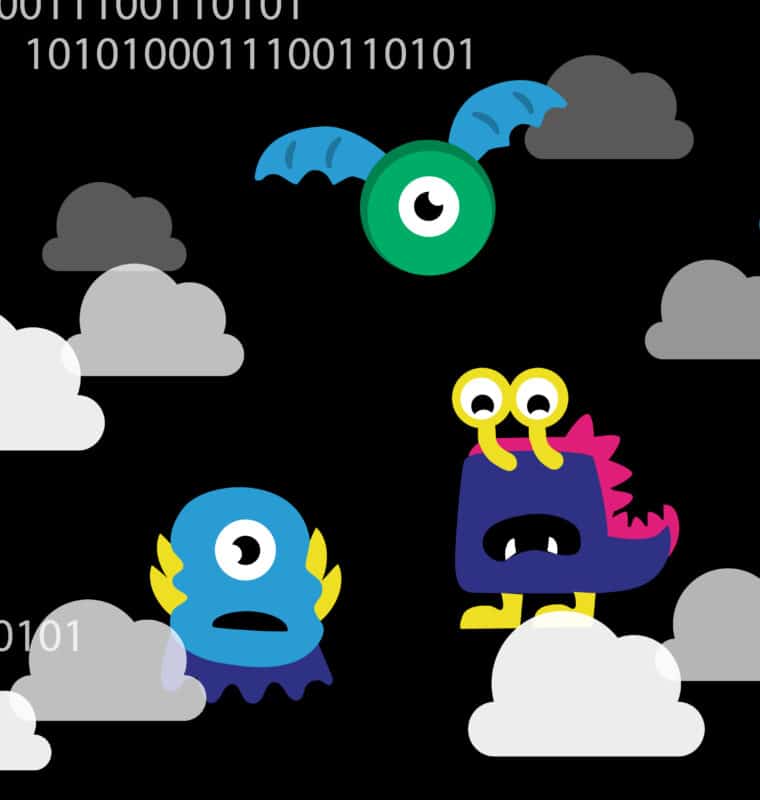
His name is Mano: He’s amorphous, invisible, and slightly threatening. And he’s the latest addition to a family of monsters who persuade my 2-year-old, Rowan, to complete basic tasks.
The book Hunt, Gather, Parent inspired the creation of Mano, who convinces Rowan to wash his hands when he comes home. You see, Mano lives in our sink drain and eats the dirt from your hands. Luckily for me, he’s insatiable. If you don’t feed him as soon as you get home, he’ll suck you down the drain. Mano is very effective.
Just a few weeks after introducing Mano, Rowan not only washes his hands, he also polices everyone else to make sure we all wash our hands, lest Mano escape and chase after us. Mano is so effective, in fact, it made me want to invent some technology monsters I can hide in ebooks who persuade technical decision makers to act.
So, in the spirit of Halloween, here are a few spooky buggers lurking in the shadows of your cloud technologies.
Niner: He jumps up and down on your cloud trying to hamper your availability. Every 9 he finds, he swallows whole. It’s getting serious—you’re already down to 99.9999.
Corny: She eats the last two rows of data in any table you migrate, making it a dark and scary journey to the cloud. Beware!
Webs: He lives in your data warehouse, pulling out APIs and gumming up the works so you no longer have real-time insights. You have (gasp) yesterday’s data!
Kondo: She swims in your data lake and is sick of bumping into mismatched data. She’s on a mission to organize, culling sources so you’re only left with one size, shape, and speed.
The good news is, 2A knows how technology monsters operate and can help you convince your audience to fight back!