How to maximize generative AI for partner marketing
Marketing budgets are tight, and the excitement around generative AI and agentic AI is palpable. Yet, in practice, applying it is often more complicated than it first appears. Launching a joint go-to-market (GTM) campaign with partners is a prime example. In a perfect world, both parties could brainstorm content ideas, then feed AI brand guidelines and transcripts to generate emails, one-pagers, and webinar decks. But joint marketing efforts come with an extra layer of relationship context that AI can’t quite decipher. How can generative AI get multiple partners to agree on a messaging direction when they don’t? What can it do for collaborative offerings that come with a bit of competition for the spotlight?
There’s a lot of highly human, nuanced negotiation that happens in co-marketing—it’s a bit like therapy. So, we set out to see where we can best apply generative AI to important activities across joint GTM efforts, and where we can’t. Here’s what we learned about where AI shines and where it falls flat.
Working through messaging hierarchies
Falls flat
Two or more brands with competing offerings and stories have different priorities, and generative AI struggles to grasp those dynamics. It can’t resolve alignment or make judgment calls on which messaging tier should take precedence.
Shines
Only after humans create a joint messaging framework can AI help. Once the hierarchy is established, generative AI can apply that framework consistently in content generation.
Ensuring content sticks to all brand and legal guidelines
Falls flat
Generative and agentic AI often leave out important brand or legal guidelines—especially when navigating 100-page brand guides. They miss nuances, like Oxford comma usage, shifting partner rules, or strict naming guidelines, enforced by hyperscalers like AWS, Microsoft Azure, and Google Cloud.
Shines
If you’ve built an AI agent in-house, you can train it over time to retain and enforce the rules. AI can serve as a second set of eyes when it comes to compliance, such as running completed content through the agent to catch violations and suggest corrections, ensuring co-branded assets stay publishable and eligible for marketing development funds (MDF).
Distilling shared value propositions
Falls flat
Multi-partner GTM motions require telling a joint story that highlights the “better together” value. Generative AI can’t conduct interviews, facilitate stakeholder discussions, or navigate political tensions between product and marketing teams. It also can’t pull insights from sales calls or uncover the discovery work needed to align on shared value.
Shines
Generative AI can describe features and benefits once humans define the shared value—such as articulating how two services complement each other. It’s effective at polishing and amplifying agreed-upon value statements, but not at generating them from scratch.
Drafting GTM content
Falls flat
Relying on generative AI to draft long-form copy from research alone often produces content that lacks authenticity. It can’t capture the nuance of customer pain points or the storytelling required for a strong narrative.
Shines
Generative and agentic AI excel at supporting research, surfacing data points (with sources if prompted), and refining human-written drafts. Once you have a strong narrative, AI can repurpose messaging for derivative assets, like social copy, web blurbs, or social cards, and adjust content for different personas and industries when provided with strong, research-based prompts.
Why the hybrid model works best
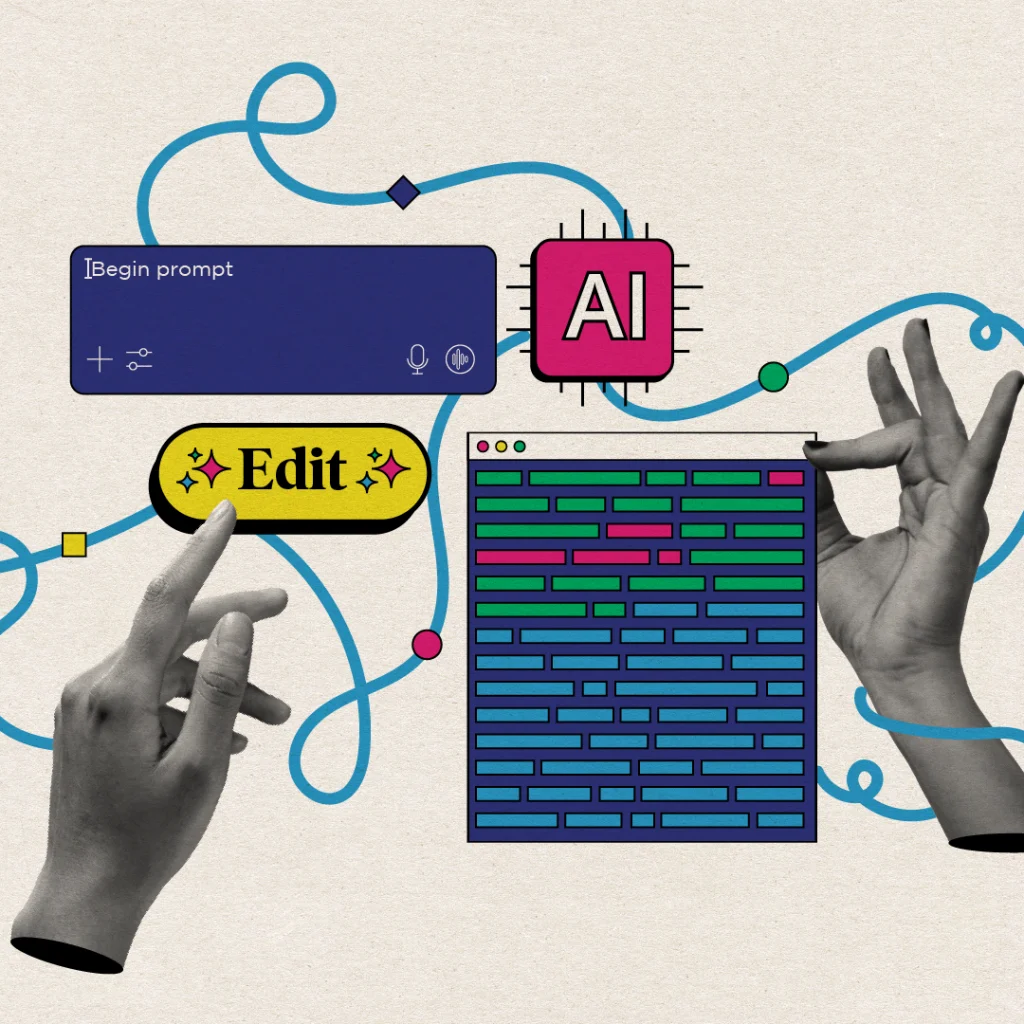
It’s undeniable that generative and agentic AI offer valuable scalability and efficiency, but they are limited when it comes to understanding complex human interactions, creativity, and context within a multi-partner GTM strategy. That’s why we’ve made AI a support tool rather than a replacement for human oversight.
By combining AI’s speed and efficiency in refinement and content creation with human-generated baseline content, you can accelerate the GTM process. Add AI to a mix of strategic insight and the creative expertise of experienced marketers, and you can use both to deliver high-quality, aligned, and impactful content that meets everyone’s needs in a multi-partner ecosystem.