

Image by Jenni Lydell
Clients are increasingly asking me how our recruiters use AI at 2A Recruiting & Staffing.
The truth is, AI is making it easier for candidates to apply to more jobs, leading to a surge in applications, and recruiters need good tools to sort through them. However, the reality of how we use AI is more nuanced than many people assume.
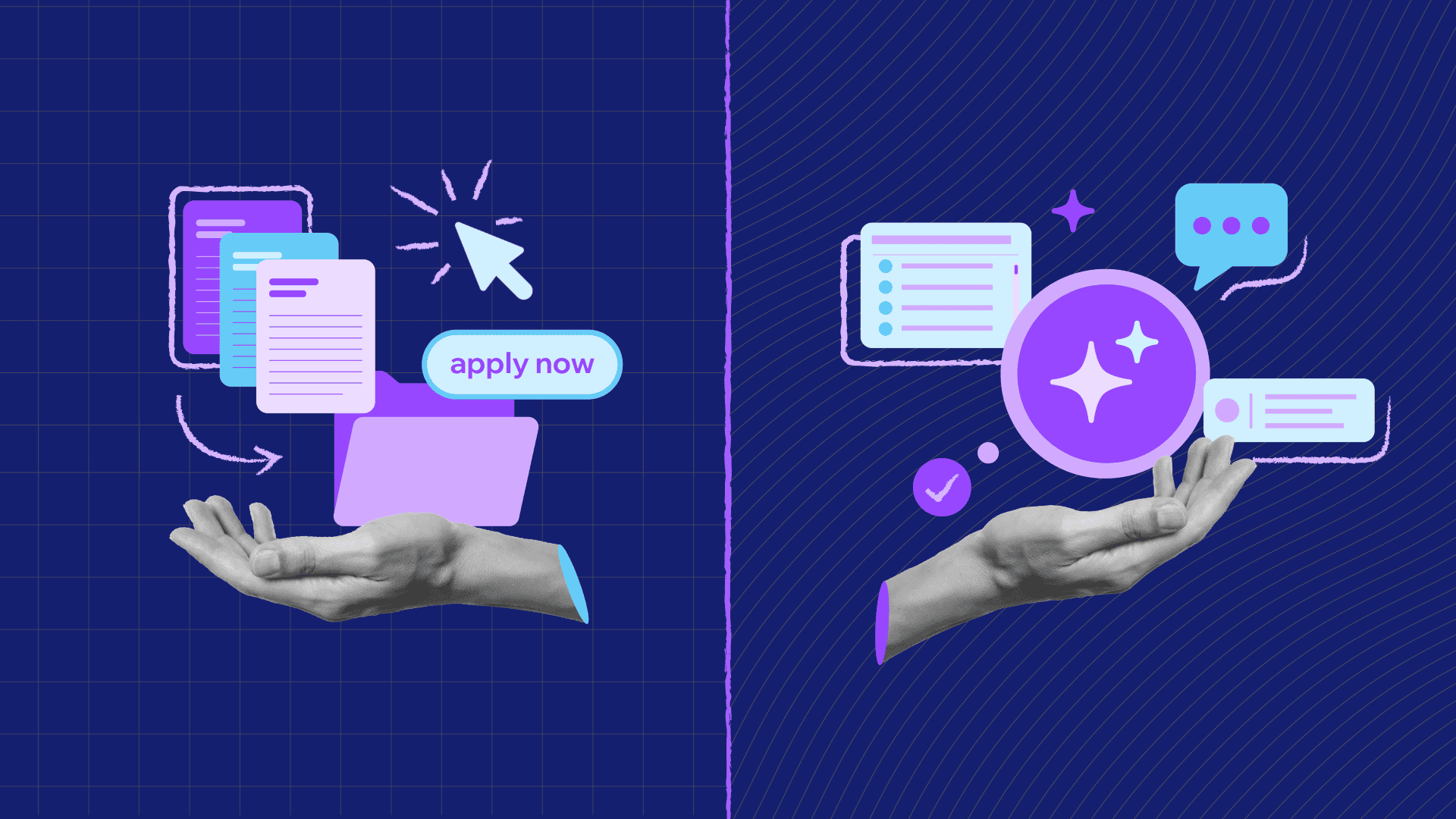
We use AI to make our process more efficient, but we don’t use it for making decisions about which candidates to phone screen, or which to pass along to our clients. To better understand what AI recruiting tools we use, it helps to differentiate between automation and AI:
Automation: Ways to improve efficiency and organization, but not evaluate candidates.
- Calendaring
- Email templates
- Knockout questions in our ATS (multiple choice questions that filter candidates, like “Do you live on the West Coast?” if a PT time zone is required)
AI: A synthesizer of information, a thinking partner, and a speedy writer
- Drafting job descriptions with inclusive, effective language, using our 2A template
- Getting us up to speed on new industries or roles
- Brainstorming candidate profiles and sourcing strategies
- Drafting or refining candidate summaries sent to clients
Do you use AI for resume screening?
The answer is no, not yet. AI tools for reviewing resumes just aren’t that good right now. Our ATS has an AI resume screening tool that I’ve piloted, and I’ve often found myself disagreeing with it. Beyond sometimes failing to see a basic match between role and candidate, the tool also doesn’t know everything I do about a particular team or a manager that I may have gained from years of experience working with them. For creative roles, it doesn’t work well at all. For example, it can’t review a graphic design portfolio or watch a video reel. And many resumes we get are unreadable by our ATS.
Of course, the potential for bias in AI looms heavy in my mind as well, and I’m mindful of not perpetuating inequities that already exist in hiring. There’s growing research showing that AI resume screening tools can reflect and even amplify historical biases in hiring data. And as a recruiter, the idea that I might miss the perfect candidate is enough to keep me up at night. Ultimately, it doesn’t seem that the benefits outweigh the risks.
AI can’t replace the human side of recruiting
I certainly don’t use any AI tools to interview candidates on our behalf. I see a big part of my job as building relationships with our candidates, so these tools seem counterproductive. I have tried out AI notetaking tools during phone screens, especially for technical roles where there’s lots of technical details. Generally, we avoid them because being recorded and transcribed can make candidates feel awkward, and can make it harder to build real relationships.
So much of what makes a great recruiter is their relationships with candidates. The best recruiters I’ve worked with know their candidates deeply. At a previous firm, we used to joke that one of our senior recruiters could tell you not just a candidate’s career history, but the names of their kids—and their pets. When it comes to negotiating a tricky deal, or getting a candidate to lay their cards on the table when it matters, candidate relationships are extremely important.
I really believe in 2A’s focus on kindness and taking care of our people, and for me that starts with the candidate experience. I’m a “helper” at heart, and giving one job seeker, who might be navigating a brutal job search, a good experience, makes me feel I’ve done something meaningful that day. And it’s also the part of the job that’s hardest to replicate with technology.
Automation and AI can speed things up, but ultimately the human touch is still just as essential in our recruiting process.