
Blog
Virtual assistants

10/16/2015

The rise of virtual assistants

By Renato Agrella

Virtual assistants

Facebook recently launched their virtual assistant “M”, which is only available in San Francisco. This move brings the competition to Microsoft’s Cortana, Apple’s Siri, Baidu’s Duer, Amazon’s Alexa and Google Now. It’s funny that Google’s assistant doesn’t have a human-like name. In a world where devices and information are becoming the center of all interactions, it makes total sense for companies to reach customers in more human ways. Here’s my experience trying to communicate with some of these virtual assistants:

Siri: I have used iPhones since 2007 and when Siri came out I was super excited, but that excitement was quickly shattered by the bad experience. In full disclosure, English is not my mother tongue and my very thick accent was my initial excuse for the bad experience. However, after several years of trying and multiple updates from Apple the experience has only improved to mediocre. I’m not a big fan of someone that suggests a famous Chinese writer when I am trying to find the closest bakery.

Alexa: I have only used the Fire TV voice search which doesn’t have the full functionality of Alexa. I was impressed by her accuracy, all my queries yield the correct result and that was pleasant. At some point, I actually thought that my accent was magically gone. However, to be fair I was not using the full functionality of Alexa but only searching on a contained collection of movie titles.

Cortana: I’ve used this one for couple of months. The best thing about it is the ability to use it both on your mobile device and your laptop – This might apply to Google and Apple if you only use their OS and devices. The voice recognition was not that good at the beginning but rapidly evolved into a very reliable way of search things in both my devices and the web.

It seems like the success of virtual assistants will rest on their ability to adapt and learn from our requests and interactions to provide accurate results. This sounds very similar to what we do at 2A. Are virtual assistants trying to take over?


bring on the waterworks

09/30/2015

Bring on the waterworks

By Abby Breckenridge

bring on the waterworks

A few weeks ago, a good friend reached out to me and another friend about a mentoring situation she was struggling with at work. Her mentee was a young, ambitious, well-respected female developer in a mostly male company. She had recently cried in front of more senior colleagues in response to some reasonable feedback, and was feeling ashamed and regretful. She wanted advice on what she should do, not wanting to build a reputation as “the girl that cries.”

After much discussion about the pros and cons of crying at work, we basically came to this:

Shake it off.

Crying may not be the best way to get things done at work, but it happens. I’ve certainly done it, more than once. After a quick browse through the internet, it became clear that we are not alone in our advice. Apparently Sheryl Sandberg declared its ok to cry at work in 2013.

“Look, I’m not suggesting that the way to get to the corner office is to cry as much as possible. Nobody is going to publish the next Seven Habits of Highly Effective People and say that crying is one of them. But I am saying that it happens…Rather than spend all this time beating ourselves up for it, let’s accept ourselves. OK, I cried, life went on. And I think that’s part of the message of Lean In, like we are human beings, we are emotional beings and we can be our whole selves at work.”

In all of our job descriptions at 2A, we include this clause:

We like what we do, and we want to work with people who are excited to be at work, and nice to be around.  At the end of the day, work relationships are a big portion of our lives, and we want them to be rewarding and enjoyable.

To me, that means we want real whole people on our team. And if you’re a person who cries when you get emotional, bring it on.

Mile high revelations

09/16/2015

Mile high revelations

By Theresa Howe

Mile high revelations

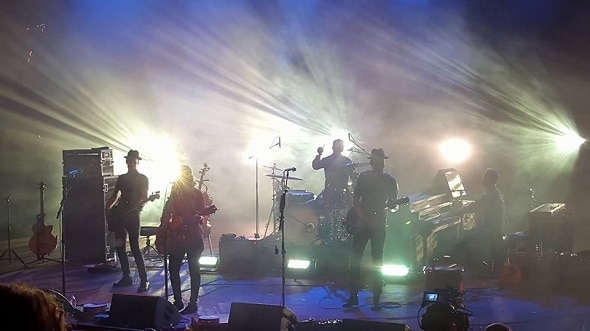
Red Rocks Amphitheatre in Colorado might be the best setting to see a show, ever. Nestled amongst the towering red rocks that give the place its name is a 9,500 seat outdoor venue, with great views of the stage and the surrounding Colorado landscape. It’s worth visiting just to see, but to see a performance there is a privilege. It’s as though playing in such a beautiful place inspires the artists to a higher level and the concertgoers to be more attentive. The thin air could play a part in that, but I like to think it’s the magic of the environment.

I had the opportunity to attend Brandi Carlile’s most recent show at Red Rocks in August. I’m a big fan, so to me, it is perfectly logical and normal to fly to another state just to go to a concert, especially at a place like Red Rocks. It was an evening with a couple of my favorite storytellers. And I happened to be sitting in the third row.

Anderson East was the first opening act and brought a bluesy charm to his set. Gregory Alan Isakov was the second opener. He’s a Colorado guy, who gardens and writes sparse-yet-lush folk songs with powerful narratives. You can see, hear, taste and feel every detail of his songs. The guys he plays with are a close-knit group of friends, including the stellar violinist Jeb Eagle Bows (great name, right?)

After the sun went down and the sky filled with stars, Brandi, the Twins (guitarist Tim Hanseroth and bass player & identical twin Phil Hanseroth), long-time collaborator and cellist Josh Newman and a drummer whose name I didn’t catch took the stage and things really kicked-off.

Carlile’s big, bell-clear voice remains the center of the band’s work, ranging from a sweet croon to a roar. Their set list moved from barn-burning to ballads and back again. She brought back Gregory and Jeb for a fun John Denver medley. She also closed with a cover of the Avett Brothers song Murder in the City, her version a poignant re-telling, considering she married her wife three years ago and their daughter is a year old.

What always impresses me is that though their songs are about the big things: love, loss, regrets – they have a way of making listeners feel like they know exactly what triggered the creative process. Brandi makes you feel all of the emotions that underpin her songs. Her stories are alternately sweet, sad and inspiring, but unbeatable when experienced live, in a gorgeous setting.

Who tops your storytelling playlist?

Parental leave

09/03/2015

When parental leave gets real

By Abby Breckenridge

Parental leave

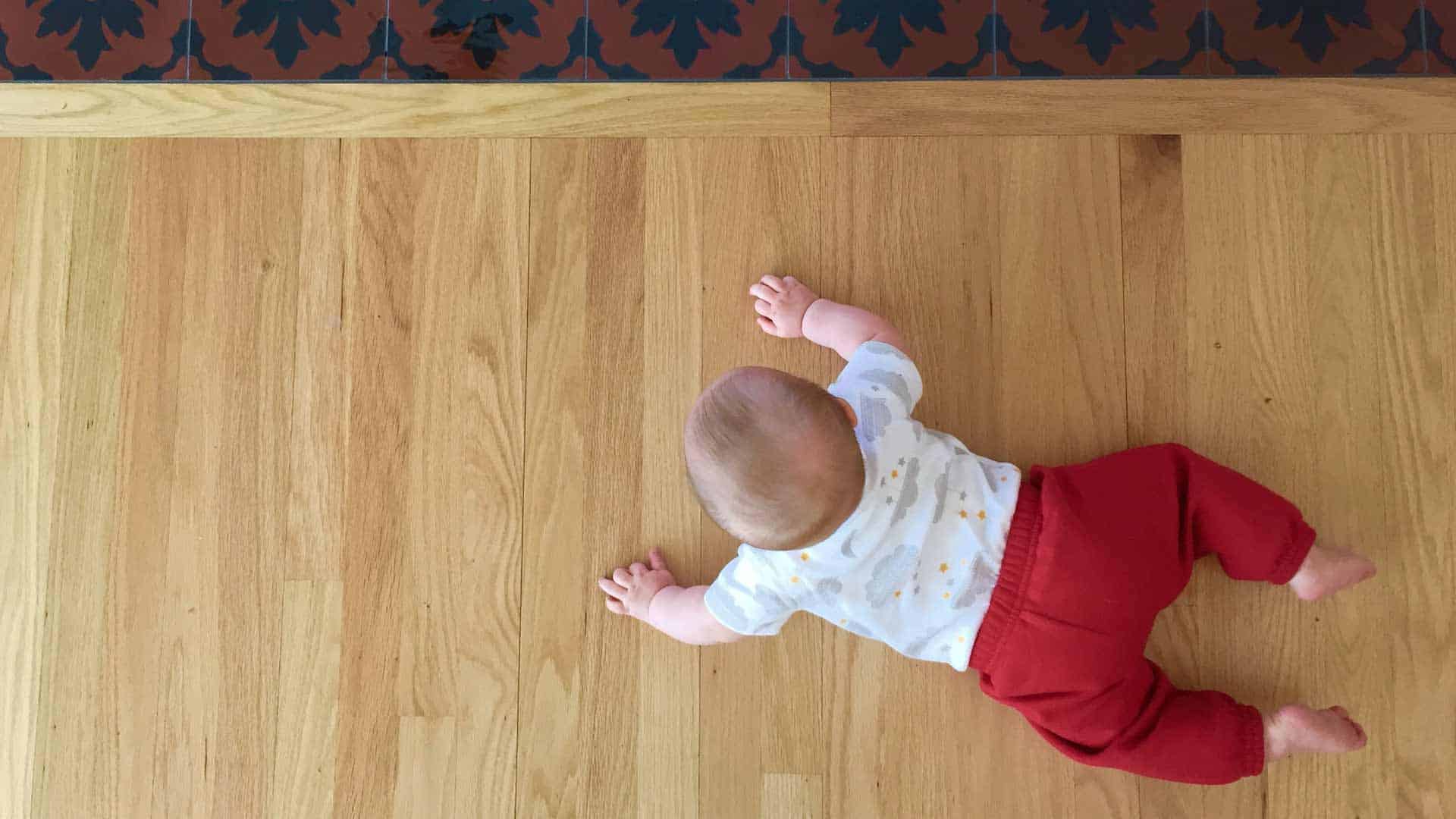
My husband isn’t technically a millennial, but he’s close. That, and the fact that we’re juggling a new baby and two careers made me especially interested in Claire Cain Miller’s “Millennial Men Aren’t the Dads They Thought They’d Be” in the New York Times a few weeks back.

Miller writes that while millennial men aspire to more egalitarian relationships—more so than any other generation—as they advance in their careers, they adopt more traditional roles.  She attributes the shift to unsupportive workplace policies and a gender divide in the way workers respond to the pressures of employment.

“The research shows that when something has to give in the work-life juggle, men and women respond differently. Women are more likely to use benefits like paid leave or flexible schedules, and in the absence of those policies, they cut back on work. Men work more,” Miller writes.

My husband works for a small architecture firm, and they’ve generously let him cut his hours to accommodate spending Wednesdays with our son. Similar to what many working moms have experienced for decades, he already feels the tug of what a reduced schedule means for his opportunities and perception at work.

According to John Oliver, the US and Papua New Guinea are the only countries that require no paid maternity leave. And while there’s been some good news recently about strengthening of family workplace policies with Microsoft and Netflix expanding parental leave, we obviously have a long way to go. In the meantime, I am grateful to have an almost-millennial partner who’s committed to working through the challenges of balancing family and work, and taking advantage of modern workplace policies that allow him to prioritize parenting.

Maybe by the time my son enters the workforce, we can come up with something more useful to offer parents than a free meal at Hooter’s on Mother’s Day.

Self-talk

08/18/2015

Talking to the man in the mirror

By Kelly Schermer

Self-talk

Michael Jackson might have been onto more than he even knew.

His song “Man in the Mirror” talks about how we can change the world around us “starting with the man in the mirror.” According to a recent scientific study, simply talking to the man in the mirror can help us affect positive change in our lives too.

For decades, pop psychologists and motivational speakers have made millions selling new methods for talking to ourselves – to the point that the fundamental activity itself has become a ridiculed stereotype all its own (remember Stuart Smalley from Saturday Night Live?).  The science behind these methods has been soft at best until recently.

Ethan Kross, a psychologist from the University of Michigan, has shown that when it’s done correctly, we can use self-talk to help ourselves make better decisions, overcome our fears, and more successfully confront challenging situations.  Self-talk, as described by Kross, can help us distance ourselves from the issue, reframe the situation, and gain a new level of objectivity.

Through his research, Kross has developed a simple framework to help you make a compelling case to yourself.

  • Start by calling yourself by your first name which helps to change your perspective on the problem.
  • Identify simple steps you need to take to achieve your desired result so the issue becomes surmountable.
  • Mitigate your anxiety and put the problem in larger context by reminding yourself of your good qualities.

The next time you’re feeling nervous about meeting a challenge head on or you need some help managing a situation, you can feel confident about turning to your best advisor, YOU.

Anthony Bourdain at the Paramount

08/04/2015

Genuine with a side of snark

By Theresa Howe

Anthony Bourdain at the Paramount

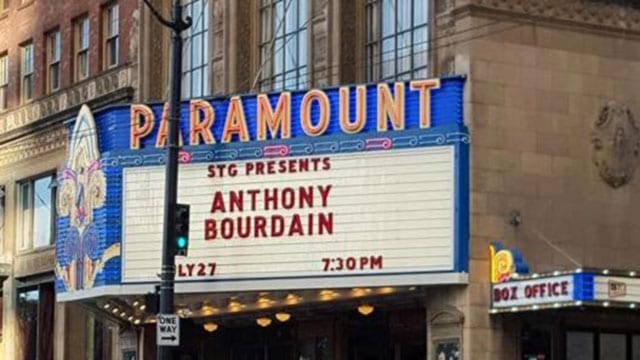
I have long enjoyed watching Anthony Bourdain’s travel shows. He’s a great writer and his personal story is also compelling. I occasionally find his snarkiness to be grating, but appreciate that he tends to keep it real – would you eat a recently deceased warthog’s colon, raw?

I was curious what the live version would be like, so got tickets for his stop in Seattle at the Paramount. He lived up to his reputation, cutting away at the oh-so-American obsession with fame, the elevation of food to bizarre levels of importance while people are starving in our own country, and the excesses we portray in all of their disturbing glory.

Once he settled into the heart of his talk, it became clear that beyond cooking, beyond travelling, storytelling is what drives him. Yes, he has had many madcap experiences on which to draw and his writing and visual storytelling reflect that. During the Q & A he talked extensively about his move to CNN, how much freedom he and his creative team are given, and how being a part of CNN has allowed him to go to places where he couldn’t previously, like Iran.

He kept circling back to the idea that when visiting places you don’t know and cultures you can’t possibly understand, being surprised and thrown off is exactly what you should be. He also underscored that he goes places, asks really simple questions, usually over a meal, and listens to the amazing stories people tell him. He doesn’t care what’s cooking, he cares about who is cooking it and why and what it means to them.

He remains foul-mouthed, hilarious and opinionated, but beneath snark and sneer, he’s managed to retain a curiosity about the world and the people who live in it and uses that gift to tell some amazing stories. He asks questions, and we get to see the answers.

What’s your favorite way to get people to tell you stories?

Problem Solving

07/21/2015

How to problem solve with email

By Kelly Schermer

Problem Solving

A well-written email can greatly simplify a complex problem.  Which is not to say that email is simple to write.  Through trial and error, I’ve developed a set of guidelines I rely on to help me address more complex issues through email. Using these guidelines in conjunction with tips on email etiquette and form has helped me to improve the overall effectiveness of my correspondences.

  1. Open with the punchline. Figure out exactly what you need from your reader and address it at the top of the email.  In the next line, provide a high-level explanation about why the decision is potentially a complicated one.  This helps the reader understand exactly what is required and indicates that a carefully considered response is expected (a critical message to help the reader break out of rapid-fire emailing to which we are all prone.).
  2. Organize the details. Provide pertinent information such as background, contingencies, follow-up questions, and assumptions after you’ve set up the problem. Think about the problem as a story that the reader hasn’t heard yet; what is the order of information that will make the most sense?  What is the right level of detail to include?  Use section headlines with clear formatting (ie. bold, underline, spaces) and bulleted lists to create visual order and help the reader more easily consume the information.
  3. Communicate your next step. Tell the reader what and when you are going to do next, and how you would like for her to be involved. You may want to provide a couple of options from which she may choose, but make sure you state your timeframe for action so you’re not “waiting by the phone” wondering what your next step should be.

Email seems like it should be easy and quick to compose.  Sometimes it is neither, and that’s okay.  Because when it’s handled well, it has the potential to dramatically improve communications and simplify your overall work.

Have you discovered your own tried-and-true email tricks? We’d love to hear them!

US Women's FIFA World Champions

07/07/2015

Victory!

By Theresa Howe

US Women's FIFA World Champions

In case you were under a rock, the US women’s national team won the World Cup in record fashion on July 5th. It was a solid 5-2 victory over Japan, who had bested the US in the previous World Cup final.

Japan has a great team, very technical and disciplined. However, Carli Lloyd was on fire, scoring a hat trick within the opening 16 minutes (fastest ever), with an additional goal in that same time frame from Lauren Holiday. Let’s just say I had a pretty good feeling our ladies would win when Lloyd shelled Japan’s goalie from 54 yards out to take our team up 4-0. Japan fought back, but didn’t have enough time or opportunity against a solid defense, even with excellent goal scorers.

What’s more interesting from a marketing perspective is that the game was the second most watched soccer game in US history – coming in only after the final for the men’s World Cup last year, which featured Leo Messi and Argentina vs. the eventual victors, Germany.

In 1999, the last time the US women won the World Cup, 17.9 million Americans watched. This year, 25.4 million were watching. The US women have long been a compelling story, and I’m glad so many people were watching. I can’t wait to see what they can do in 2019.

I ❤ NY

06/24/2015

For the love of logos

By Daniel Schmeichler

I ❤ NY

We’ve all read useful pointers that separate good logos from ones that miss the mark.

In general, a logo should be:

  • Distinctive
  • Simple
  • Adaptable

Doesn’t everybody love NY?

From a practical perspective, we also strive to create logos that are effective in black and white or color, with a focus on form. And, given the numerous channels where your logo might appear in this day and age, it’s even more important to keep in mind that logos should be truly scalable, from 16×16 pixels to the side of a building.

We love creating logos, especially for new companies who are seeking their first opportunity to make an impact on potential customers. Although we try to structure the process to be as straightforward as possible, in essence, we’re forming a partnership that will help us see into the heart of the company. That’s how we find out what your logo and messaging should communicate.

The process of discovery helps us gain critical insight into the business in order to understand what direction we should be going in. We ask questions around audience, objectives, personality, plans for growth to help characterize your company so we can see your vision for the future. We create brand guidelines to be a roadmap on our journey to visual identity.

It’s only after we know how you see yourself that we can envision how the rest of the world should first encounter your brand, through your logo. Is your brand speaking your message?

Will the World Wide Web die?

06/09/2015

Will the World Wide Web die?

By Kelly Schermer

Will the World Wide Web die?

The global internet faces the threat of being splintered into to a collection of regional internets. Many of the experts consulted for the Atlantic article on this topic, consider the occurrence to be only a matter of time.

When I read this, it shocked me to learn that I feel protective and proud of the World Wide Web the same way I do of the American value system (ie. human rights, democracy, the American dream). For better or worse, I believe the internet has become an idealized standard which inspires the best, most optimistic side of humans and business. And I believe it’s our duty to protect our best intentions for it.

Do you remember a time before the internet existed? Back when international communication depended on complicated country and area telephone numbers, blue airmails, and a healthy dose of disbelief that correspondence of any kind would actually work?

I do. To me, the world felt too big, unknown, and unwelcoming.

Today, however, I find the same world feels knowable, welcoming, and just big enough to think I might be able to try it all. I attribute much of that change to how easy technology and the internet has made it to talk across geographies, time zones, languages and even cultures.

We’ve overcome boundaries by using the global internet to dissolve the questions of ‘how’ and ‘where’ so we can focus on more interesting questions like ‘who’ and ‘what.’ I engage with clients across the world and partner with agencies who work while I sleep without anyone feeling farther than my inbox.

Imagine if we were to suddenly implement new boundaries and limitations that call out differences and complicate our ‘how’ and ‘where’ again? How would this change the way we all view and experience the world? How would it shape new prejudices and misrepresent true intentions?

The arguments for a regional network are not unreasonable in and of themselves: tighter control on information, regional commerce oversight and management, localized data storage, and (the big one) the opportunity to capture more money. But these arguments discount the mistrust and distance that inevitably result from erecting walls of any kind, even if they’re digital.

Let’s be clear: I am NOT A TECNHICAL EXPERT ABOUT THE INTERNET. I might be able to answer a 100-level Jeopardy question about how it started and reset my modem in the event of a storm, but that about maxes me out. Still, I believe I am qualified to talk about what it would mean if it fractured into regionally managed entities because the change could trigger a global paradigm shift for non-technical users, such as myself, and set us back decades in how we perceive ourselves as a global community.

The global reach of the internet today is critical in that it unites communities virtually while representing and upholding our most optimistic aspirations for ourselves in digital space. I believe that we need to challenge ourselves to be worthy of those goals and to trust our neighbors to do the same by resisting efforts that would keep us from a shared global internet.