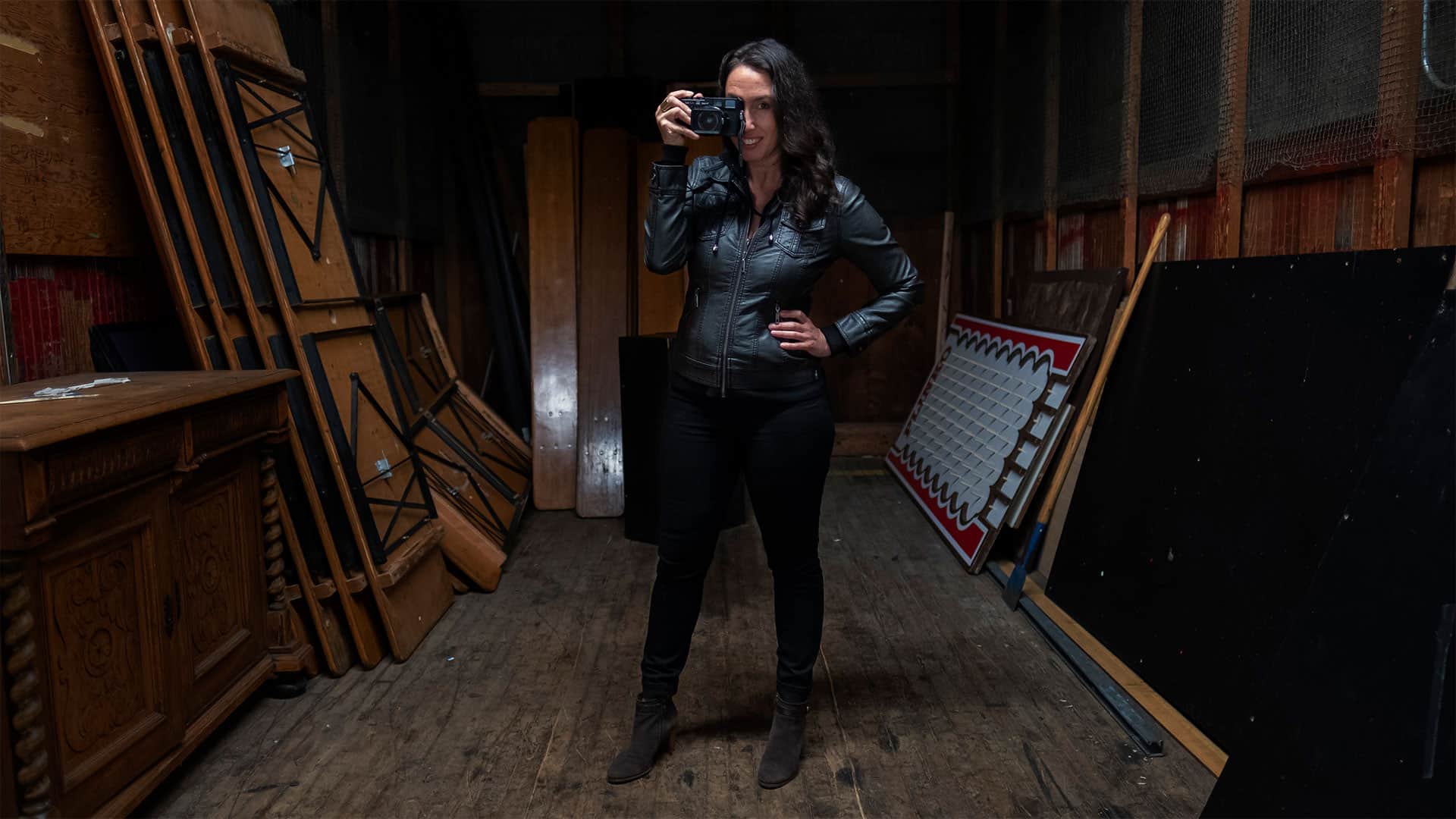
For more than two decades, photography has been my passion. I’ve used my camera to tell stories that aren’t being told, focusing on diverse cultures, social justice, and environmental issues. For several years, I documented daily life in Cuba, from the urban streets to the countryside. As a recent Elevating Stories presenter, I shared my perspective on visual storytelling and how a willingness to have a point of view can lead to more poignant and connected photographs.
I believe having a point of view about what I’m photographing is imperative. It’s what allows us to see in a deeper more sensitive way. When I embarked upon my Cuba book project, I began the visual journey with a romanticized notion of the Cuban revolution, looking for positive remnants throughout the island nation. But while on location, it became evident there was more to the visual truth that I could unveil. Over time, I better understood the complex dynamics and many layers. In Cuba Black and White I wrote, “it’s easy to romanticize revolution, it’s harder to live in its aftermath.”
I found beauty and ingenuity amongst struggles. I found a nation waiting for a change and hoping for a rebirth, reflected as a metaphor in my images of the maternity series. In my book I wrote, “It was ultimately within the shadows that I found Cuba’s dichotomies in all their beautiful trying complexities. … Within revolution there’s music and the rhythm of life happens.” That rhythm of life is the pulse and essence of what Cuba felt like in all its dynamic truths. That is the feeling portrayed in the images in my book.
Achieving this deeper understanding was only possible by adopting a point of view, investing time, listening closely, and approaching the work with a willingness to see things differently.
When you think of fundraising for colleges and universities, your first thoughts are probably something like “ugh, junk mail and relentless phone calls from students asking for money!”
You’re not wrong, but as a former higher-ed fundraiser, allow me to offer a counter perspective.
What really bugs you, other than paying off student loans (been there), is that you’re getting the same content and message every year, and it’s not personalized to your experience.
Universities aren’t staffed and resourced like Fortune 500 companies. It’s usually one person who is responsible for planning, segmenting, and executing the marketing campaigns. With so much to do, it’s easy to de-prioritize content and lean on the letters, emails, and call scripts from last year.
The Dartmouth College Fund was in a similar situation last fall, planning for a campaign that celebrated the school’s 250th anniversary. But they lacked the bandwidth to create unique, new content worthy of the milestone. That’s where we came in—delivering a feature animation, four GIFs, two emails and an infographic. Altogether, this fresh approach inspired over 4,700 donors to make a gift, nearly doubling the campaign’s 2,500-donor goal.
Content matters. Some super famous tech CEOs might even say “content is king.” We’re here to help when other things get in the way, so you can keep your audience… content.
When the central character in your story is a 730-mile river, that means swimming at sea level, flying at 10,000 feet, and zooming out across states to capture all perspectives. In our third installment of Elevating Stories, we followed Heather Hansman down a natural storytelling path where she explained the secret to weaving together many points of view.
As part of the research for her book, Down River: Into the Future of Water in the West, Heather paddled 700 miles of the Green River in a solo pack raft from source to confluence, getting a firsthand look at the ongoing fight over water rights on the largest tributary of the Colorado River. Along the way she interviewed stakeholders such as ranchers, farmers, conservationists, and city officials while learning about the river itself at water level. Her book expertly bridges science, adventure, and conservationism, bringing together information from different camps to enlighten the reader.
Heather makes it look easy to build multiple perspectives and storylines into one narrative. Here are three tips we learned for making sure the big picture captures it all and keeps your audience engaged:
Take a journalistic approach. Do extensive background research to understand the subject matter and build a comprehensive story. Once you speak the language of a topic you can write accurately and authentically.
Don’t act like an expert if you’re not one. You need a solid foundation to ask the right questions, but then let the experts do the talking. This allows you to listen and discern the most salient points.
Make your narrative action oriented. Weaving in some adventure keeps the audience hooked. The tricky part is to stay true to your thesis and main points.
Heather reminded us that solid storytelling starts with asking the right questions and a having willingness to go on a journey to learn more.
At 2A, a lot of our design efforts go into shaping presentations to tell a great story. We’re constantly pushing the limits of what’s doable in PowerPoint, striving to make presentations interesting and engaging rather than a bland slog through bullet points. Making them sing requires staying on the pulse of the latest trends. With a new year upon us, here are some hot design tips to make sure your presentations aren’t trapped in the past.
Sanding off the edges: removing the details from illustrations and icons
Screens are becoming capable of higher definition all the time—from Apple’s Retina to Microsoft’s ClearType to 4K TVs. But rather than cramming details into every pixel available, the savvy designer takes a simpler approach to the crisp clarity provided by high-res screens. Here’s what’s hot:
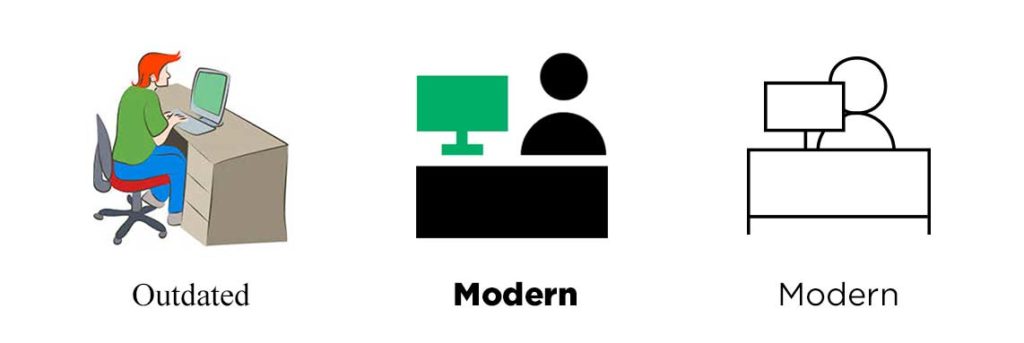
Illustrations are headed toward one of two minimalistic paths: solid block colors or open outlines.
Icons are becoming more abstracted rather than finely detailed.
Similar graphic styles are used to communicate information; for instance, infographics are replacing charts, visualizations are superseding text.
Our advice? Embrace those designs. Viewers can only take in so much visual information, especially when it’s accompanied by a speaker. Cutting graphics down to the bare minimum will make sure audiences take notice of what you want to emphasize. Gain a little pop by combining text and minimalistic graphics to concisely communicate information.
CAN YOU HEAR ME NOW‽ Typography is getting bold with all caps
Maxi typography, which uses all caps and often dominates the page, is a growing trend in design. Look for:
Bold, all-caps, sans-serif fonts that serve as the hero and emphasize titles and text.
Full bleed layouts as the backdrop for maxi typography, making the text jump off the page and immerse the viewer.
Larger text means that photographs and texture can be placed inside typography to draw the eye.
As we like to say, “less is more work.” Like streamlined icons, just because something is simplified does not necessarily make it easier! Careful planning will go a long way toward helping your text make its greatest impact. Get ready for some louder typography in 2020—your words are going to make a statement.
It’s morphin’ time: PowerPoint threads the story with motion
First introduced several years ago, PowerPoint’s Morph transition is gaining a foothold as presenters realize its full potential. You’ll see more of Morph in 2020 because it provides an incredibly easy way to add elegant visual transitions. Here’s what you need to know:
Instead of spending hours assembling complex animations, Morph allows you to naturally and easily revise motion as you design in PowerPoint.
Morph or Fade can work wonders to flow content between slides, smoothly guiding viewers through your story.
Animation and transitions in PowerPoint are extra effective when combined with the graphic and text treatments discussed above.
As we move into a new decade, it’s exciting to see how presentation methods continue to grow and evolve. Let’s leave the days of “death by PowerPoint” behind and forge dynamic new presentations!
Imagine climbing a mountain with only one arm. In the documentary Stumped, Maureen Beck does just that. “We don’t climb to be special, we don’t climb to win some silly awards,” she says in the film. “We climb because we love climbing just like everybody else.”
When we think of disabilities it’s easy to think of the physical challenges people like Maureen face. But in today’s modern world, where many of our public spaces have been changed to support those with disabilities, it’s our digital spaces that lag behind. When design is approached from a human-centered perspective with disabilities in mind, everyone can benefit from more accessible products.
Who hasn’t appreciated closed captioning at a noisy event, an elevator instead of stairs, or audio books? Additionally, by making these accessibility features out in the open and available to all, they become less stigmatized and individuals are empowered to select interaction methods that work best for them—regardless of ability.
Here at 2A, we’re putting people front and center in every step of our web development process. Our design team is constantly checking for contrast and font sizes to help people with low vision read more clearly. We design our sites with alt text and tab stops to help people who are navigating with a screen reader. And our development team tests our websites in staging environments before anything goes live to make sure we’ve incorporated accessibility measures.
Do your part
Ready to start doing your part to make the web more accessible? Here are some places to start:
Read up on Web Content Accessibility Guidelines (WCAG) to understand how websites can become more accessible. WCAG measures website content and accessibility by four criteria: perceivable, operable, understandable, and robust.
Install the Chrome extension Accessibility Insights for Web. This tool allows you to run quick automated tests that can catch 30-40% of the most common WCAG issues such as low contrast text, missing alt text, and tabbing.
Involve people with disabilities in your user testing to accurately uncover usability issues. Having them test your primary workflows with tools they already use is a great way to pressure test your digital experiences for accessibility. Be sure to offer compensation for their time (everyone loves gift cards)!
Small steps toward a send
In climbing the term “send” means to climb a route without falling. When climbing a difficult route, it’s common to try multiple times before sending. Failing forward is just a part of the process. Designing for accessibility is kind of like sending—it’s not going to happen right away, but with enough small steps we can achieve big changes to make the web more accessible for everyone.
Malaka Gharib makes sense of a complicated world by making art. As a journalist, zine-maker, and graphic novelist, Malaka is in her element writing and illustrating her unique perspective of the world around her. We had the pleasure of learning about her creative approach to storytelling in the latest edition of Elevating Stories–a series of talks with authors, experts, and creators held at 2A.
Malaka traveled to Seattle from her home of Washington, D.C. to present at the Short Run Comix and Arts Festival, the city’s preeminent convention on alternative comics and handmade books of all kinds. In addition to the festival and speaking at 2A, she also used her trip to promote her new graphic memoir about growing up as a first-generation Egyptian-Filipino American, I Was Their American Dream. In an authentic conversation, Malaka revealed these lessons she’s learned from finding her creative identity and professionally publishing her first book.
You can’t always depend on your day job to be a creative outlet
After graduating from college as a magazine journalism major during the 2008 financial crisis, Malaka realized that she couldn’t rely on her 9-to-5 job for creative expression. So she figured out how to do it in her free time. By carving out time to write and draw on her own accord, she made zines and art that truly satisfied her own personal agenda.
Making art helps us persevere
As the child of Egyptian and Filipino immigrants, Malaka struggled to make sense of her personal identity growing up. She learned as a teenager that following creative pursuits could help her understand and celebrate her uncommon background. After Donald Trump’s anti-immigrant rhetoric helped him become president, Malaka knew she had to write a book about her upbringing that served as a counter argument. Self-expression enables catharsis, and Malaka was able to cope with the state of the world by taking on the biggest creative project of her life.
Zines can be storytelling building blocks
Zines are self-published magazines that don’t follow print conventions, which makes them flexible tools for storytelling especially suited to people tight on time like Malaka. To quickly get her creative energy out, Malaka’s made a habit of creating mini comic zines from a single sheet of paper during idle moments. When she faced the daunting task of creating a 160-page graphic novel, Malaka structured it as a compilation of eight zines. By breaking the novel into familiar subcomponents, she was able to control her focus and organization.
Collaborate, but don’t compromise your vision
Writing and illustrating your first novel is inherently a learning process. And for someone used to the DIY nature of zines, working with dozens of book agents, publishers, designers, and editors made for a dizzying experience. More than 60 people contributed to the creation of her book, and their guidance was sometimes in conflict. At one point, her work-in-progress novel was a problem she just wanted to throw money at to fix. But after taking command of her vision, she put the right stakeholders in place to get the best version of her book across the finish line.
To the uninformed, writing a book sounds romantic. However, Malaka’s uncensored depiction of writing and drawing a graphic memoir took us behind the curtain to understand how messy the creative process can be. She candidly shared obstacles in her journey as a storyteller, but also proved that creating something that beautifully captures your perspective is worth the struggle.
Every fall, I long to slow down from the summer pace of doing-all-the-things-because-it’s-light-until 10pm. I’m comforted by familiar habits like hibernating in a favorite sweater rediscovered in the back of my closet. And while the well-defined patterns of my work week can be reassuring, they can also lead to a lack of creativity as I get too comfortable. Fortunately, last week I was able to shake things up. After joining teammates and Puget Soundkeeper staff on their weekly Lake Union kayak patrol, I walked away refreshed with renewed creative energy to bring to my role at 2A.
Every Wednesday morning, Puget Soundkeeper wrangles volunteers to paddle the edge of the lake collecting trash before it flows into the Puget Sound. Last week our team removed 85 lbs of mostly plastic in under two hours. By getting this trash out of the water before it breaks down into smaller particles called microplastics, we are protecting our waterways and the wildlife who depend on them to survive (including humans)!
Paddling around Lake Union may not sound like storytelling for business, but it certainly sounds like 2A. Our Giving program encourages the team to be part of the community both through activities like the kayak cleanup and by matching donations. It’s also a great way to shake up the routine which was just what I needed last week—even more effective than a pumpkin spice latte.
Rick Moody has storytelling down to a science. Over the course of a publishing career that is nearing its third decade, Moody has written novels (The Ice Storm, The Four Fingers of Death), collections of stories (Demonology, The Ring of Brightest Angels Around Heaven), music criticism (On Celestial Music) and memoirs, including the award-winning The Black Veil and his latest book, The Long Accomplishment: A Memoir of Struggle and Hope in Matrimony.
Moody was in town to promote his new memoir with a reading at Elliott Bay Book Company, conveniently located across the street from 2A’s offices. Knowing that he was coming to Seattle and that he probably had time to kill before his reading, we invited him to share his insights about the art of storytelling with our team. 2A specializes in storytelling for business and we figured we could learn something from this master storyteller, who has also sustained a long teaching career, currently at Brown University.
Moody didn’t disappoint, to say the least. He opened our conversation with the classic diagram you spot on whiteboards in many a writing workshop, sometimes referred to as Freytag’s triangle, which charts the passage of narrative tension, climax, and denouement over time:
Pretty basic stuff so far. Then Moody challenged this model, which, he noted, served a nineteenth century understanding of the novel. Jane Austen, the Brontës, Charles Dickens, Thackeray et al wrote works that all, more or less, conformed to the readerly expectations set forth in this model. Conflicts are introduced, complications arise, a false climax is followed by a reversal, the real climax happens, and then the novel gracefully concludes with order restored.
In the early twentieth century, the rise of modernism in works from James Joyce, Virginia Woolf, TS Eliot, et al, introduced narrative subjectivity to storytelling. Writers became more concerned with the vagaries of individual conscious minds. And once writers began to perceive the pattern of conflict, rising action, climax, and denouement, they started considering it formulaic and contrived, and so sought a new engagement with literature.
Moody also noted that the Freytag’s triangle model of storytelling conveyed an excessively male vision of how the world works, at which moment the white board Moody was writing on collapsed, in what can only be described as exquisite timing.
According to Moody, the evolution of storytelling took a turn with the works of Russian writer Anton Chekhov, whose literary innovation was the “slice of life.” These were stories that didn’t deliver climactic scenes or tidy resolutions; instead they gave us glimpses into the everyday lives of characters.
Still, Moody was unsatisfied with the slice of life model of storytelling. So he developed an equation that he believes distills the art of storytelling to its essence. It looks like this:
S = t(B) ÷ Cn
Stories (S) equal time (t) acting on bodies (B) divided by consciousness, which can be multiplied by an infinite number.
Let’s break that down a bit further. Stories are about change, which necessarily involves the passage of time. Time only passes in relation to subjects (bodies). This process is governed by consciousness, which is the narrator. Adding multiple narrators or points of view slows time down.
We steered the conversation toward marketing narratives, asking what from literary storytelling we can apply to our work crafting narratives for businesses. Moody asserted that whether delivering the narrative in the form of a novel or an ad campaign, the same guidelines apply. Stories are about the transformation of people over time, filtered through a particular consciousness or set of conscious perspectives, and we perceive narratives in the realm of marketing campaigns this way, too.
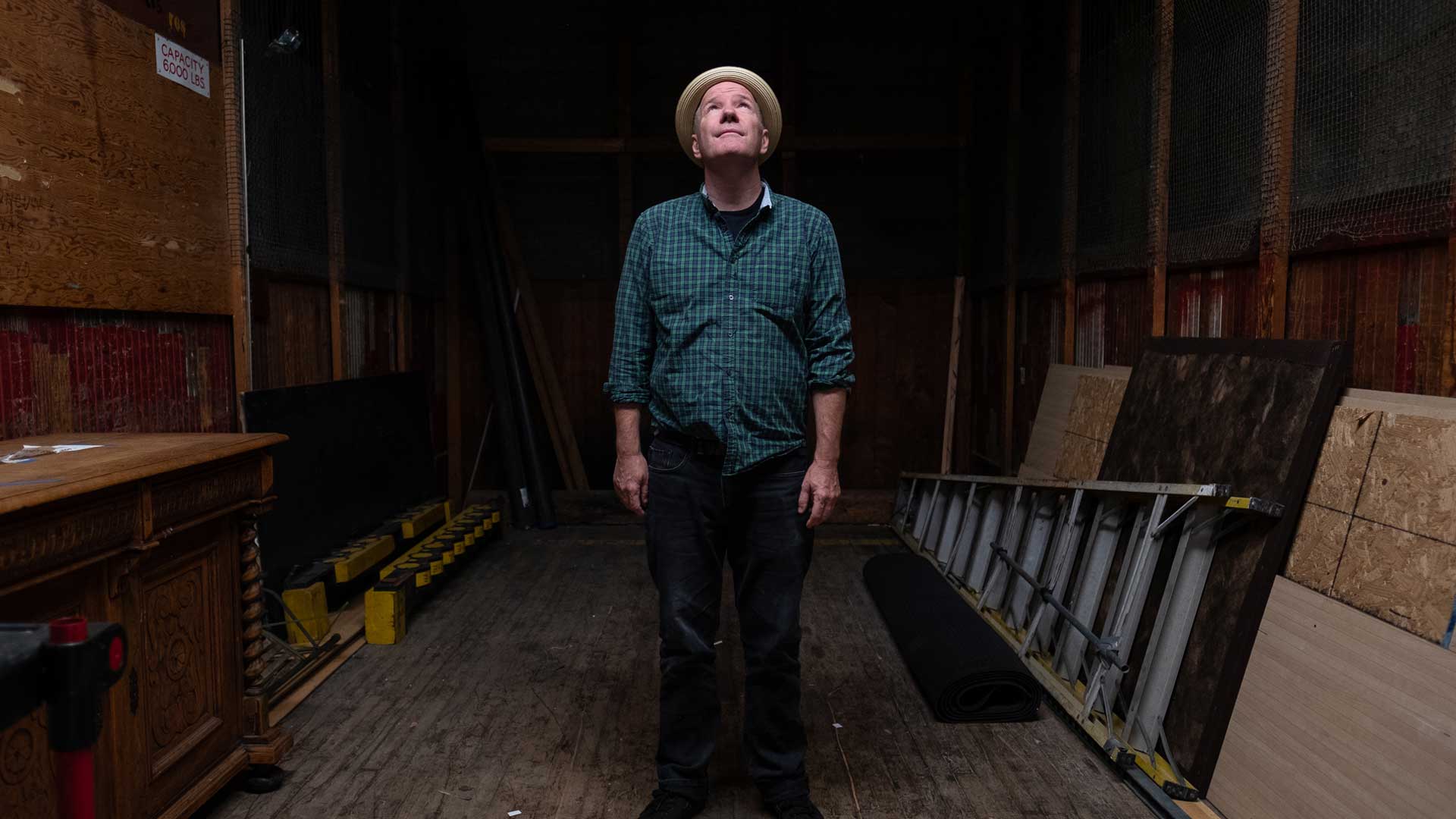
Moody’s visit marked the first of a planned series of author and artist talks at 2A, where we seek to broaden our understanding of storytelling and grow as storytellers. Our office used to be a car dealership and features a comically voluminous freight elevator with the capacity to lift 6000 pounds. We chose this as the setting for the first of a series of artist portraits to commemorate this series. As for a name, we’re calling it 2A’s Elevating Stories series, in a nod to both this fun feature of our building and for the manner by which our visitors raise the bar on storytelling craft.
For someone who generally dislikes sitting still, recovery has always been an active verb. I run, climb, hike, ski, and bike, and recovering has meant yoga and foam rolling, pulling garden weeds, or walking my dog. The idea that recovery could also be a noun that describes just resting didn’t dawn on me until I read Good to Go: What the Athlete in All of Us Can Learn from the Strange Science of Recovery by Christie Aschwanden. She roped me in with her study on whether or not beer aids recovery after running, and blew my mind with her revelation that recovery used to be a noun, but has evolved into a verb—and not always for the better.
My son is almost 2 years old and goes to daycare full time. As a household it feels like we’re sick every single week. While my son bounces back from everything within 24–48 hours, his toddler super germs lay siege on my white blood cells for weeks at a time. I used to think that I could will myself healthy with Emergen-C, Throat Coat tea, and strong coffee. Just another active-verb type of recovery to fit into my busy life.
The partners at 2A recently reminded us all that WFH (work from home) days shouldn’t replace sick days. Thinking back on it, I realized it had been six years since I’d taken a real sick day—a genuine, stay-in-my-jammies, watch-bad-TV, nap, camp-on-the-couch sick day. Instead, I would push through it, trading rest for dialing into meetings, working on projects, and responding to messages. I convinced myself these days were restful because I wasn’t in the office. But nowadays, I’m not so sure about that.
Besieged by the latest round of toddler germs, I decided to try something radical. With the support of my manager and team I took an actual sick day. I spent the day napping, eating soup, and sipping tea. I generally stayed offline and truly rested. And you know what? It worked. I got better, faster. I felt sharper at work and was a more present mom and partner at home.
One of our words we work by is “great work requires being well,” and that sentiment has empowered me and the rest of my team to take real sick days. While my recovery as an athlete remains an active verb, I’m happy to report my sick days are officially nouns again, and that is helping me stay active.
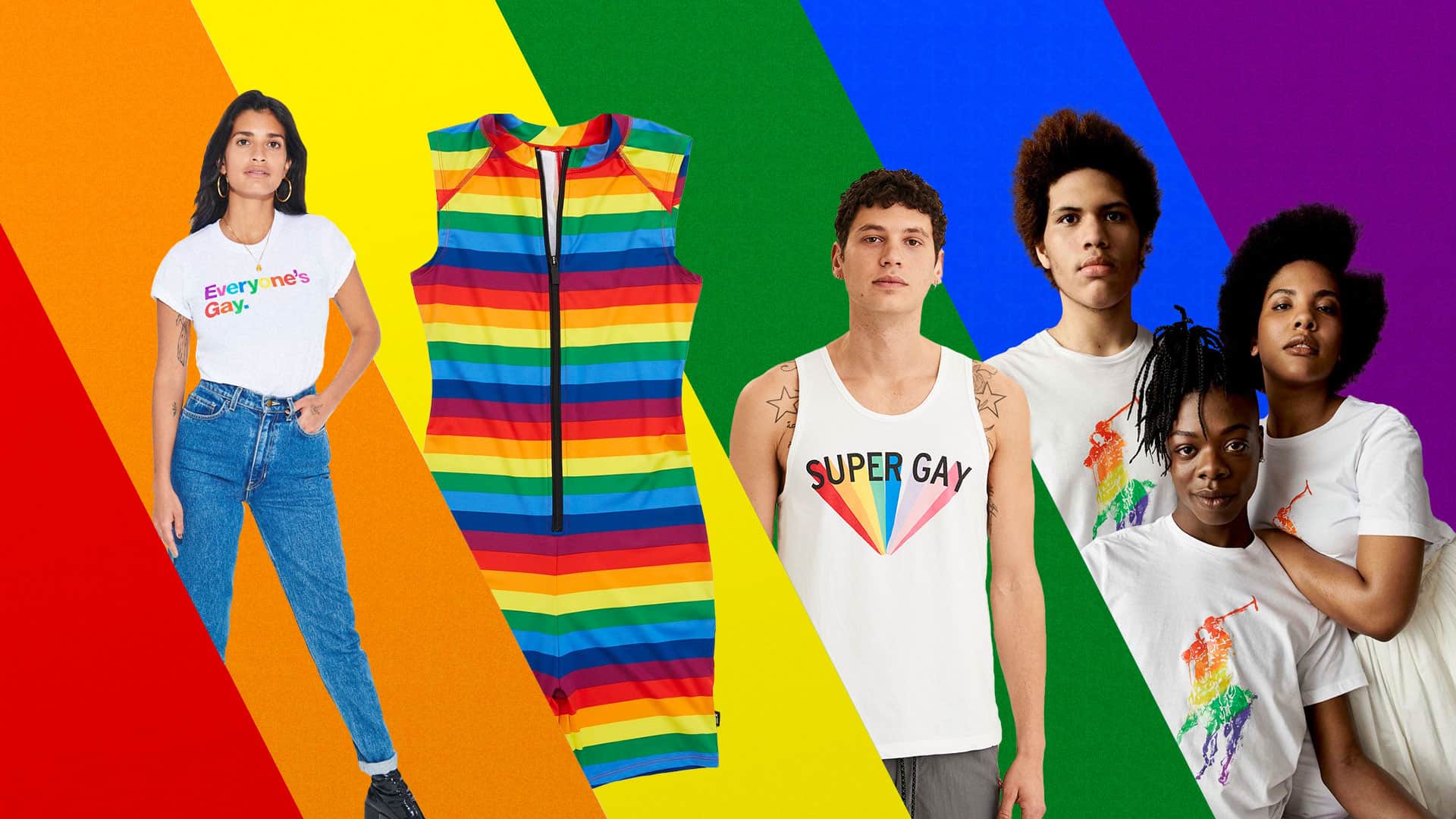
Pride month in Capitol Hill, at the very least, guarantees you’ll see some rainbows. The crosswalks are repainted, flags are hung in windows, and stickers glue themselves to mailboxes, all to rally support for the LGBTQ+ community and welcome this weekend’s parade. For-profit brands, too, are riding the rainbow wave, but it can be hard to tell which ones are just cashing in on consumers’ pride for Pride, and which ones are actively trying to make a difference in the LGBTQ+ community. Here’s how you can tell:
Is their LGBTQ+ enthusiasm inherent to their brand? For most of the large, national brands, their LGBTQ+ connections aren’t part of their overall brand stories, and instead just jump on the Pride bandwagon once a year. In this case, the rainbow filter on their logos is usually fleeting. Consider digging a little deeper to find those (usually) smaller and local companies that have a brand story connected to LGBTQ+ inclusivity. Case in point, Seattle clothing company, TomboyX, which was founded by two lesbian women who wanted to make underwear that fit regular bodies across the gender spectrum.
Are they aligned with an LGBTQ+ organization? Rainbows in June can start to feel like snowflakes in December. And many brands recognize the power of the rainbow to sell merchandise. While slapping a colorful arch on a T-shirt might make a sale, before you buy, consider where your dollars will end up. Plenty of companies are putting their rainbow revenue to a good cause. For instance, American Apparel will donate 100 percent of its Pride collection proceeds to the Los Angeles LGBT Center.
Are they using the right words? While rainbows successfully communicate a connection to Pride, they don’t really make a statement. American Eagle’s pride collection uses words like “gay” and “queer.” Messaging gets easier when you use the right words, but some brands aren’t ready to take a stand and speak up.
Rolling on a rainbow doesn’t have to be a brand’s only means of supporting the LGBTQ+ community. There are much more meaningful actions companies can take to show their solidarity during and post Pride. And brands can always opt to give up their space on the stage entirely, in favor of amplifying LGBTQ+ voices. As an informed consumer, you have the power to hold companies accountable for simply trying to profit off Pride.