Blog

07/15/2025

Joint GTM is a team sport—webinars make it playable 

Full story

By Liz Mangini

Illustration of multiple hands raising a large silver trophy, surrounded by colorful icons representing people. Arrows connect the icons in various directions, suggesting collaboration or a network. The background features a subtle computer window outline, symbolizing a digital or webinar setting.

Image by Emily Zheng

At 2A, we know joint go-to-market (GTM) strategies can feel like a fast-paced game, with multiple teams running different plays, shifting priorities, and high stakes. But we’ve also seen how well-executed webinars act like game-winning plays, turning alignment into leads, pipeline, and real revenue impact. Investing in the story of a webinar up front can have a big payoff in the end. Not only does the process align teammates on a single narrative, but it also fuels a flywheel of content to continuously generate leads. 

Bringing your whole team along 

When your joint GTM motion spans multiple organizations—yours, a cloud provider, plus one or more partners—the biggest risk isn’t lack of effort. It’s misalignment. Developing a GTM webinar, live or recorded, can fix that. When we create webinar decks and talk tracks for clients, we pull information from marketing, sales, alliance, and product teams to build a narrative that brings all major players onto the field. They’re involved in shaping the overall story and at the same time, they hear how their solutions are being positioned to customers. 

  • Cloud sellers learn the narrative firsthand 
  • Alliance teams understand co-sell plays 
  • Product knows what’s being promised
  • Cloud partners see where they fit 
  • Buyers see joint value 

When done well, a joint GTM webinar gets watched, discussed, and shared—not just with customers, but by internal teams as well. When everyone understands the story, they tell it better, and that clarity shows up in how your message lands with customers, building trust and accelerating deals. 

Fueling content flywheels 

Winning teams don’t treat webinars as one-and-done events. They build them as multi-use assets to drive further value across marketing, sales, and alliances. At 2A, we’ve helped teams at AWS, Microsoft, and partner ecosystems repurpose webinars into blog posts, video clips, slides, social content, and follow-ups. These assets have generated dozens of qualified leads when used as gated content or incorporated into targeted LinkedIn campaigns.   

The next time you’re planning a GTM motion, ask yourself: What’s the one message we want every partner, seller, and customer to take away? Build your webinar around that, then watch the alignment happen and leads follow.

And, if you need help, you know where to turn

07/10/2025

Avoid messaging mayhem with a smart content strategy 

Full story

By Andrea Swangard, Felip Ballesteros

A collage-style illustration features a grayscale hand giving a thumbs-up surrounded by colorful geometric shapes—circles, rectangles, triangles, and semicircles—each with arrows indicating movement or flow. Background is black with subtle texture and snippets of text overlayed on the shapes. The composition suggests positive motion, feedback, or process improvement.

Image by Nicole Todd

Marketing content often starts with a strong, clear message. Maybe it’s a compelling value proposition, a punchy pitch, or a narrative everyone’s excited about. But as that message is adapted across campaigns, formats, and partner collaborations, things can quickly spiral. Like the Hydra from Greek mythology, which grew two new heads for every one that was cut off, efforts to scale your story can quickly split into multiple directions.  

The challenge isn’t having too many heads—it’s making sure that they’re in sync. Without clear direction, your hero asset spawns offshoots that feel disconnected from the origin story you and your partners are trying to tell, drifting from repeatable, core ideas into vague or even competing narratives. If you’ve tried to scale a strong message across a joint campaign and ended up with a tangle of inconsistent materials, you’ve met the messaging Hydra.  

The good news? You don’t need to slay the Hydra. You just need a smarter way to guide it. 

Scaling without losing the thread 

The best place to start is by creating a shared story. Without that foundation, assets start to drift: a blog post might highlight different benefits than the sales deck, and a co-branded ebook might clash with your product page. That’s where a messaging and positioning framework (MPF) becomes essential. A strong MPF doesn’t force a one-size-fits-all message. Instead, it offers a consistent set of foundational messages, benefit language, and partner positioning that can be customized for each audience. Think of it as a flexible toolkit, not a script. 

To be useful, your MPF should be concise, accessible, and built to support creativity. If it’s a 20-page PDF no one reads, it’s time for a rethink. The most effective frameworks help teams work faster and stay aligned, while still leaving room for the nuance that makes content resonate. That’s how you scale your story without losing the plot.  

The myth of one-size-fits-all messaging 

Repurposing a strong message for a new vertical sounds easy: swap in a few industry terms and publish. But that surface-level approach rarely resonates. Customers know when content has been stickered over. It’s vague, it’s boring, and it often misses what actually matters to the audience. Effective scaling doesn’t mean repeating the same message everywhere. It means starting from shared core ideas, then adapting them to match the context. That means digging into the details: talking to subject matter experts, addressing timely industry concerns, and reshaping language, use cases, and tone accordingly. Whether it’s public sector efficiency mandates, AI scrutiny in healthcare, or tariff talk for supply chain folks, your story should feel rooted in what each audience is currently navigating. 

Course correct before chaos multiplies 

When you’re trying to scale a campaign, it’s tempting to spin up every format at once: an ebook, a deck, an infographic, etc. But if the content underneath isn’t strong and you’re missing data points, customer stories, or clear value props, those assets can end up looking good but saying very little. You risk ending up with a lot of Hydra heads with no brain! That’s when it’s worth pausing to evaluate what you’ve got. Do your current materials tell a complete, compelling story? Do they map to what your audiences actually care about? We can help assess your core content, flag gaps, and guide which formats will land best with the resources you have. Sometimes the smartest move isn’t to create more, but to sharpen what’s already there or to hold off until you’ve got the inputs to make a new asset worth building. 

Mitigate messaging mishaps 

Taming the Hydra isn’t about fighting it, it’s about guiding each head with intention. With the right starting point and a smart, flexible strategy, your core content can scale into a full ecosystem that’s as useful to your internal teams as it is compelling to your customers. 

Whether you’re planning a joint campaign with partners or trying to bring structure to your co-branded content, we can guide you down the best path (and keep those Hydra heads working in harmony). 

07/01/2025

Human vs. AI: How to know if your writing has a pulse 

Full story

By Ashley JoEtta, Carolyn Lange

Illustration of a browser window filled with blue and pink lines of text. A hand holding a pencil circles a red phrase, while other editing marks and a magnified word “Leverage” suggest a review or revision process. The background is dark blue with floating squares and cutout paper textures, evoking a theme of AI-generated content review.

Image by Nicole Todd

You know the feeling.  

The writing checks all the boxes. Grammar? Fine. Structure? Present. But you’re three paragraphs in, and nothing’s landed. You’re not bored, exactly. Just…disconnected. We get it. AI-generated content can feel like the industry equivalent of a knockoff handbag: technically correct but missing the soul. In a sea of auto-generated sameness, people are craving content that sounds like it came from someone who gets them.  

That doesn’t mean swearing off AI. It means using it well and knowing how to add the human layer that keeps readers reading. 

At 2A, we don’t fear the tech—we use it. Joyfully and strategically. It helps us write faster and get out of our own heads. But we never let it replace the part that matters most: knowing our audience, holding your brand voice, and shaping a story with a bit of soul. 

When humans and AI work in harmony… 

You can feel it. When someone’s really shaped an idea and turned it over in their minds, it leaves a trace of intention, texture, and warmth. (Yes, B2B tech can have cozy stories.)  

Here’s what that might look like: 

  • A point of view. There’s a pulse behind the prose. Real people have opinions. Great content does, too. 
  • Intentional rhythm. Sentences vary in length and cadence, so content reads naturally. 
  • Tone that fits the brand. It doesn’t just say the right things. It sounds like you. (Our tone? Smart, clear, and a little bit spicy.)
  • Specificity. The messaging is grounded in real-world examples, offers concrete advice, or speaks from personal experience with a turn of phrase you can’t just copy and paste. 
  • A sense of story. Even in B2B content, a good narrative structure pulls you through by giving you a reason to keep reading.
  • Quotes, references, or punchlines. The kind of stuff you’d only get from a real person with a real perspective.
  • A little imperfection. Maybe there’s an odd analogy. Maybe a dad joke sneaks in. That’s flavor. 
When AI is left to its own devices…  

The humans might just bounce. When the only fingerprints on the draft are digital, it’s obvious: 

  • Repetitive phrasing. You know the ones: “Whether you’re an enterprise or SMB…” or “With the ever-evolving digital landscape…” You’ve read them hundreds of times. You’ve skipped them hundreds of times. 
  • Keyword soup. Scalable, secure, seamless, innovative, robust, transformative… yawn.
  • Over-structured sentence patterns. Every sentence begins with a prepositional clause, ends with an em dash, and sounds like it’s trying to win an award for formality. 
  • Zero personality. It exists. It says a thing. You read it. But it could’ve come from anyone, and might as well be for no one. (It definitely wasn’t from us.)
  • No story, just summary. You’ll get bullets and benefits, but not a sense of why it matters. 
Use AI, just don’t stop there 

We use AI all the time: to kickstart drafts, poke holes in our logic, suggest a dozen options we hadn’t thought of, or help us pressure-test structure and voice. But the magic doesn’t come from the model. When our storytellers use AI, they follow up by shaping structure, adding brand voice, and replacing autopilot phrasing with something real. 2A relies on human ears, human judgment, and human standards. 

Want content that sounds like you? Let’s talk. We promise not to write “leverage” in the first 100 words. (Probably.) 


Nerd Corner with Dr. Ash 


Corpus bias: When the data used to train a model doesn’t reflect the full range of voices, perspectives, or language patterns that exist in the real world. 

Most large corpora (the datasets AI models train on) skew toward what’s been published the most: dominant voices, formal registers, U.S.-centric norms. The result? Outputs that feel generic, repetitive, or off-brand. 

That’s why the human layer matters. A model can predict the next word. You can decide if it actually belongs. 

06/24/2025

Living like the chickens: Tips for working during uncertainty 

Full story

By Forsyth Alexander

Illustration of two hands holding a smartphone displaying a cartoon chicken. Around the phone are social media icons, including a heart, an alert symbol, and a profile icon. The background features bold wavy patterns in dark blue with yellow accents.

Image by Nicole Todd

Outrage. Powerlessness. Panic. Anxiety. Insomnia. When this year began, those were the words that best described my state of mind. So much was at stake—rights, protection, immigration, and even my home. I’m just one of millions of people who felt this way, and there are millions more whose lives are even more affected than mine. I added their worries to my list of concerns, as if I didn’t have enough of my own. 

But I had work to do, and on my list of favorite things in the world, storytelling for clients is near the top. I had to be sure that these negative emotions didn’t affect what I was born to do. I needed a plan. So, I made one. And with a little help from a LinkedIn post by an indie filmmaker named Kennon Fleisher, I’m going to share it with you. 

End the doomscrolling 

“Doom story after doom story. Ad after ad… Why not give your attention a break from the noise and MAKE ART instead?” Why not indeed, Kennon?  

I’m a doomscrolling news junkie. But as 2025 rolled in, it was too much. So, I went cold turkey on the news, deleting all news apps, hiding X at the end of six screens, and reconfiguring my phone’s news aggregation capability so it only showed me sports and music news. I also started a creative project to fill the free time in my personal life and keep me off the phone. 

I started sleeping better. I wasn’t as worried. My natural good mood in the morning (don’t hate me!) wasn’t derailed by misery and anger. When I get enough sleep and I’m feeling good, I can give 100% of my attention to creative storytelling. 

Live like the chickens 

I have four hens and a rooster, and they are living their best lives. They greet each new day with joy, going about their business of wandering our yard and looking for food. They don’t think, “What if a fox gets into our coop and kills us all? What if another rooster comes along and messes up our rhythm? What if we stop finding food?” 

The chickens also help one another. They hunt for food together, and the rooster lets the hens know when it’s about to get dark and they need to get in the coop. 

As best as I can, I live like that now, focusing only on the day ahead and making an alphabetical gratitude list every morning. I make sure I’m helping my 2A colleagues and clients wherever I can. Another 2A storyteller has taken a different approach to being helpful. When tornadoes damaged neighborhoods in her city, she volunteered to assist with cleanup. 

Remember your passion 

I see a lot of the sentiment that “There are much bigger and worse things happening out there, why should I be writing a script or creating an illustration or learning an instrument when there’s so much pain in the world?” … and I hear you, but that’s exactly why you need to be doing it anyway. Art is quite literally how humans have been able to navigate some of the most difficult periods of time throughout history. 

Kennon Fleisher 

Kennon’s wise words apply to anyone who has a passion of any kind, including managing, dancing, accounting, math, and more. Mine has always been storytelling, and I’ve been doing it since I was 6 years old. To make sure I keep my head in that game, I remind myself that I love it more than scrolling through my phone. 

The joy of hearing a client say, “This script nailed it” or “This ebook is just what we needed,” far outweighs any misery I can find in a news app. It reignites my passion and keeps me focused on work. 

I’m not alone, either. At 2A, we support one another through collaboration and communication. We lift each other up and keep the momentum going when times are challenging and when they’re good. Nothing gets in the way of our passion for helping clients market their technology and delight their customers. 

06/17/2025

From layoffs to life advisors: AI plays both sides 

Full story

By Jane Dornemann

Image credit: Chris Feige
Gossip (for nerds) 
  • Following an extremely strong quarterly earnings report, Microsoft laid off 3% of its workforce in mid-May—about 6,000 workers (with a focus on managers)—to accommodate its AI investments. Nearly two-thirds of those employees were based in Washington state. The company’s stock has since reached a near-record high
  • For years, AWS was trying to build out a 5G network so its customers could have private mobile networks, but the pursuit has been officially abandoned
  • A Microsoft software engineer interrupted Satya Nadella during his Build keynote to protest Microsoft’s AI, software, and cloud sales to the Israeli military, the first of several outbursts on the subject during Build. The employee was fired and Microsoft has blocked any emails using words like “Palestine,” “genocide,” and “Gaza.” Microsoft claimed that while it did indeed provide IDF with AI software for war, it can’t confirm its tech is being used to kill Palestinians because IDF will not disclose details. CNBC reports that tech companies are increasing security at events after a similar protest occurred at Google I/O because of Project Nimbus
  • The AWS Summit in DC on June 10 and 11 saw AWS folks rubbing elbows with policymakers and other government leaders. AWS maintained its focus on generative AI, but the government is still working on a secure and sovereign cloud infrastructure. 
  • If you don’t know what “AI washing” is, you should. A great example is Builder.ai, a Microsoft-backed startup that claimed AI could build your app. But the “AI chatbots” that customers thought they were interacting with to build apps were actually human developers in India. 
  • The CEO of Microsoft’s AI division plans to win over Gen Z by having AI tools emotionally connect with the generation by acting as “life advisors.”
  • Even though it seems like Microsoft is moving toward using agents to replace the professionals who created agents in the first place, Azure’s CTO says not to worry, AI can’t replace human coders for complex software projects
Wheelin’ and dealin’ 
  • Microsoft is launching a startup with oil and gas giant BP called GridFree AI. It will help businesses rapidly build and power datacenters with a modular power foundry that uses gasoline, battery storage, and cooling. 
  • SAP and AWS are launching an AI co-innovation program to help businesses embed generative AI into their ERPs using cloud credits and technical resources. 
  • Pepsi, the lesser of the two leading colas, is putting its deep inferiority to Coca-Cola aside to focus on bringing agentic AI to its operations with AWS. The technology will address everything from supply chain optimization to personalized customer experiences. 
  • Elon Musk and Microsoft just got a whole lot closer. The cloud giant has added Musk’s xAI’s Grok 3 model to the Azure AI Foundry platform. Also new to the Azure AI Foundry is Sora, an AI-powered text-to-video generation model that may or may not be in the same ballpark as Google’s Veo 3. Sora has also been integrated into Bing, but nobody noticed—and you know why. 
  • Boomi signed a new partnership with AWS to help joint customers speed up SAP migrations and build AI agents for use cases across business. 
  • Microsoft will rank various AI models by safety in an effort to build trust with customers using three metrics: quality, cost, and throughput. 
  • Crowdstrike, Palo Alto Networks, Google, and Microsoft are joining together to create a taxonomy for threat groups, which will reduce complications associated with intelligence sharing. 
Professional pivots 

Databricks has hired Stephen Orban, formerly VP of the marketplaces at AWS and Google, to build out its partnerships and marketplace. And the general manager of quantum technologies at AWS has taken a leap to Google as a Distinguished Engineer. 

World domination 
  • Saudi Arabia created a company called HUMAIN so it could partner with AWS to accelerate AI adoption in the country by building an “AI Zone.” AWS is investing $5.3B in Saudi Arabia. Taiwan will see a $5B AWS investment on datacenters and Chile gets $4B. In the US, AWS will create 500 new jobs following its $10B investment in a North Carolina datacenter to power AI. It will also invest $20B in Pennsylvania. However, AWS has hit pause on plans for a datacenter in Minnesota because the governor doesn’t want to give one of the world’s richest companies a tax break or fast-track permitting. 
  • Microsoft didn’t make the delivery deadline for its special Azure version for the European Union, the proposed solution to an antitrust dispute. Which company made the deadline? AWS. The AWS EU Sovereign Cloud will launch this year in Germany, which one can safely assume gives it a huge advantage over Azure in the region. The effort cost €7.8B.
  • Switzerland will gain a $400M investment from Microsoft to expand and upgrade two datacenters. 
New stuff 
  • At Build 2025, Microsoft announced Agent Service as part of its AI Foundry. It allows users to design, deploy, and scale production-grade agents. This is connected to the company’s strategy to improve agent memories so they can work better together. Also in agent news, Microsoft will add an intelligent coding agent backed by Anthropic to its GitHub service. 
  • AWS Transform is now generally available. It uses AI agents to migrate and modernize infrastructure, applications, and code.
  • Here are eight announcements from Google I/O that impressed an AI expert. Now you don’t have to clean up your inbox, shop for things you need, or have conversations using your own face and body. Up next: Google Lungs, because why breathe? 
  • Anthropic’s newest Claude 4 models are now available in Amazon Bedrock so teams can do “hours of work in minutes.” 
  • Microsoft Discovery, which uses AI agents that are specifically designed to help scientists and engineers, will accelerate research—and already has. It discovered a new coolant chemical in 200 hours, which Microsoft said could have taken years otherwise. 
  • Beyond bringing more chemicals into the world, Microsoft has a cancer-care management agent. It’s an agent orchestrator, which is a system that allows multiple agents to work together.
  • In fact, Microsoft loves agents so much it created a separate Agent Store marketplace, which serves both technical and non-technical users.
Ma’am, I’m going to have to call security 

AWS earned a new certification from the US Department of Defense so it can do more cybersecurity work for the military. 

06/12/2025

Reel in buyers with a full-funnel content strategy 

Full story

By Katy Nally

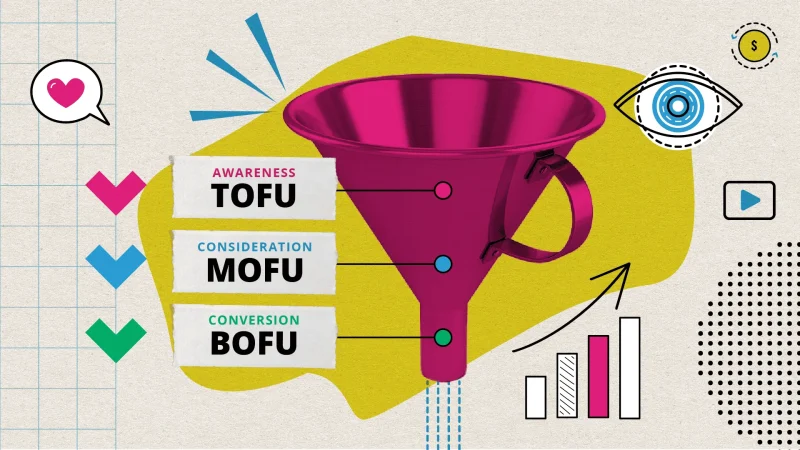
Illustration of a bright pink funnel representing a marketing funnel with three labeled sections: TOFU (Top of Funnel) for Awareness, MOFU (Middle of Funnel) for Consideration, and BOFU (Bottom of Funnel) for Conversion. Arrows, charts, and marketing icons surround the funnel, symbolizing engagement and sales growth.

Image by Suzanne Calkins

There’s nothing like fishing with my kids to make me appreciate the waiting game. Fishing isn’t fast. And fish don’t eat their dinner systematically. All right, it’s true, we’re not good at fishing. But still, the process is a series of unanticipated interactions that culminates in one fish deciding yes, I’ll completely eat the worm this time. As the human on the other end of the pole, that’s the long-awaited thrill. We get to reel one in, throw it back, then start the madness all over again. 

This process of swimming around, inspecting hunks of worms, and finally chomping on the hook is your typical buyer journey in its purest form. No matter how often we depict a customer’s journey in a neat line, it’s really more like a sunfish that’s watching and waiting, while occasionally nibbling on the lure to throw you off. 

That’s why we tell clients to simultaneously push content designed for ALL stages of the funnel. Let’s say your audience is a group of fish hiding in a clump of watermilfoil awaiting their dinner. Some will be too shy to go after the worm right away. They prefer to inspect it from afar. Others will be bold enough to nibble. And, if you do it right, one might even grab the hook on your first try. It’s unlikely (if you’re anything like us), but it’s possible. The tricky part is that it’s difficult to guess which fish will go after the hook next. Do you need to cast four more times to lure out the shy ones? Do you need some extra bait to allow the nibbles to continue? 

Here’s where a full-funnel content strategy can target all types of fish—I mean, customers—to encourage them along their journey (into your boat!). 

Consider the following two scenarios: 

The large-mouth bass: ITDM with vast product knowledge, but still needs convincing 

This customer heard about your solution from a former colleague and knows it’s widely used. They understand how it works and what it does, but they want to hear how others have adopted it and the impact it has had. They’re unsure it can solve their unique issues. 

This buyer could be convinced with: 

  • Customer success stories
  • Technical blog posts
  • Interactive product demos 
The sunfish: Solution champion that needs to bring others along 

You’ll often have one fish on the line, but their friends aren’t joining in. You can still cultivate that champion with bottom-funnel assets that keep them interested while providing them with top-funnel assets they can share. 

Here’s what you might give them: 

  • Solution briefs
  • Explainer animations
  • Deep-dive whitepapers 

Now, the reel question is, are you fishing with the right bait? We can help you create the juiciest content that tempts the full range of potential customers—across all stages of the funnel. 

06/10/2025

Designing a world full of C.R.A.P.  

Full story

By Evan Aeschlimann

Graphic of the word “CRAP,” with each letter in a colorful block: C (pink) for Contrast, R (yellow) for Repetition, A (blue) for Alignment, and P (green) for Proximity. A large cursor points at the “A” block, and a bright pink toolbar with design tool icons appears above, representing design principles.

Image by Emily Zheng

As a designer at 2A, I spend my days building everything from infographics and ebooks to solution briefs and pitch decks. No matter the format or audience, I lean on the same reliable foundation: good design principles. At 2A, we pride ourselves on combining strategic storytelling with smart design—and for me, that starts with a little C.R.A.P. 

What is C.R.A.P.? 

Contrast, repetition, alignment, and proximity—I approach every creative endeavor with this straightforward, four-principled framework that I learned on day one of college. Whether I’m starting from scratch on a Figma prototype or building a piece of furniture in my shop, I always seek a solution that adheres to these four basic principles. 

Why is it foundational to everything I make? 

“Design” is a robust word, but at its core, design is simply creating order out of chaos. And to get to a place of order, first there needs to be a set of rules to follow. 

Contrast. People are inherently drawn to things with contrast. Contrast taps into a part of our brain that predates modern humans. It’s why hunters wear orange—to stand out against the backdrop of fellow hunters. Our brains seek out things that break patterns. In design, contrast is perhaps the most foundational of the rules, allowing us to create distinction between two things. Contrasting background colors help us create distinct sections of an infographic or callout box. High contrast is an important part of our efforts in creating accessibility. 

Repetition. While contrast seeks to differentiate, repetition seeks to assimilate, creating readability that makes information easier to digest. In design, we create typographical systems and layouts that indicate what type of information the audience is about to receive before they’ve had the chance to absorb it. The audience knows they’re starting a new section because there is a repeating title style and layout. They know that a product is part of a larger ecosystem because of repeating brand elements. 

Alignment. Remember a few sentences ago, when I said our brains seek out things that break patterns? Well, our brains also really like patterns. We like to know where to look and be able to anticipate what’s coming next. Most designers and copyeditors hate right-justified text for this reason. When reading right-justified copy written in English, the varying line lengths confuse our brains, as our eyes are accustomed to moving to the far left edge. 

Proximity. How do things fit together, or in laypeople’s terms, does this information go with this information? Does this piece of the puzzle need to go with that piece, or can it be moved down a bit? Objects too close together? Designers love white space. I don’t know why so many people seem to have a desire to fill every spare inch with more stuff. Proximity is about finding balance. At 2A, we generally believe less is more. 

C.R.A.P. is all around us. 

The beauty of C.R.A.P. is that it scales out. You can apply this framework to any creative endeavor, like building a piece of furniture or preparing a meal for friends. It also scales up. Does this ebook contrast enough to create distinction from competitors with a similar product? Does it repeat established and familiar brand elements and solutions? Does it align with the messaging and creative brief? Where will it live and what proximity will it have to other assets? Each principle of C.R.A.P. on its own is only part of the process. And each part overlaps with every other part. 

So—what type of C.R.A.P. are you making today? Need a fresh pair of eyes (and a sharp design mind) on your next creative project? At 2A, we apply the right amount of C.R.A.P. to every asset to make your brand stand out for all the right reasons. Let’s talk

06/05/2025

Keeping your sales team in the loop: 3 effective approaches 

Full story

By Jane Dornemann

A megaphone held by a hand emits winding, looping paths that intersect with colorful geometric nodes (squares, circles, diamonds) on a deep blue background, symbolizing communication and connection points.

Let’s face it: Keeping your sales team aligned is crucial as your organization grows. That’s because there’s a lot going on. Your product is gaining new capabilities, the company is launching new tools, strategies pivot, and in the meantime, your sales folks are gathering valuable customer insights that should be shared with everyone. 

After a product launches and you share all the standard sales enablement tools (product pitch deck, battlecard, datasheet, conversation guide, etc.), you need to keep momentum going and keep your product top of mind. Sales teams are typically juggling multiple offerings and priorities, so maintaining visibility for your solution requires ongoing efforts beyond the initial rollout. 

If your team isn’t up to date on product changes and aligned on messaging, you’ll likely see decreased sales and confusing communication with customers. 

We love these three ways for keeping everyone on the same page: newsletters, webinars, and demos. Each has its own perks and required effort. 

When sharing info with your sales team, focus on: 

  • What they need to know to sell effectively (benefits, differentiators)
  • New resources they can use (pitch decks, email templates, scripts)
  • New selling opportunities (market fit, industries, target personas) 
Newsletters keep your sellers in the know 

Newsletters can help you meet a variety of objectives such as finding new leads, sharing successful sales strategies through customer wins, and updating sellers on the latest product enhancements, features, and sales tools. 

Win wires are great for sharing internal deal info and building momentum. They help your team discover new use cases and include details about co-selling and upselling strategies. 

For quarterly or monthly newsletters, stick to a template. Consistency matters! At 2A, we build templates for our clients that make structuring and producing content easier. 

Include metrics on who’s buying what, product updates, and selling tips. Our internal newsletter at 2A (called Cloud cover) includes new leads shared through our Teams channel. For the external version, we remove the leads section before sharing our research with customers. 

Pro tip: Ask your sales team to contribute before publishing—they usually have gold nuggets to share. 

Webinars offer a deep dive with experts 

Want something more interactive? Webinars with Q&A sessions are perfect for discussing product changes. They’re essential for new sellers and ideal before big launches or when addressing company issues affecting sales. 

One of our clients runs webinars with partners to explain program changes and answer questions. You can pre-record, edit, and then “air” it with a Q&A. (We like using Riverside for editing.) These recordings can be chopped into bite-sized clips to share in Slack or Teams, or at sales meetings as mini refreshers. 

If you go with live webinars, record them for on-demand viewing later. To boost attendance, schedule two to three sessions so people can join when it fits their schedule. 

Pro tip: Ask for questions beforehand to tailor your content to what people actually want to know. 

Demos make product features make sense 

Nothing helps sellers understand value props faster than seeing a product in action. Demos are perfect for visualizing new features and provide deeper understanding than newsletters or webinars. 

Keep demos pre-recorded and brief—under a minute is ideal. Avoid silent demos (recordings without any explanation). Instead, include context with voiceovers or on-screen text. 

Pro tip: For a budget-friendly approach, use AI voice software (we use Murph AI), which can even be translated into different languages. 

Looking to create internal resources for your sales team? We produce these three assets, as well as playbooks, pitch decks, and more. Contact us for a consultation. 

06/03/2025

Turn one great event into many with a playbook 

Full story

By Kimberly Mass

Illustration of a football-style playbook with Xs, arrows, and icons for communication and content tools—like phone, email, video, document, and clock—surrounding a slice of pizza at the center. A blue user icon is at the bottom, suggesting a strategy or play involving multiple media types and engagement channels.

Image by Emily Zheng

There it is—the sigh of relief that comes when the last commemorative keychain is handed out, the signage comes down, and the final post-conference survey is sent. Another successful event in the books—and a chance to reflect on what went well and what you’d do differently next time. 

While you’re reflecting, what if you were also laying the groundwork to make the next event easier? Or finding ways to hand off that event to a colleague while you work on something else? Or seamlessly expanding that event across regions or audiences? A turnkey event-in-a-box, if you will. 

2A is here to help! Our event playbooks capture everything an event organizer needs to know to plan your next great event, conference, or meeting. From planning timelines to pre-event activities, and from day-of logistics to post-event follow-up, we document it all in a playbook that’s easy to use and update—taking the stress out of consistently producing great events. 

That’s exactly what we did for a recent client that wanted an event playbook to help kickstart a standardized, easy-to-replicate global event program. Based on findings from the client’s first local event, we developed a playbook that included the following. 

  • Detailed event timelines and communication cadences
  • Guidelines for choosing planning committee members and event speakers 
  • Email templates for invitations, follow-ups, agendas, and post-event surveys
  • Guidelines for creating and ordering swag
  • Tips for day-of-event logistics like A/V setup and food ordering
  • Links to helpful resources
  • And much more—all in a user-friendly PowerPoint format 

The result? An intuitive guide that makes it easier for any team member, in any region, to plan and pull off a standout event without starting from scratch. 

Want to make your event planning more efficient, consistent, and scalable? Get in touch

05/30/2025

Crowded conference? Animations like this will bring visitors to your booth

Full story

By Jane Dornemann

Stylized graphic of an eye with a play button in the center, surrounded by abstract video icons, arrows, and shapes on a dark blue background. Text reads

Image by Suzanne Calkins

Eighty percent of tradeshow attendees are decision makers, and 85% of them have buying authority in their company. In short: it’s important that you capture attendees’ limited time. 

You want your booth to stand out at the big event, so you’ve got cool swag and great graphics—and you’re demo-ready. But how do you pull in passersby? A screen showcasing your digital logo or static CTA simply won’t do it—but a strategically produced animation can. 

Why are animations great for event booths? 

Anyone can loop stock video, but that won’t bring your brand to life. You only have seconds to get (and keep) people’s attention, which means your animation needs to be several things at once: eye-catching, informative, and on brand. Because making this happen involves different types of talent, we sourced the best advice from our storytellers, designers, animators, and marketing consultants to help you start thinking about your next booth animation. 

The words 

Chunk it up. Events are loud, so ditch the soundtrack and focus on text. Each frame with text should make sense on its own to people who see it and walk by, but animations should also tell a cohesive story for those who stay and watch. One more challenge: It must make sense in a loop. Think in terms of five-second frames and be realistic about what most people read and absorb in that time. 

Less is more. Focus on a main point with no more than three supporting benefits or proof points. Trying to shove every fact and every single differentiator into a 30-second or one-minute animation will throw off the text-to-visuals ratio and overwhelm your visitor. Go for short, tagline-style phrases that are simple to digest but still pack a punch. 

The visuals 

Be big, bold, and slow. Using simple, big, and bold graphics keeps your animation easy to perceive from farther away. As for motion, booth animations should be slower paced but also eye-catching. Make sure the graphics stay on screen long enough for people to digest it as they walk by. 

Think distinct. Visuals should be attention grabbing—bright colors and visual contrasts that will entice someone to stop and look. Think chunky neon green text on black. Find a way to surprise people (within your brand guidelines, of course). 

Stay silent. Unlike other marketing animations, this one shouldn’t have audio since the booth area is too loud. This creates more flexibility: With no voiceover and a simpler script, there’s more opportunity to design the copy into visuals. 

The strategy 

Know where you stand. To inform the direction of your animation, look at what market research says about people’s familiarity with your brand. A startup that’s introducing itself to the world will want different animation content than a household brand that’s launching a new product. 

Feel the pain. Speak to your target customers’ biggest pain points. Don’t get into the weeds about technical details or all the different ways someone can use your product or service. Stay focused on the high-level benefits that your customers care about most—and back it up with data, if you can. Everyone loves a good data point! 

Plan ahead. Sometimes quick turns are unavoidable, and we can handle that. But, ideally, you want to allow four to eight weeks to produce a stellar animation. 

Reduce, reuse, recycle. Don’t forget, showing off your new animation doesn’t have to end when the event does. If you followed our storytellers’ advice, it will be easy to divide the animation into chunks that you can use in social media campaigns, turn into gifs, and include in your lead-generation follow-up emails. 

Looking to create an animation that will keep the show going? Contact us for a consultation.