Every fall, I long to slow down from the summer pace of doing-all-the-things-because-it’s-light-until 10pm. I’m comforted by familiar habits like hibernating in a favorite sweater rediscovered in the back of my closet. And while the well-defined patterns of my work week can be reassuring, they can also lead to a lack of creativity as I get too comfortable. Fortunately, last week I was able to shake things up. After joining teammates and Puget Soundkeeper staff on their weekly Lake Union kayak patrol, I walked away refreshed with renewed creative energy to bring to my role at 2A.
Every Wednesday morning, Puget Soundkeeper wrangles volunteers to paddle the edge of the lake collecting trash before it flows into the Puget Sound. Last week our team removed 85 lbs of mostly plastic in under two hours. By getting this trash out of the water before it breaks down into smaller particles called microplastics, we are protecting our waterways and the wildlife who depend on them to survive (including humans)!
Paddling around Lake Union may not sound like storytelling for business, but it certainly sounds like 2A. Our Giving program encourages the team to be part of the community both through activities like the kayak cleanup and by matching donations. It’s also a great way to shake up the routine which was just what I needed last week—even more effective than a pumpkin spice latte.
Rick Moody has storytelling down to a science. Over the course of a publishing career that is nearing its third decade, Moody has written novels (The Ice Storm, The Four Fingers of Death), collections of stories (Demonology, The Ring of Brightest Angels Around Heaven), music criticism (On Celestial Music) and memoirs, including the award-winning The Black Veil and his latest book, The Long Accomplishment: A Memoir of Struggle and Hope in Matrimony.
Moody was in town to promote his new memoir with a reading at Elliott Bay Book Company, conveniently located across the street from 2A’s offices. Knowing that he was coming to Seattle and that he probably had time to kill before his reading, we invited him to share his insights about the art of storytelling with our team. 2A specializes in storytelling for business and we figured we could learn something from this master storyteller, who has also sustained a long teaching career, currently at Brown University.
Moody didn’t disappoint, to say the least. He opened our conversation with the classic diagram you spot on whiteboards in many a writing workshop, sometimes referred to as Freytag’s triangle, which charts the passage of narrative tension, climax, and denouement over time:
Pretty basic stuff so far. Then Moody challenged this model, which, he noted, served a nineteenth century understanding of the novel. Jane Austen, the Brontës, Charles Dickens, Thackeray et al wrote works that all, more or less, conformed to the readerly expectations set forth in this model. Conflicts are introduced, complications arise, a false climax is followed by a reversal, the real climax happens, and then the novel gracefully concludes with order restored.
In the early twentieth century, the rise of modernism in works from James Joyce, Virginia Woolf, TS Eliot, et al, introduced narrative subjectivity to storytelling. Writers became more concerned with the vagaries of individual conscious minds. And once writers began to perceive the pattern of conflict, rising action, climax, and denouement, they started considering it formulaic and contrived, and so sought a new engagement with literature.
Moody also noted that the Freytag’s triangle model of storytelling conveyed an excessively male vision of how the world works, at which moment the white board Moody was writing on collapsed, in what can only be described as exquisite timing.
According to Moody, the evolution of storytelling took a turn with the works of Russian writer Anton Chekhov, whose literary innovation was the “slice of life.” These were stories that didn’t deliver climactic scenes or tidy resolutions; instead they gave us glimpses into the everyday lives of characters.
Still, Moody was unsatisfied with the slice of life model of storytelling. So he developed an equation that he believes distills the art of storytelling to its essence. It looks like this:
S = t(B) ÷ Cn
Stories (S) equal time (t) acting on bodies (B) divided by consciousness, which can be multiplied by an infinite number.
Let’s break that down a bit further. Stories are about change, which necessarily involves the passage of time. Time only passes in relation to subjects (bodies). This process is governed by consciousness, which is the narrator. Adding multiple narrators or points of view slows time down.
We steered the conversation toward marketing narratives, asking what from literary storytelling we can apply to our work crafting narratives for businesses. Moody asserted that whether delivering the narrative in the form of a novel or an ad campaign, the same guidelines apply. Stories are about the transformation of people over time, filtered through a particular consciousness or set of conscious perspectives, and we perceive narratives in the realm of marketing campaigns this way, too.
Moody’s visit marked the first of a planned series of author and artist talks at 2A, where we seek to broaden our understanding of storytelling and grow as storytellers. Our office used to be a car dealership and features a comically voluminous freight elevator with the capacity to lift 6000 pounds. We chose this as the setting for the first of a series of artist portraits to commemorate this series. As for a name, we’re calling it 2A’s Elevating Stories series, in a nod to both this fun feature of our building and for the manner by which our visitors raise the bar on storytelling craft.
For someone who generally dislikes sitting still, recovery has always been an active verb. I run, climb, hike, ski, and bike, and recovering has meant yoga and foam rolling, pulling garden weeds, or walking my dog. The idea that recovery could also be a noun that describes just resting didn’t dawn on me until I read Good to Go: What the Athlete in All of Us Can Learn from the Strange Science of Recovery by Christie Aschwanden. She roped me in with her study on whether or not beer aids recovery after running, and blew my mind with her revelation that recovery used to be a noun, but has evolved into a verb—and not always for the better.
My son is almost 2 years old and goes to daycare full time. As a household it feels like we’re sick every single week. While my son bounces back from everything within 24–48 hours, his toddler super germs lay siege on my white blood cells for weeks at a time. I used to think that I could will myself healthy with Emergen-C, Throat Coat tea, and strong coffee. Just another active-verb type of recovery to fit into my busy life.
The partners at 2A recently reminded us all that WFH (work from home) days shouldn’t replace sick days. Thinking back on it, I realized it had been six years since I’d taken a real sick day—a genuine, stay-in-my-jammies, watch-bad-TV, nap, camp-on-the-couch sick day. Instead, I would push through it, trading rest for dialing into meetings, working on projects, and responding to messages. I convinced myself these days were restful because I wasn’t in the office. But nowadays, I’m not so sure about that.
Besieged by the latest round of toddler germs, I decided to try something radical. With the support of my manager and team I took an actual sick day. I spent the day napping, eating soup, and sipping tea. I generally stayed offline and truly rested. And you know what? It worked. I got better, faster. I felt sharper at work and was a more present mom and partner at home.
One of our words we work by is “great work requires being well,” and that sentiment has empowered me and the rest of my team to take real sick days. While my recovery as an athlete remains an active verb, I’m happy to report my sick days are officially nouns again, and that is helping me stay active.
Pride month in Capitol Hill, at the very least, guarantees you’ll see some rainbows. The crosswalks are repainted, flags are hung in windows, and stickers glue themselves to mailboxes, all to rally support for the LGBTQ+ community and welcome this weekend’s parade. For-profit brands, too, are riding the rainbow wave, but it can be hard to tell which ones are just cashing in on consumers’ pride for Pride, and which ones are actively trying to make a difference in the LGBTQ+ community. Here’s how you can tell:
Is their LGBTQ+ enthusiasm inherent to their brand? For most of the large, national brands, their LGBTQ+ connections aren’t part of their overall brand stories, and instead just jump on the Pride bandwagon once a year. In this case, the rainbow filter on their logos is usually fleeting. Consider digging a little deeper to find those (usually) smaller and local companies that have a brand story connected to LGBTQ+ inclusivity. Case in point, Seattle clothing company, TomboyX, which was founded by two lesbian women who wanted to make underwear that fit regular bodies across the gender spectrum.
Are they aligned with an LGBTQ+ organization? Rainbows in June can start to feel like snowflakes in December. And many brands recognize the power of the rainbow to sell merchandise. While slapping a colorful arch on a T-shirt might make a sale, before you buy, consider where your dollars will end up. Plenty of companies are putting their rainbow revenue to a good cause. For instance, American Apparel will donate 100 percent of its Pride collection proceeds to the Los Angeles LGBT Center.
Are they using the right words? While rainbows successfully communicate a connection to Pride, they don’t really make a statement. American Eagle’s pride collection uses words like “gay” and “queer.” Messaging gets easier when you use the right words, but some brands aren’t ready to take a stand and speak up.
Rolling on a rainbow doesn’t have to be a brand’s only means of supporting the LGBTQ+ community. There are much more meaningful actions companies can take to show their solidarity during and post Pride. And brands can always opt to give up their space on the stage entirely, in favor of amplifying LGBTQ+ voices. As an informed consumer, you have the power to hold companies accountable for simply trying to profit off Pride.
A lot of people think improv is about doing something you haven’t prepared for, but that description doesn’t really do it justice. Improv does require you to prepare, just not in ways you expect.
Last year, 2A embraced an improv work culture that started out with a half-day training led by Bridget Quigg and Anya Jepsen. Since then our team has incorporated aspects of improv into weekly team meetings, manager check-ins, and team-building events (Seen Jet City’s Matchelorette, yet? We have!).
Through practice and preparation, we’ve identified a few ways that the improv work style makes us more joyful, curious, engaged—overall, better at our jobs!
1. Committing to improv ignites action
Improv is about being in the moment and committing to a shared reality you create with someone. It’s childlike and completely brilliant—think fresh air tickling your brain synapses.
The key is to turn off your editor, listen with your whole body, and let yourself respond. Some improv professionals refer to this as allowing yourself to “be average” or “trending toward action.” Whatever you call it, the point is to consistently contribute. Don’t hold back waiting for the “perfect” contribution.
The improv work style encourages you to trust that by engaging, you will be able to create/access/understand what you need in the moment.
2. Turning your fall into a jump gets you farther, faster
Embracing an improv work style requires taking risks that may lead to something less than polished awesomeness, but that’s the point. Failing is essential to moving forward because every fail offers valuable lessons. The trick is to create a culture that doesn’t treat failing like a setback or an embarrassment.
When the neighborhood kids climb trees together, they constantly remind each other to turn their fall into a jump. By making falling part of their process, they have made it easier to let go of the embarrassment of the fall and embrace what they learned from it instead. No surprise the ones who shrug it off and keep trying climb higher, faster.
Much the same way, an improv work culture teaches you to grow comfortable with the fact that you’re going to fail. Expect it. Embrace it. Normalize it. Then turn it into a big leap forward.
3. Building on others’ ideas builds trust
Many academic and company cultures tend to endorse the type of critical thinking that points out flaws in ideas—the “no, because” philosophy. While it can make you seem smart in the moment, “no, because” blocks collaboration, creativity, and inhibits participation.
Judy: “Let’s make the GIF a space cat!” Me: “No, because cats are overused.”
On the flip slide, improv’s “yes, and” philosophy lays the groundwork for trust and teamwork. It encourages listening, collaborating, and engaging with one another through the act of acknowledging what someone else offers and building on it.
Judy: “Let’s make the GIF a space cat!” Me: “Yes, let’s make the GIF about a space cat that needs AI to navigate the space shuttle.”
A fear of failure has trained many of us to prepare a response to a specific problem before we engage. However, the improv work culture teaches that when we prepare ourselves to fully engage, take risks, and build on one another’s ideas we can uncover new levels of richness that we could never reach alone.
If you’re looking to infuse your work style with a big shot of energy, laughter, and growth, what about giving improv a try?
What a season. The English Premier League—the world’s most popular soccer league—is nearing the end of one of the most memorable seasons in recent memory. Fans are enraptured by a months-long battle royale between two of soccer’s strongest teams, Liverpool and Manchester City. It has come down to the final weekend of games to decide who will win the league title and lift the coveted sterling silver trophy overhead.
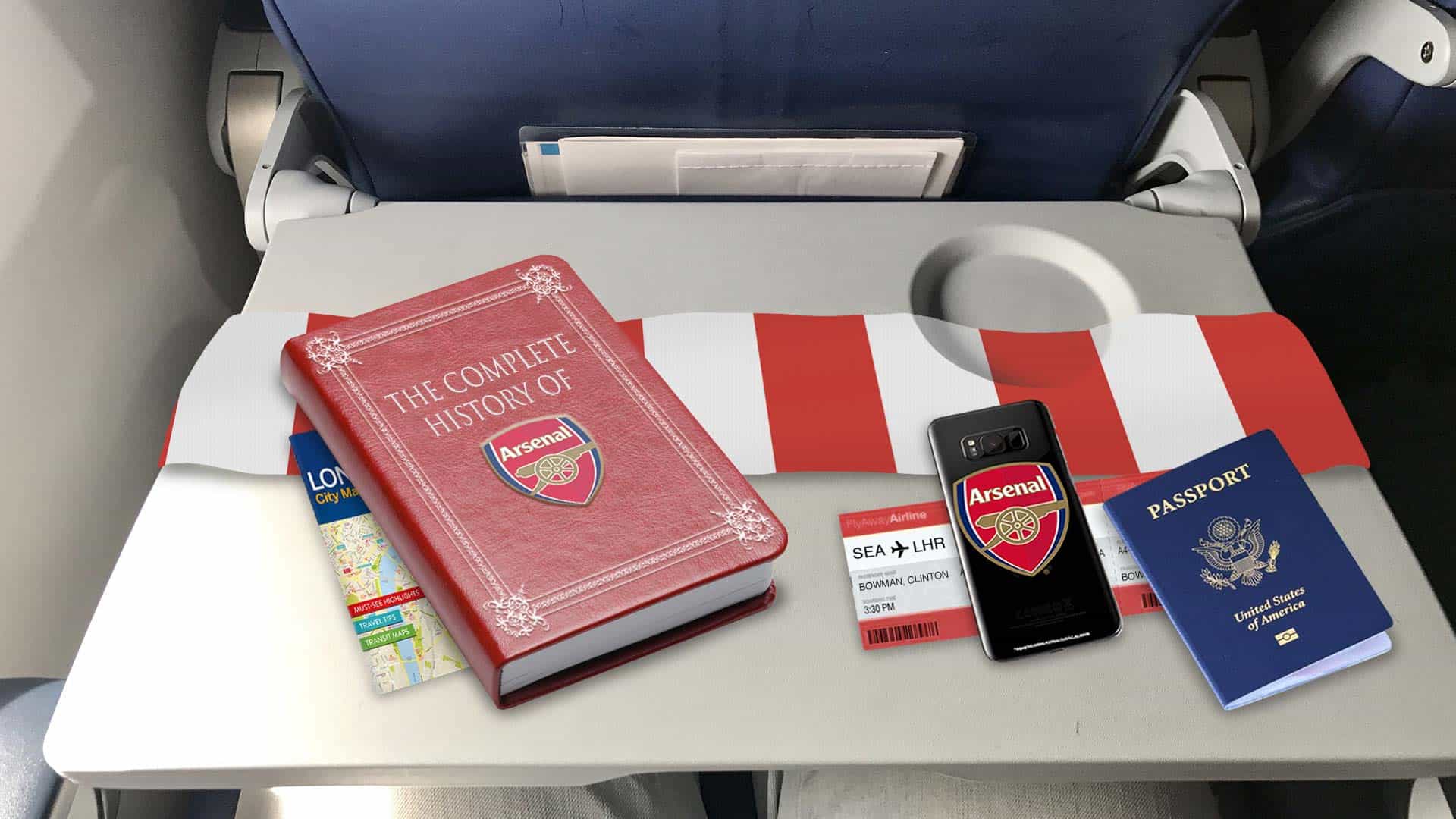
While many captivating stories played out in this banner year—like this game-stopping furry pitch invader that brought one stadium to a standstill—the most memorable moment for me was seeing my first game in the flesh. After five years of following the Premier League and nearly a year of planning, three friends and I made the trek to London to watch the storied game, known as the North London Derby, between London rivals Arsenal and Tottenham Hotspur. While the team I support, Arsenal (go, Gunners!), ultimately drew with Tottenham at the final whistle, it still felt like a win for us Seattleites. The nine-hour flight, and cost of tickets and hotels didn’t dishearten us in the least.
We were so enamored with our experience, despite neither side winning, that we committed to do it again next year. Are we soccer fanatics? Quite possibly. But it goes deeper than that. Looking back on that weekend in London, I can’t help but appreciate how the storytelling of the Premier League’s brand lured me to super fandom.
Until 2012, most Americans could not readily access the Premier League. While sports fans may have known the name Ronaldo or that some guy named Beckham could really bend it, hardly anyone paid much mind to English soccer. That all changed when the Premier League inked a deal with NBC Sports. Americans were given a front row seat to the best soccer on the planet and like other Anglo-imports such as the British Invasion, New Wave, and Downton Abbey, we ate it up.
With a platform on American tellys, the Premier League had an outlet to educate Americans on the values and heritage of the clubs and the league itself. Before kick-offs commentators would regale viewers about the club’s rich history or meaning of the rivalry match told over decades of footage, effectively making their history ours. Through storytelling, they positioned each club as full of lore, rich with tradition, and even familiar. They bet that we Americans would fall in love with Premier League not only because of the athleticism, but because they had beautiful narratives to share—narratives we could easily make our own.
While 2A hasn’t done branding work for the Premier League (at least, not yet), we approach the challenge in much the same way. From new businesses to established enterprises, we help our clients demonstrate their value and create captivating stories to support brands. Because what businesses wouldn’t want their customers to find a similar, fly-across-the-world bliss in their brand?
I ignored a lot of advice in college. My dad was the first one to try to steer me away from journalism—he nearly had a heart attack when I shared my “highly impractical” degree plan. Then there were my professors. Many of them had climbed the ranks at print publications and were still wounded by the slashed budgets and staff cuts occurring at outlets large and small. They weren’t shy about portending the demise of newspapers during lectures, and I thought I detected a little smugness in the “writing for web” classes.
So chalk it up to stubbornness, or naivety, but I stuck with journalism and surprised even myself when I landed a job at a small newspaper after college. It wasn’t until I ran into my favorite professor outside the state legislature building in Hartford that I started to think about other career options. Instead of telling me I was doing great and boosting my fragile 22-year-old ego, he told me, “Get out while you still can!” That time it sunk in. Maybe it was the genuine concern in his voice, but I started thinking about where—other than print publications—my journalism degree could take me.
Turns out marketing makes a great home for would-be journalists. Here’s what we bring to the table:
Structured, newsworthy stories
First and foremost, journalists can write. It’s drilled into us. We have to produce loads of accurate copy on deadline, and we rely on a proven formula that works and aligns with marketing. A lead goes at the top to hook the reader, then an explanatory body breaks down the message in clear, concise points. Journalists know how to keep your marketing consistent, on-message, and compelling.
New facts and emotion
Journalists are diggers. We’re trained to ask an annoying level of questions to uncover the truth! In marketing, this skill comes in handy when you want to validate a proof point with data, or beef up a campaign with first-hand testimonials. Journalists live for sifting through pages of documentation, or cold calling sources to learn the skinny. We have a knack for interviewing subjects to draw out click-bait-worthy quotes and uncover the emotional ties that give a story its relevance.
Less spin, more ground
Authenticity is the holy grail for brands. It’s how marketers want to sound, and it’s how consumers want to perceive companies. But many marketers fall into the spin trap, where they’ve piled on so many great things about one product that their pitch couldn’t possibly be genuine. That’s where journalists can help. Firstly, we have an inherent aversion to spin. And secondly, we’re conditioned to remove ourselves from the story and consider it from other people’s perspectives—in this case, the customer. We use that lesson in empathy to uncover new ways of framing the benefits of your product in a way that’s genuine, and makes you look muy authentico.
While newspapers may be falling out of fashion, journalists will find a soft landing in marketing. And we’re here at 2A when you’re ready for a fresh take.
I’ve had a few conversations with women leaders recently where the story I hear goes something like this: I was doing my job, never thought of myself as a leader, someone else told me how great I was and now here we are. Surprise! I am in charge.
While I’m sure that’s how it happened for some women, I would prefer to paint a different narrative for aspiring leaders. One closer to what my peer Carey Jenkins, CEO of Substantial, shared in a Q&A for Seattle Magazine’s Daring Women series. “I ended last year thinking for the first time, ‘What if I were CEO?’ Within a couple of months, I was in talks for the role.” It’s refreshing to hear a woman leader tell us she believed in herself and made her goals come to life. And it’s essential that we tell the next generation of leaders you don’t need to wait for someone to tap you on the shoulder.
I, like many women, was raised not to brag. There’s certainly some goodness in that lesson—no one wants to hang around people who can’t shut up about how great they are. But (to twist an expression from Anne Lamott) the sunny side of bragging is owning your own strength. It’s saying: I am qualified to weigh in here, I’m up for the debate, and in some cases, here’s why I’d make a great CEO.
As February sees many easing off aggressive New Year’s resolutions to KonMari their basement or detox their beauty routine, we at 2A are homing in on a theme for the year. We’re working toward refining how we talk to our strengths and the value of our work. For us, that’s explaining design decisions, backing up copy choices with strategy, and speaking up when we have tested opinions. We’re calling it demonstrating our worth.
The flip side of that coin is making sure we’re treated fairly and honoring our worth. That’s insisting on fair pricing, communicating the benefits of reasonable timelines, and saying no to projects that just don’t fit.
My partners and I have been helping clients market for over a decade. But we’ve been doing it as 2A for just five years. For us, startup mode helped us build a body of strong work, win and keep exceptional clients, and recruit some of the most talented marketers around. Now—with a team of over 40 consultants, designers, storytellers, PMs, developers, and administrators—we’ve outgrown startup mode.
While creating amazing and effective work for our clients will always be the core of our effort, we also need to nurture a culture that supports creativity and experimentation. This is how we’ll hang on to that team and those clients, and how our work will get even better. It’s time to shirk the imposter syndrome—to stop waiting for someone to tap us on the shoulder—and act like the thriving team we’ve become.
It’s essential for our business to honor and demonstrate our worth. And it’s the next step for us as individuals, for aspiring leaders, and for women who want to take charge.
A few weeks ago, I went to see The Midnight perform at Neumos. I discovered their music fairly recently, but they’ve swiftly become one of my favorite bands for how their melodies and vocals carry such a strong feeling of emotion, longing, and ennui. As saxophone solos wafted over a crowd illuminated in beams of neon light, I could hardly imagine a better visualization of the burgeoning synthwave movement.
Synthwave, also called retrowave or outrun, is an artistic movement that’s been gaining a lot of steam over the past several years. Inspired mainly by imagery and music from the 80s, synthwave combines visuals like neon lighting, airbrushed chrome, computer grids, and midnight cityscapes with synthesizer-heavy music reminiscent of new-wave pop music and sci-fi movie soundtracks. The genre explores a wide variety of themes, from retrofuturistic optimism to dystopian fears of mechanized oppression. Many artists explore the limits of 80s media, intentionally adding VHS noise to digital video or releasing their music on vinyl.
And yet, for something apparently steeped in nostalgia, synthwave isn’t an accurate representation of what the 80s were really like. Movies looked at as progenitors of the movement—such as Blade Runner, TRON, or films by John Carpenter—were minor successes at best or box-office failures at worst. Synthesizer film scores by Tangerine Dream and Ennio Morricone garnered Razzie nominations rather than Oscar nods. Even the famous DeLorean DMC-12 seen in Back to the Future drove poorly and sold worse. Though synthwave visuals may resemble tech support posters or a Corvette ad, by and large the media of the 80s bore only a minor resemblance to this new aesthetic. Going beyond regular rose-tinted glasses, synthwave is nostalgia for a time that never existed.
This fascinating development—faux-nostalgia taken in a new and modern direction—speaks to me as a designer. A truly successful design should connect with its audience, and synthwave has achieved this. Straightforward 80s nostalgia has become a huge marketing trend in recent years, from Voltron selling Hondas to the Stranger Things kids suiting up as Ghostbusters, but synthwave goes beyond simply parroting what was popular 30 years ago. Instead, the movement uses a smaller-scale evocation of certain nostalgic elements rather than a full-on resurrection.
In an age where you can instantly stream a classic album or pull up clips from a favorite movie, synthwave stands out by sampling the mood and aesthetics of the past and then taking it in a new direction. Pressing beyond hollowly echoing nostalgia, synthwave finds a unique way to create emotionally resonant works.
Remember that one ad with the farmer in the dusty field and the cooing baby that took your breath away? Remember what it was for? Or what it wanted you to do?
Yeah, I don’t either (but I guess beer, or maybe trucks?).
I would ask if you remember the ad that told you exactly what you needed to know but was so boring you didn’t read it…only I didn’t read it either….so…
When it comes to marketing—whether it’s an ad, an animation, an ebook—there are endless ways to miss the mark. Some agencies do striking but empty, while others do focused but bland. At 2A, we believe there’s a third option that uses creativity and strategy to captivate and connect.
A lens for bringing stories into focus
It’s natural to want to think of creative and strategic as synonyms for design and content, but that’s not how it works for us. At 2A, creativity and strategy come long before design and content. They fuse together to make a single inseparable lens through which we view our client’s situation.
You’ve probably experienced a right brain/left brain gridlock that ended in a compromise no one really wanted. Imagine instead a fluid progression of ideas in which creativity and strategy hone one another for the purpose of defining what needs to be accomplished and determining how best to bring it to life. By using them together, they can take you someplace new.
It’s creative strategy or strategic creativity or really some fused-hybrid thing all its own. It’s the foundation from which we build the content and design that come together to create a story.
An approach used by everyone
No one person owns our process at 2A. It’s everyone’s approach—our designers think strategically; our consultants get creative. While it may upend traditional agency roles, it’s who we are. It’s how we captivate and connect.
Ideas, words, pictures and the way they intersect matter to us. Let’s see what we can make them do for you.