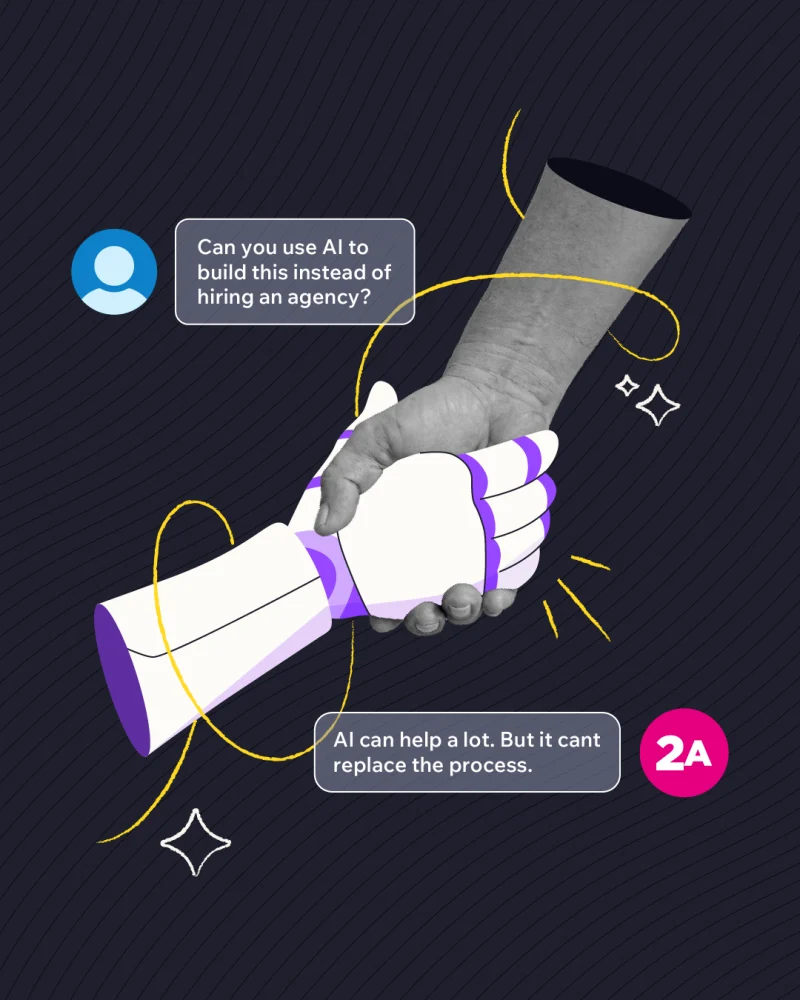
If you’re a marketer in big tech right now, you’ve probably heard the question: “Can you use AI to build this instead of hiring an agency?”
It usually comes up when you’re asking for budget for a pitch deck, a gated asset, or maybe a case study.
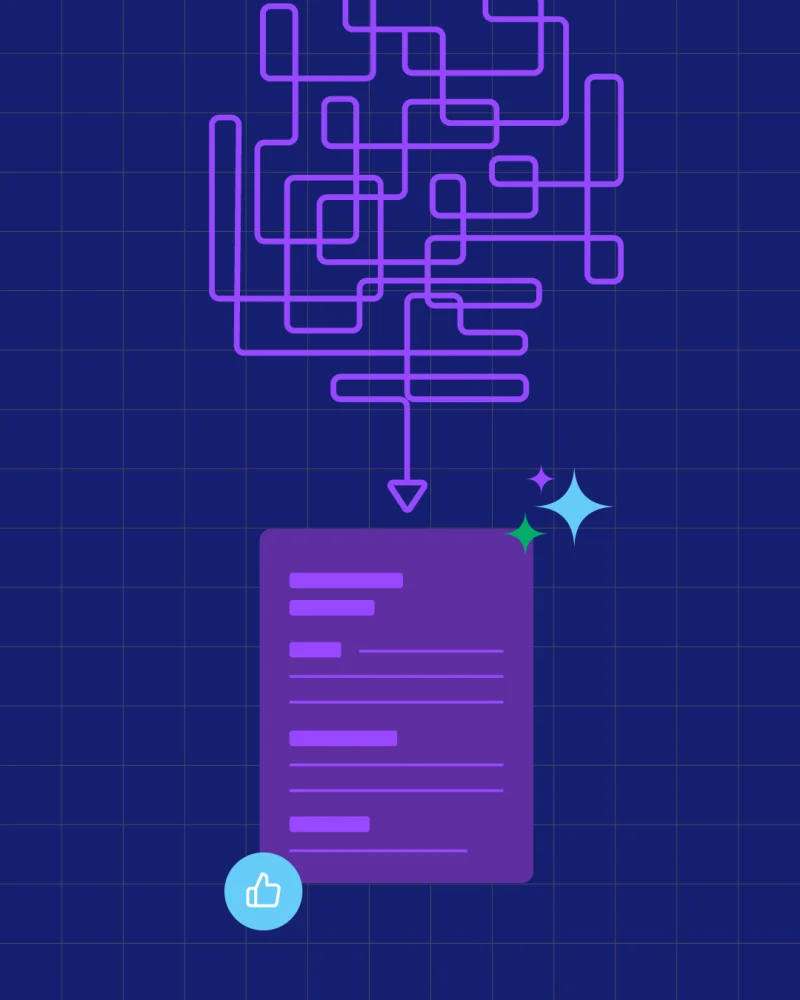
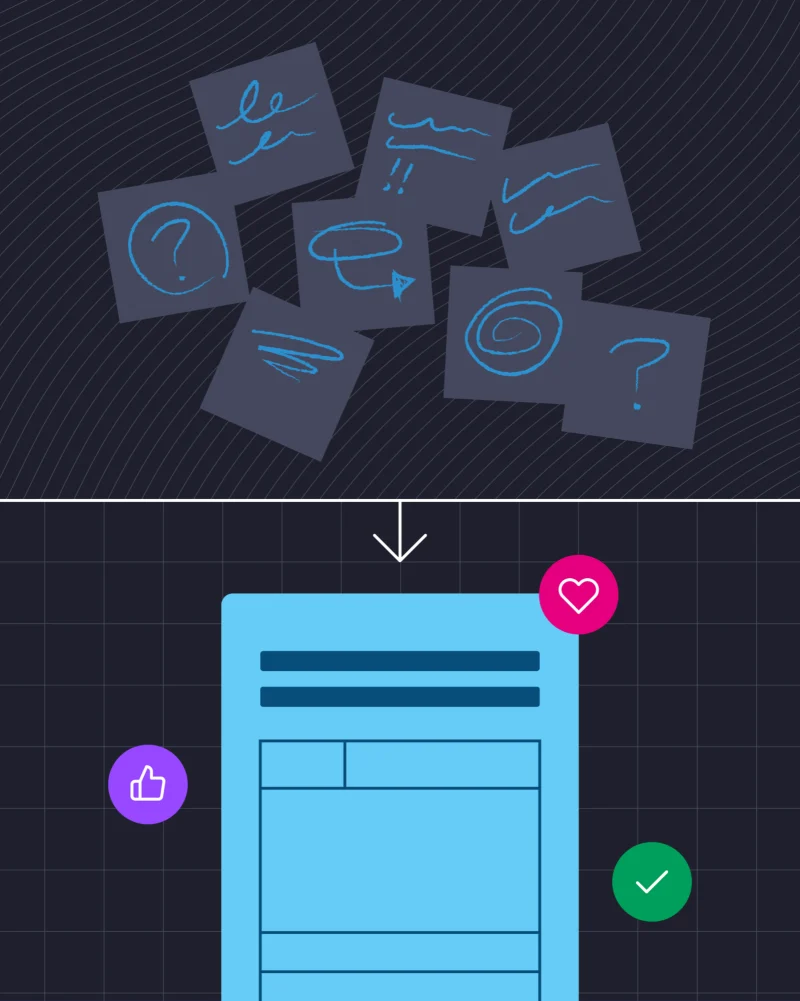
The honest answer is: AI can help a lot. But it can’t replace the process.
AI is useful and saves time at several points across the content creation lifecycle. It’s great for accelerating research and summarizing source material, and it can help surface possible angles for a story. It can assist with early drafting, tightening language, and generating variations of messaging. Used well, it can speed up the mechanics of content creation. (Used poorly, it can suck up the user’s time in a different way. Or worse, create a terrible asset.)
Making the story matter
Moving from an idea to a finished asset still takes skilled humans. And maybe that tech marketer has the skills to guide the AI. But do they have the time?
Good marketing content requires judgment. Someone has to define the point of view. Someone has to decide what’s actually interesting to the audience. They also have to ensure the story supports the brand and helps differentiate it from competitive solutions in the market.
And when it comes to visual design—especially for assets with strong, recognizable brands—AI tools can assist with ideation and photo editing, but they’re not yet producing the kind of story-driven design that represents a major tech brand.
So when someone asks whether AI can build the asset, the right answer is: AI can help. And it still takes skill and time to make something great.
Helping teams move faster
That’s where we come in. At 2A, we combine experienced storytellers, consultants, and designers with modern tools to meet the pace of today’s tech teams. When it makes sense, we use AI to accelerate brainstorming and streamline drafts. It also helps us explore design directions more efficiently. That allows us to spend more time refining ideas with you and delivering work that’s thoughtful and precise.
Because the goal is to make content that resonates. And we can help.
AI is everywhere in marketing right now. A common assumption is that designers using AI type a prompt, magic happens, and the creative work is done. Sounds easy! And risky. The reality is more nuanced, and far more interesting. To ground the conversation in real-world experience, I spoke with 2A designers Aaron Wendel, Evan Aeschlimann, and Guangyi Li about how AI fits into their creative process.
Getting to a first draft faster
Inside 2A, AI isn’t replacing designers, but it’s becoming a fast, surprisingly capable assistant. The design team uses it most heavily in early concepting for things like generating layout variations, exploring infographic structures, experimenting with illustration styles, and prototyping interactive experiences. Tools like Figma Make, Gemini, and Adobe Firefly help accelerate the “blank page” phase and bring ideas to life faster.
Where AI really shines is efficiency. Background removal that once took 20 minutes now takes 30 seconds. With a quick prompt, AI can help turn a static image into a video and rearrange a rough wireframe into a more logical flow. Designers can test alternate angles, lighting, and visual treatments, all before committing hours of production time.
The difference between fast and finished
Here’s the critical distinction with AI: it can get you to early concepts quickly. But it doesn’t reliably maintain brand consistency and it struggles with typography and detailed layout logic. The more complex the brand system, the more human oversight is required. In experiments with training custom agents to generate fully on-brand visuals, the results were either generic or oddly off-base. Sometimes the output was decent, but rarely client-ready.
That’s where expertise matters. The designer’s role isn’t shrinking; it’s evolving. AI enables faster experimentation and cross-disciplinary thinking—designers can prototype motion, imagine interactivity, or explore UI behaviors without writing code. However, judgment and brand integrity still require a trained eye.
At 2A, AI accelerates the process, and our designers define the outcome. AI tools can generate options, but only experts can turn those options into assets that are on-brand, intentional, and built to drive results.
2A may have started off as a Microsoft shop, but over the years, we’ve grown to cover a much larger slice of the tech industry. We have clients at small AI startups, large cloud enterprises, and many other partners in between.
Each year we compile our show-stopping assets into a sizzle reel to showcase our best work. Take a look! And keep reading to learn more about how we put it all together. (And if you’re curious about how we think about video formats more broadly, check out our recent post on engaging more and converting faster with the right video.)
Katy: Oh hello there Aaron Wendel! Please tell us about the new sizzle video you and your team created for 2A. I hear it captures the essence of our work in just about 1 minute. What does it show?
Aaron: It’s a little of everything we create at 2A. Animation, video, decks, ebooks, blogs… even a sticker sheet.
Katy: What’s your favorite moment in this sizzle?
Aaron: There’s a moment toward the beginning that highlights two assets we created for the Azure Database team. It’s really simple, but I love when a project spans across a range of deliverables, and we lean into our team’s brand expertise to adapt to the needs of each asset.
Katy: What does this sizzle say about 2A?
Aaron: It shows we have a wide variety of work, and know how to put together a great playlist!
Katy: So true! What’s something that didn’t make the cut that you think should get some love?
Aaron: All of the projects that don’t necessarily sizzle but are successful in other ways, like translating technical concepts, demonstrating a new product feature, or building foundational messaging for a client. These go a long way in helping clients explain their solutions and giving customers “Aha!” moments.
Katy: How did you time the music with the images?
Aaron: You’ll have to interview our talented motion designer Chris next!
Katy: Glad I asked! Thanks for chatting—we love the sizzle!
The Thomson Reuters Future of Professionals Reportis packed with essential data on how AI is transforming professional services, with a particular focus on the legal industry. But as with many in-depth reports, its richness and detail can be a double-edged sword: great for insight, but harder for time-strapped readers to absorb and act on quickly.
Thomson Reuters partnered with us to create two new content pieces that made key findings from the report easier to engage with and more directly useful for their legal audience. By distilling complex research into a targeted infographic and a focused whitepaper, we helped bring clarity to professionals at different stages of their AI journey.
Getting started: The infographic for AI readiness
For professionals still shaping their AI strategy, we built an infographic that functions as a readiness checklist. It walks readers through the foundational steps needed to prepare for agentic AI, from building strategy to empowering individuals, with practical prompts and data points drawn from the report.
The visual format makes the information easier to scan and share, while still grounding every recommendation in the original research.
Going deeper: The whitepaper on maximizing AI value
For legal leaders further along in their AI adoption, we developed a six-page whitepaper that offers concrete strategies to turn AI investments into measurable results. Drawing from the report’s legal-specific insights, the guide covers four key focus areas: strategy and leadership, trust, enablement, and measurement.
Rather than reiterating technical features, the whitepaper keeps the focus on real-world applications, like how to embed AI in workflows your team already uses and track outcomes that align with your business priorities. It positions Thomson Reuters as both a thought leader and a trusted advisor for legal professionals navigating AI transformation.
One report, two assets, many outcomes
These assets demonstrate the power of repackaging research to meet audiences where they are. By creating content that’s aligned to different levels of AI maturity, we helped Thomson Reuters extend the reach of their research and support their customers in taking the next right step.
Looking to turn your insights into action? Let’s talk.
Our clients are smart. They market cutting-edge products, which means they’re always looking for new ways to make their efforts more effective. So the line of questioning we hear most consistently from them is: what’s working? What are your other clients doing? What’s hot in B2B tech marketing?
Right now, the answer is letting real experts speak directly to buyers. Not brand voice, not canned demos, not vague thought leadership—but credible, knowledgeable people who clearly know their domain and aren’t afraid to say something specific.
Buyers are overwhelmed. Social media feeds and inboxes are flooded with generic content, most of it interchangeable and written to satisfy an algorithm. In that environment, content that clearly came from a real person with real experience immediately stands out. When buyers hear from someone who has hands-on expertise, like an engineer, a product leader, or a satisfied customer, they’re more likely to pay attention and trust what they’re hearing.
This approach works across a range of formats. We’re seeing strong performance from:
Written case studies that go beyond surface-level metrics and include expert commentary on how and why results were achieved
Video case studies where customers or internal experts speak plainly about challenges and outcomes
Engineer-driven blogs that explain architectures and the reasoning behind decisions
Founder or executive POV pieces with anecdotes that reflect lived experience
Original research with new takes and insights
Credibility is what wins today. When customers are looking for reasons to believe, the most persuasive marketing isn’t louder—it’s grounded in real expertise and feels more specific and human.
A client recently came to us with a familiar request: they wanted a sizzle video to improve the effectiveness of a product landing page. After adding one of our sizzle videos, they noticed a lift in performance and wanted to repeat the approach.
They’re not alone in turning to video to boost engagement. Including video on a landing page can increase conversion by as much as 80%. Sites with video also tend to convert at higher rates overall, with one benchmark showing a 4.8% average conversion rate for sites using video, compared to 2.9% for those without.
So, what type of video should you use—and when? Here are three formats we recommend, each suited for different goals and stages of the buyer journey.
Sizzle videos: Build excitement and boost engagement
Sizzle videos are short, energetic, and designed to get attention. They’re great for product pages, campaign rollouts, or events where you want to create momentum and drive action. These videos usually combine animation, sound design, and fast pacing to create an emotional connection quickly.
That’s what our client experienced: after adding a sizzle video to their product page and seeing a clear lift, they came back to request more. It’s no surprise—when visitors stay longer and feel more emotionally invested, they’re more likely to take the next step.
Explainer videos: Clarify and convert
Explainers go deeper and often include common customer pain points, topline product benefits or features, and UI snapshots. They’re especially effective when addressing a known challenge or objection, like demonstrating cost-saving features or what’s changed in an update.
We’ve partnered with enterprise teams to create explainer videos that highlight key functionality and reduce friction during the decision-making process. These videos are a great fit for users further down the funnel who need reassurance before they commit.
Testimonial videos: Build trust with firsthand perspective
For buyers evaluating complex solutions, credibility is key. Testimonial videos let viewers hear directly from the source about the impact your solution had. They’re especially effective when paired with written case studies, giving added dimension to performance metrics and making success stories more relatable.
These videos work well on product pages and in sales enablement content, where they help build trust and spark engagement. Like this one, where the team at Lumen Field, home of the Seattle Seahawks, shows how a partnership with Amazon took the fan experience to the next level.
Video works because people remember it
Studies show that viewers retain about 95% of a message when they watch it in a video, compared to just 10% when reading text. Pages with video also hold attention longer, which correlates strongly with higher engagement and conversion rates.
If you’re considering ways to drive conversion with your audience, we’re well-versed in video and would love to show you what’s possible.
We’re proud to say that two customer stories we wrote made Google Cloud’s list of most-read blogs in 2025! Given how much Google Cloud published—and launched—last year, it was encouraging to see our Target and Waze customer stories resonate so strongly. Turns out, people are as interested in smarter retail search and traffic data as we are!
Both stories focus on practical, real-world use of Google Cloud products. To us, that’s the whole point. Even in a year packed with attention-grabbing AI news, B2B audiences still want to understand how cloud and AI show up in real systems, real workflows, and real decisions. Customer stories do that in a way few other marketing assets can.
Going great with Google
We’ve worked closely with Google Cloud for years, and part of that partnership is understanding how their customer stories are meant to work:
Clear without oversimplifying
Technically credible without being inaccessible
Grounded in what actually happened
When those pieces are in place, even a deep dive into databases or infrastructure can hold a reader’s attention.
That’s the approach we bring to every customer story we write at 2A. We focus on the details that matter and write in a way that reflects the customer’s voice. When stories are handled like that, they feel real. And hey, sometimes they even end up on a cool list.
It’s time to talk about our favorite albums of the year! Historically, we’d assemble a list of top picks that recently dropped, but 2025 was a little different. Some of us weren’t into the new stuff and instead reached for music that felt familiar and grounding. So our 2025 list includes both new music we discovered and not-so-new tunes we love.
The right song can work wonders: it can inspire when you’re stuck in a creative rut, calm you when you’re feeling overwhelmed, or motivate when prepping for something big (Dwight Schrute + Kickstart My Heart, am I right?!). However you’re feeling at the moment, we hope you’ll enjoy our roundup of what we had on repeat—maybe it’ll inspire some good vibes for the year ahead.
Vie—Doja Cat Doja Cat does it again! At first I was thrown by the 80s beats (and background sax?!) in many of the tracks. But on a second listen of the full album, the lyrical magic and sound that Doja is known for shines through. She’s got me embracing the 80s vibes and considering shoulder pads :-). —Katy Nally
The Art of Loving—Olivia Dean This year, one of my goals was to find a signature scent. I spent hours misting tiny paper tabs in front of perfume walls. Eventually, I landed on Etat Libre d’Orange’s I Am Trash, which a salesperson described to me as “what a trash can smells like after a wedding: wilted flowers, leftover fruit, cake, and champagne”—a hauntingly beautiful description for a very unfortunately named perfume. But I loved it. Olivia Dean’s The Art of Loving captures the same bittersweet magic that made me fall in love with I Am Trash: It’s nostalgic, elegant, sweet, and somehow, still fresh. Listening to it feels like standing alone in a ballroom at the end of a wedding. Thankfully, the album has a much prettier name than my new perfume. —Emily Zheng
Dance Called Memory—Nation of Language I write for long stretches of time, go for drives in the Washington wilderness, and paint abstract landscapes while the rain pours outside. Nation of Language’s Dance Called Memory is the perfect pairing for all of these activities. Their melancholy synthpop makes me feel wistful, nostalgic, dreamy, and inspired in just the right way. —Andrea Swangard
From a Room—Chris Stapleton It’s been a year of highs and lows. Chris Stapleton’s music has always been a place of peace for me. —Tammy Monson
The Life You Save—Flock of Dimes Flock of Dimes has been one of my favorite projects over the years, a solo endeavor by Jenn Wasner of Wye Oak and Bon Iver. She is one of my favorite vocalists in indie music and I think The Life You Save is a very beautiful, chill, and personal album that’s among her best work. I’ve had it on repeat since it came out. —Wil Morrill
Suzanne—Mark Ronson and RAYE While Mark Ronson is a talented producer, the real star in this song is our girl RAYE. This song came up in my To Listen playlist this summer and has been on repeat ever since. There’s something about the jazzy vibes that I can’t seem to get enough of! And if you like this song, definitely check out more RAYE—she is amazing! —Olivia Fiero
We Go Again—Enny We love a hip hop, R&B girlie, and Enny delivers. Her 2023 release We Go Again brings an existential, soulful edge to her sound, balancing introspection with sharp, confident storytelling. “Charge It” has been on repeat since its release, setting the tone for an album that feels both grounded and expansive. Enny is real and raw in how she reflects on her experience as a Black woman, her Nigerian heritage, and her come-up through trial and tribulation. It’s an album that works at any time of day, equally fitting for slow mornings, getting ready to go out, or winding down. —Salena Hill
Hickey—Royel Otis If you’re like me, you got hit over the head with that Linger SiriusXM Session at some point last year. Thus began my love affair for this lil’ band that sits somewhere between slacker indie and romantic nostalgia. It makes me want to sip a Slurpee, windows down, sun low, cruising the Santa Monica Pier with my friends… you know, for old times’ sake. Honorable mention to their 2023 album Sofa Kings. —Michelle Najarian
Live From 33 West—Charles Yang Splitting my time between all the different forms of content available means I don’t usually have the patience to listen to a whole album for the two bangers in an hour of forgettable tracks. I’m just looking for that quick, invigorating musical fix. Instead of scrolling through music venue calendars to find new music, now I’m mostly finding those musical fixes through social media. So, when a clip of Charles Yang popped up, I was like “OH SCHNAP! This guy got pipes!… Link to the full track in the comments?… Yes, please!” Skip to that three-minute mark and enjoy. —Evan Aeschlimann
Headlights—Alex G I listened to this album for the equivalent of four business days in 2025. Headlights is full of somber, retro songs about being a dad that, for some reason, 20-year-olds like to mosh to (a real thing I witnessed). —Jack Foraker
This Better Be Something Great—Westside Cowboy The debut EP from Westside Cowboy is what I wish my band in high school had sounded like if we’d had more talent (no offense Dave, but this drummer is incredible). It’s only five songs, and each has a distinct, dynamic sound—from group vocal anthems to lo-fi acoustic tracks. A blend of 90s/2000s rock, punk, and (strangely) some alt-country that stands out in a crowded genre, this has me looking forward to their next EP coming in January. —Mike Lahoda
Make The Road By Walking—Menahan Street Band Listen to this album for the ultimate getting-stuff-done music. Warm horns, steady grooves, zero lyrics so your brain stays on task and your vibe stays groovy. It energizes without interrupting, motivates without shouting, and never asks for attention. Make the Road By Walking is your busy day bestie: cool, consistent, and calmly crushing it. —Jenni Lydell
AI is supposed to be the most exciting thing happening in tech right now. It’s powerful, it’s fascinating, and it’s reinventing entire categories of work. But you wouldn’t know it by reading most AI product websites.
Somehow, the world’s most thrilling technology keeps getting distilled into phrases like “streamline processes” and “unlock the value of your data.” You’d think AI was invented solely to help overworked managers feel slightly better about their operational dashboards.
Let’s look at where AI messaging goes flat, how to spot the signs in your own copy, and how to get on the path to clearer differentiation.
This messaging could belong to any AI tool
To show what this looks like in the real world, here’s the kind of messaging you’ll find across half the AI work automation market.
Tempo is an AI-powered work automation platform that streamlines your processes from end-to-end using predictive intelligence. By eliminating manual, repetitive tasks and reducing bottlenecks across the organization, Tempo helps boost operational efficiency at scale. With automation guiding every step, your business is better equipped to adapt, grow, and stay future-ready.
It works. But it’s also extremely forgettable. And the kicker is: the product underneath is actually very cool. So, let’s make the messaging match the substance.
Tempo is an AI-powered work automation platform built to understand the behind-the-scenes of your business. It finds the places where things slow down—handoffs that stall, steps that repeat, patterns everyone follows but no one really questions. As Tempo learns your team’s natural rhythms, it automates the friction that causes the most drag and surfaces smarter ways to move work forward. Your workflows get faster on their own, without needing a big redesign.
Suddenly the product feels more grounded and more memorable. It’s something built for people instead of presentations.
So what happened here?
The new messaging works because…
It trades aspiration for specificity. “Streamline your processes” could describe any automation tool. “Tempo learns where work actually stalls and fixes those patterns first” tells you something real about the tool and the AI behind it.
The benefits don’t just restate the features. The old version promises efficiency because… automation. The new version shows the outcome: fewer hidden slowdowns, smoother handoffs, faster work.
It explains how the product delivers value in real-world terms. Generic AI messaging says “intelligent automation” and moves on. The revised copy makes Tempo’s approach clear: it learns real behavior, uncovers real bottlenecks, and improves actual workflows without redesigning them.
Self-assessment: Is your AI messaging putting people to sleep?
Time for a quick self-assessment.
Could a competitor paste your messaging onto their site without changing a word?
Does your hero line rely on broad promises instead of describing something real or observable?
Do your benefits sound like synonyms for “work faster” or “do more with less”?
Is your copy missing real-world context your audience would recognize?
Do your benefits restate your features in slightly different words?
Could a non-AI tool make the same claims you’re making?
Would your messaging read almost the same if you swapped “AI” with “software”?
Scoring
Mostly yes: Your messaging is technically correct, but easy to forget. If you’re ready for clearer, more differentiated language, 2A can help you build messaging that actually sounds like you.
Mostly no: You’re carving out your own space in a crowded category. If you want to turn that clarity into standout content or a full narrative, we’d love to help you take it further.
If you work in marketing, you’ve probably noticed that customer stories tend to follow a familiar pattern. Useful, sure, but not always the most compelling way to show what a team actually built or why it matters.
Over the last year, we’ve built an internal engine with our Google Cloud partners that helps us tell these stories differently. Instead of only dropping customers into a problem, solution, results template (which has its time and place), we start with richer inputs, dig deeper for voice and nuance, and craft pieces that read more like real conversations.
Starting strong with thoughtful inputs
One thing we love about working with our Google Cloud clients is the way they encourage their customers to be thorough in our intake form. Product marketing managers and account teams take the time to set expectations and give customers space to answer thoughtfully. That means we often start with:
Enough technical detail to understand what matters and what doesn’t
We don’t need every diagram or service dependency to write a strong story… but having them helps us choose the right details. Better too much information than too little when you’re translating something like a migration to Cloud Run or Target’s use of AlloyDB AI into a narrative anyone can follow.
Digging deeper, however the customer works best
Our discovery process is intentionally flexible. Sometimes we hop on a Google Meet with the customer and ask follow-up questions live. Other times, everything happens asynchronously in doc comments, letting people think before they answer. This mix of structured inputs and flexible follow-up gives customers the space to be thoughtful and selective in what they share. It also lets us meet them exactly where they work best, something that feels especially natural in our Google partnerships.
When we do meet, we listen for how Google’s customers talk about their project: what they emphasize, what they gloss over, and what sounds too exciting to ignore (like Google’s AI Hypercomputer). That’s where their voice lives and what makes each story unique.
Writing from their perspective
This is where the magic happens. Instead of locking ourselves into the classic case-study phrasing, we write many of our dev-centric stories the way the customer would actually tell it.
For example, a traditional case study might say:
“The team migrated its workloads to GKE to improve scalability.”
But the customer would say:
“We moved our workloads to GKE so we could scale without babysitting infrastructure.”
A scrappy startup modernizing on GKE sounds nothing like a research team building a GenAI pipeline with Gemini. That’s why we let each piece find its own rhythm. And because Google encourages a more human, conversational tone, we’re able to keep the writing lively, even when we’re deep in architecture decisions or GenAI pipelines. Their stories can be technical and still feel witty, warm, and unmistakably human.
Process makes perfect
A huge part of why this works is project management on our end (shout out to Google Cloud process expert Sal) and on Google’s. Internally, we keep the machine humming by coordinating schedules, tracking templates, meeting with the client, managing approvals, and quietly removing roadblocks before anyone notices them.
And we couldn’t do any of it without our Google Cloud partner marketing managers. They know their customers and products inside out, and they give us the right context and guidance to make each story shine.
At its core, the success of our Google Cloud customer story engine comes down to four things:
Thorough inputs that help us understand the full scope of the story
Flexible discovery that pulls out authentic voice
Perspective-driven writing that feels human
PM support from 2A and Google that keeps the process delightfully uneventful
If you want stories that feel like real humans talking about real wins, this is how we get there.