Blog

06/15/2022

Bravo Langston Seattle and three cheers for 2A’s working groups

Full story

By Alyson Stoner-Rhoades

decorative image

Image by Suzanne Calkins

An article came out in the Seattle Times last year stating that Seattle is fifth in the running for fastest diversifying big city in the United States. That same article proceeded to remind us that we are also the sixth whitest city in the country. While many of us may lose sight of our self-work and reeducation in the progressive bubbles we occupy, data points like this show that it’s still imperative to keep pushing and growing.

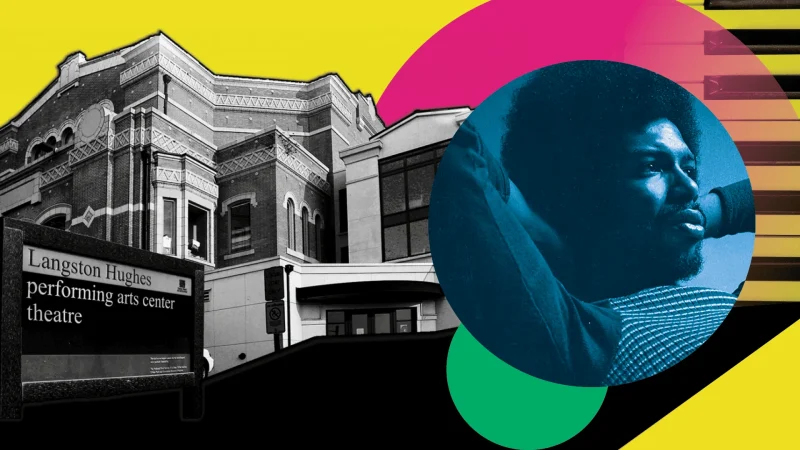
With that in mind, 2A’s two working groups—the Diversity, Equity, Inclusion, and Belonging (DEIB) group and the 2A Giving group—decided to join forces and focus our energy on organizations that elevate Seattle’s Black communities. We wanted to support organizations with a financial contribution and also get the team together for an event. We found the perfect fit at Langston Seattle.

We invited all our employees to the live-streamed and in-person performance of “Winter in America: An Homage to Gil Scott-Heron.” Artists did fantastic renditions of Gil Scott-Heron’s work along with a few original pieces that had people dancing in their seats. The show was powerful and heavy with Black excellence. The in-person energy was palpable on the live stream. In addition to Langston Seattle, we also donated to two other incredible organizations: Creative Justice and Black & Tan Hall.

Our night at Langston was a lovely evening and the perfect way to wrap up a successful collaboration between our working groups. Back in the beginning of the pandemic, we were eager to find ways to grow personally and professionally, work on inclusivity, and give back to the community during such a trying time. That’s when we formed our two working groups to support this vision—each with their own budgets, goals, and regular monthly meetings. After some time settling into a cadence and knocking out some initial projects the working groups had the genius idea to combine resources and embark on a collaboration journey.

We are proud of our working groups and grateful for consistent reminders to keep educating ourselves, keep supporting our coworkers and communities, and keep working toward creating a more equitable and inclusive workplace.

If you don’t know who Gil Scott-Heron is, no judgment. May we suggest you start your education journey by listening to “The Revolution Will Not Be Televised,” one of Scott-Heron’s most famous works, here. Then—taking a cue from our working groups—head over to Google and keep learning.

06/06/2022

If you give 2A an animation, we’re going to make it rhyme

Full story

By Katy Nally

decorative image

Lately I’ve been reading If You Give a Mouse a Cookie on a nightly basis. Each time I open the book and tell my almost-3 year old about the critter’s shenanigans, I’m transported to the library of my elementary school. I can remember so clearly sitting cross-legged looking up at the librarian as she read the same words aloud. The fact that our public library still has plenty of copies of this 1985 book is a testament to the power of nostalgia. Parents who grew up reading about the mouse and his cookie have a little flashback when reading the same stories to their kids.

Nostalgia is a powerful force, especially when woven into marketing. In the world of higher education, nostalgia works wonders for alumni fundraising. Take our Funding with Rhyme and Reason animation we created for the Dartmouth College Fund (DCF). Not only does it elicit memories of being a carefree 20-something on campus, but the rhyming whimsy takes it a step further—injecting a Saturday-morning-cartoon vibe.

In this case, the ask of 2A was to reinvent DCF’s Wacky Business Model animation, which made unfortunate parallels between Dartmouth and begging for money. The animation also didn’t quite land why tuition funding is so complex.

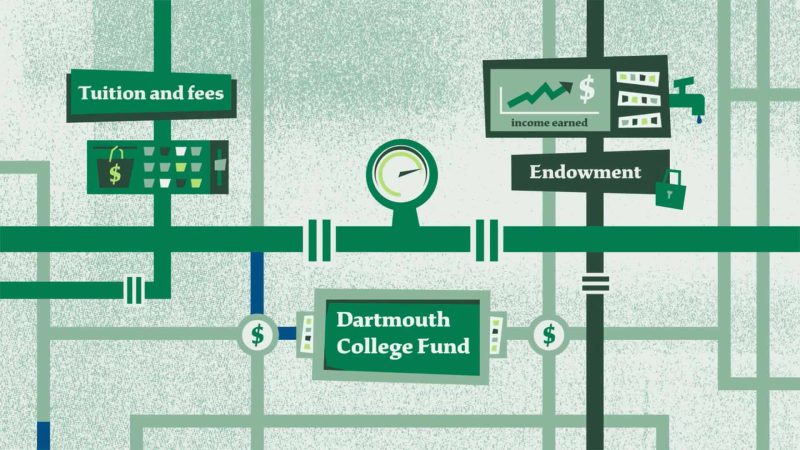
Our first instinct was to write a song and perform it like a Schoolhouse Rock! episode. Then we realized we’re not folk singers. Instead, using singalongs as a springboard, we walked viewers through a complicated funding equation with a little water theme to tie it all together. A reservoir, pipes, and barrels played a serious role in explaining why giving is still important for a school with a large endowment. Meanwhile, the animation’s rhyming roots keep it light and upbeat.

So the next time you want to tap into your audience’s nostalgia—we’re here for you, to create something new, and we’ll work hard, too, this much is true.


04/28/2022

Part II: We love our Embedded Consultants, and the feeling is mutual

Full story

By Nora Bright

Now that you know how consulting agencies impact the experience of Microsoft contractors, I’ll let you in on a little secret: some agencies have a bigger, more positive impact than others. And, according to our survey, 2A comes out on top. Read on to learn what 2A’s Microsoft contractors—or Embedded Consultants (ECs), as we call them—had to say about us and what benefits and perks we offer that made them more satisfied than folks at other agencies.


Embedded Consultants (ECs) love working at 2A
When it comes to the agency experience, 2A ECs were more satisfied than contractors from other firms.


Working at 2A leads to a better Microsoft experience
2A ECs were also more satisfied with their Microsoft experience than contractors from other firms.


Our benefits take the cake
There’s a lot to love about 2A, but our insurance benefits and company culture are the favorites.

Our superior benefits and company culture helped 2A ECs decide to say yes to their Microsoft contractor opportunities.


Ready to love your agency?
Whether you’re hiring a contractor or ready to embark on a new role with Microsoft, having the right agency behind you makes all the difference. Learn how 2A helps hiring managers and contractors shine.

Images by Guangyi Li

04/18/2022

What building websites taught me about my 1997 Eurovan

Full story

By Erin McCaul

image of a van driving into a portal

Image by Guangyi Li

In September 2021 my husband and I welcomed our second child earthside. As we juggled newborn night feedings, calculated wake windows, kept our 4 year old entertained, and changed 10+ diapers a day we decided we needed more work and bought a 1997 Eurovan. Lovingly nicknamed Clark, we celebrated the end of my maternity leave with a two-week family road trip to see a friend in Salt Lake City, Utah.

In my role as a Program Manager at 2A, I’ve had the opportunity to build cool websites with our stellar in-house team of consultants, designers, storytellers, and developers. Lucky for me, I was able to apply 2A’s web process to get our van adventure ready.

Getting the wheels turning with a feature list

When building websites (and vans) the first question to ask is “what does it need to do?” Our van needed to make it 1,600 miles roundtrip to get us to Utah and home again, so we planned for safe car-seat installation, space for our down sleeping bags, a fridge install, and ample storage for snacks, ski gear, and toys.

Gathering requirements and objectives upfront ensures both smooth design and development phases. At 2A we meet with our client’s core team to really understand their vision and audience, and plan for the site’s functionality.

From bringing delicious apples to your doorstep, communicating the importance of healthcare interoperability, or building an interactive map for sports legislation every project starts with a feature list outlining what exactly the site needs to do and how we’ll do it.

Packing in the content(s)

My family loves camping, so before our trip I did an audit to see what I could move from our gear room to the van before placing a bulk order for mac and cheese. When building a website, it’s important to go through the same exercise with content and brand elements. Do you have an existing site that contains your brand gear? What content needs to be migrated, edited, or newly crafted? Are you keeping your current brand, opting for a brand refresh, or hoping for a new look and feel? What content do you have, and how does it need to be organized for users?

Taking it for a test drive

Before our trip we tested the van at our local ski hill and spent a weekend camping close to home. It was a great way to pressure test our designs for making coffee, sleeping, cooking dinner, doing dishes, and accessing toddler toys. Before launching a site, the crew at 2A tests all websites across different browsers and devices to make sure it all works and meets accessibility requirements before going live.  

Two days into our trip I was reminded that sometimes bugs pop up after launch—or in this case, mice. As I sanitized every surface of our van in a Walmart parking lot after discovering a mouse had eaten our bagels, I was grateful I’d planned to camp near cities with easy access to stores and Clorox wipes. To head off the unexpected at 2A, we plan for website soft launches. This means the site is technically live and discoverable, but we ask clients to hold off on announcements or marketing campaigns that actively send traffic to the site until we’ve had one last chance to check for bugs.

Towing the line on maintenance

An hour into our road trip Clark broke down in rural eastern Washington. One tow truck ride and a very kind mechanic later, we were back on the road after a few hours. The lesson? Vans and websites both require maintenance to keep them running smoothly. From WordPress version and plugin updates to new feature development, 2A has you covered well after your site goes live.

Ready for an adventure? Let’s build a site together!

03/23/2022

Part I: Consulting agencies make a big impact on the Microsoft contractor experience from start to finish

Full story

By Nora Bright

Part I: Consulting agencies make a big impact on the Microsoft contractor experience from start to finish

Image by Guangyi Li

At 2A, we know it takes exceptional people to deliver exceptional work—and attracting those top performers starts with creating a top-notch employee experience. That’s true whether we’re talking about the marvelous marketers and creatives that craft client deliverables as part of our marketing agency, or our extraordinary Embedded Consultants.

Here you might ask, what exactly is an Embedded Consultant? ECs, as we call them, are highly skilled and experienced individuals who function as contracted members of our clients’ in-house teams, using their considerable talents to help get critical projects over the line. Our ECs are experts in partner engagement, marketing and project management, business operations, and more, and all share 2A’s commitment to delivering exceptional results.

While we’ve placed ECs in a number of top tech companies, our Microsoft EC practice has really taken off. As our practice grows, it feels only natural to take a step back and evaluate—as an agency, are we delivering the experiences and benefits that help our ECs shine in their Microsoft roles? And, taking a further step back, how much of an impact does 2A—or any agency—have on the EC experience anyway?

To find out, we surveyed a diverse group of 50+ marketers, project managers, and other professionals with several months to more than 12 years of experience as Microsoft contractors. Our respondents included previous 2A ECs as well as contractors who have never worked for us.

So, what did we learn? Read on for the details, but here’s a sneak peak: agencies impact the experience of Microsoft contractors at every stage, from whether they decide to accept a role in the first place to how they feel when their time at Microsoft is over.

Go or no-go: Consulting agency benefits and culture are major factors in deciding whether to accept a new contractor role.

98% of respondents said the agency associated with the opportunity impacted their decision to accept a position 

94% of respondents said the agency’s PTO policy was an important factor in deciding whether to accept a position

80% of respondents said these factors were also important in their decision:

  • Medical, dental, and vision insurance
  • Agency company culture
  • Agency ability to provide support in navigating their role

And when it’s over: When looking back on their time at Microsoft, ECs report that their relationship with their agency played a significant role in their overall take on the experience. 

  • Microsoft contractors who were unsatisfied with their agency were 3x more likely to also be unsatisfied with their overall experience at Microsoft 
  • 2/3 of Microsoft contractors who were unsatisfied with their agency reported poor company culture and lack of support with navigating their roles as the top reasons

Looking forward: Agencies can make or break opportunities for both Microsoft hiring managers and contractors. Does your agency provide these benefits Microsoft contractors love?

  • Medical, dental, and vision insurance benefits
  • Generous paid time off
  • 401k plan with matching
  • Company culture that makes consultants feel valued and supported

Stay tuned for part two of this blog series, where we’ll reveal how 2A stacks up against other agencies and why it matters. In the meantime, whether you’re a hiring manager or could be our next EC, we’d love to tell you more about what makes 2A different.

03/16/2022

Are there really only two types of stories?

Full story

By Jane Dornemann

Illustration of two figures looking at sunset landscape

Image by Brandon Conboy

A few years ago, someone told me a theory about stories that has stuck with me ever since. He said that every story in existence fits into one of two buckets: a person goes on a journey or a stranger comes to town. With a little bit of loose interpretation, this holds true.

Think about it. Hansel and Gretel? A person goes on a journey. Rapunzel? A stranger comes to town. Or, we can get symbolic, too: the first Spiderman movie can arguably be that Peter Parker goes on a journey (an emotional and physical transformation) and a stranger comes to town (the Green Goblin). Look in the newspaper, even: COVID is the stranger who keeps coming to town, and Facebook is on a journey to bring Meta to every business.

When I first heard this theory, it was kind of a downer. Really? Of the infinite number of stories told and yet to be told, they all boil down to two? This seemed against the very nature of storytelling. A good storyteller is always looking for new ways to tell a tale, so imagine being told that’s not possible.

But I came to realize that just because a story can fit into one of two buckets doesn’t mean there aren’t new ways to tell them. Because another thing is true of good storytellers: We give in to convention when it serves us and we color outside the lines when it serves our audience.

And, the persistence of rule isn’t all bad. It keeps us from saying “Let’s eat, grandma” instead of “Let’s eat grandma,” after all. Maybe we keep returning to this particular journey-or-stranger convention because it has served us so well. We can color outside the lines through mediums, tones, word choice, and perspectives. We can write about the same journey in a million different ways; if we couldn’t, Barnes and Noble wouldn’t have an entire section devoted to travel writing.

At 2A we are all about adding colorful layers to this (seemingly inescapable) two-bucket theory—and our clients agree. In 2019, a stranger came to town in the form of Microsoft’s new SQL Server, so we turned it into a helpful case study. When the Seattle Public Library launched a summer reading program, we encouraged kids to go on a journey of their own. After AWS traveled along the West Coast to educate IT pros on the benefits of modernizing with containers, we were there to tell the tale.

When a client tells us a story, we think about the best approach to communicating it. For example, does a particular case study work best if told in chronological order (detailing the journey from challenge to solution), or is it better presented as a yin-yang scenario (things weren’t great until this strange new solution came to town, and now look!)

Another way to play around with the two-bucket truth is perspective. In another ebook, we demonstrated the value of a client’s solution by writing about it through the eyes of the user (a software developer) as he took on various challenges at work—a departure from the vendor-centric narrative.

Looking for other creative ways to tell your story? Don’t be a stranger, and come to our town (….or you can just shoot us an email).

02/23/2022

Fireside chats: not just for presidents or cheesy movies 

Full story

By Kimberly Mass

Fireside chats: not just for presidents or cheesy movies 

Q. What do President Franklin Delano Roosevelt, every Hallmark winter holiday movie, and 2A have in common?

A. We all know the value of a fireside chat when it comes to delivering information in a casual, conversational way that invites listeners to share in the experience.

Whether literal or figurative, the image of a blazing hearth brings to mind feelings of warmth, light, and human connection. When done well, fireside chats deliver all that: they encourage listeners to bask in the warmth of informal conversation, they shed light on interesting or complex topics, and they connect the audience through a collective experience.

But what makes a good fireside chat? Certainly, a cup of cocoa, a cozy blanket, and a furry friend help, but the essential element is the fire itself.

  • Start with tinder: Tinder is any easily combustible material used to start a fire. What topic will spark your audience’s interest? What information or knowledge will ignite their curiosity? Once your idea is more than a flicker, it’s time to
  • Add some kindling: Kindling helps the fire you just started grow bigger and hotter. Can you find a moderator and speaker whose passion for the topic warms their conversation? Once you do,
  • Finish with firewood: Firewood provides the fuel that keeps your fire burning longer. What questions and answers will fan the flames of interest in your audience—and your speakers—to keep them engaged throughout?

Are you ready to pull up a chair and enjoy the warmth? 2A can help!

02/09/2022

What happens on conference calls, lives on the cloud forever 

Full story

By Annie Wegrich

What happens on conference calls, lives on the cloud forever 

Image by Brandon Conboy

An email comes in at 8:45 p.m. on a Sunday—close contact! No school tomorrow! A runny nose sets in—still no school tomorrow! Staff and educators are sick—and again, no school tomorrow! It’s a really hard and demoralizing time to be a parent. We believe in community safety, and we trust our educators and daycare directors. We understand the impossible jobs they have right now and the impossible feats they’re going through to stay open. But schools close. Here we are.

As a working parent of a toddler and baby twins, my partner and I are exhausted. We’re working in the armpits of the day around their runny noses. We’re cutting blueberries in half while coloring, all before trading the kids for the meeting one of us has in three minutes. We’re thankful for our incredible, graceful coworkers. We love our jobs and take pride in our careers, and we love our kids more. We’re in this together.

But, since the one long, isolated, day that started two years ago, parents have had it. Which doesn’t matter one sneeze, because our situations are far from over. Therefore, we hope you enjoy a little laughter—may it keep us from crying.

2A gives you: Things our at-home-children have done to derail our workdays

Live interruptions during team calls:

“MAMA I HAVE TO POOP” (Sophia, 2.5)

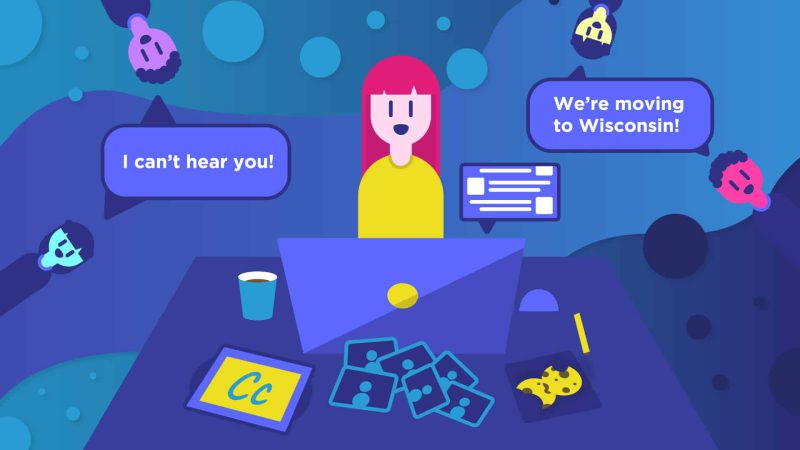
“We’re moving to Wisconsin!” (Rowan, 2.5)

“Idon’twanttoidon’tneedto, Idon’twanttoidon’tneedto, Idon’twanttoidon’tneedto” (Oliver, 3.5)

“Hey Oliver mommy is going to be on a call now so I will need you to be very quiet for me.” “But I like people! I need to say hello to my people!” (Also Oliver, 3.5)

“Don’t worry, I can find something else to do” (Edie, 7)

“I can’t hear you; I can’t hear you; I CAN’T HEAR YOU” (Anonymous teen, 17)

“Can we pretend I’m a half snake man and we live in the calamity ages?” (August, 8)

Live, unfortunate actions during video calls:

Repeatedly ripping a headset out of my ears (Maren, 1)

Throwing up all over, and inside, my shirt (Maren, 1)

Slot machining* peas onto my computer (Evelyn, 1)

*Slot machining: when Evelyn smiles while eating and shoots whatever unchewed food all over you like you won a prize.

Pulling my shirt ALL THE WAY down in a passionate ask to be picked up (Gil, 1.5)

Dropping an English muffin, jam-side-down, on the carpet (Sophia, 2.5)

Taking a child into a public bathroom before remembering to turn off video (Anonymous potty-training mom, child 2.5)

Silently watching hour 6 of anime (August, 8)

Text messages from children, received during working hours:

“DADYWANRUGONETOBEDAMWATH?” (Victor, 6) (Translation: Daddy when are you going to be done with work?)

“Idon’twanttoidon’tneedto, Idon’twanttoidon’tneedto, Idon’twanttoidon’tneedto. OMG MOM.” (Maya, 15)

“How do I know when I’m bleeding so much I have to go to the ER?” (Anonymous young adult, 23)

“Have you noticed that my lazy eye isn’t as open as my other eye before? Look at this picture.” (Anonymous teen, 17)

“The tabs on my car are going to expire.” (Abby, 20)

“I just lost my sense of taste and smell” (Anna, 31)

“Would you like to go with Anna and me to Vegas?” (Kat, 33)

Conclusion: There isn’t just one, because we’re still collecting more great, painful, and hilarious moments of humanity. Maybe there is a message here about being nice to people, not knowing what they’re going through. Maybe it’s that kids are awesome, and we should be really happy with the extra time we get with them. I hope it’s knowing that when your chaos feels isolated, you’re never alone. At least, I’m happy I invested in a mini carpet steamer because the jam-down English muffin, vomit-volcano, and slot-machine pea incidents, all mine.

01/25/2022

Part 2: Case studies are a marketer’s best friend

Full story

By Jane Dornemann

Part 2: Case studies are a marketer’s best friend

Image by Brandon Conboy

Now that you know why it’s harder for brands to land news coverage that converts, I’ll explain how that adds value to content marketing investments—specifically, case studies.

There are several reasons why content marketing has always been a great investment. If nothing else, every dollar spent results in an asset produced, which unfortunately is not the case for our hardworking PR friends. They’ll agree that changes across the media landscape have amplified the ROI of brand journalism in recent years. Having worked in each of these arenas, I only see that return continuing to grow. I feel that way particularly about case studies. Here’s why:

Case studies have higher engagement rates. People love stories. We’ve loved them since the inception of language. And we really love stories to which we can relate. We consume case studies much like we do news articles, but unlike opening to some random story in a magazine, we’ve arrived at a case study because we were already on the path to it. People who are reading a case study didn’t happen upon it, they had somewhat directed themselves to it. This means they start with a significantly higher level of engagement, which translates to much higher conversions rates. If you choose to gate your content (releasing it in exchange for an email contact), you’ve just doubled your lead generation power (#1: adding to your sales team’s contact list, #2: converting with effective content).

Case studies are a lower-maintenance investment. Brand-generated assets like case studies offer businesses a unique advantage over news articles, namely via narrative control. If your PR team lands a pitch with a top-tier reporter, the prepping is intense; there’s much to do over what to say, what not to say, and practicing deflection and non-answers to potentially damaging questions. After a story runs, you may feel like it didn’t explain the product accurately, or it didn’t put your company in the great light you’d hoped for. It will live on the internet forever and there’s not much you can do about that. But with case studies, you decide where the focus is. You direct the story, you control the language, you can align it with key messaging.

Case studies can be multiplied. Unlike the one-and-done customer story you may get into a newspaper’s business section, case studies can regenerate—they can be repurposed for other forms of content or can be replicated to reach different customers. For example, a brand can take one product or service within its arsenal and create multiple case studies for it. For example, a cloud feature that helps hospitals better treat patients can also help truck part manufacturers save money. In this way, you can not only reach different niche audiences with the same story focus, but you can strategically adjust them to meet potential customers at different points in the sales funnel. The broader your case study portfolio, the more you have to multiply, from inclusion in ebooks to slides in your conference presentation deck. Or even—dare we dream—as customer references you can give to an interested journalist.

Case studies are socially confirming. Case studies can increase sales by 185 percent—in part due to the fact that case studies give people what they need to trust a business. 93 percent of customers read online reviews before purchasing a product, and a study by the Wharton School of Business at University of Pennsylvania showed that customers earned through referrals have an 18 percent lower churn rate. After 3 years, there’s an 82 percent chance they’ll still be your customers. In your personal life, if you had to select one house cleaning service to hire, you’re far more likely to go with the one your colleague has used and approved over an unknown service, right? Especially if they provide a real-life scenario (“Green Cleaners did a great job of turning my post-holiday disaster of a house into a sparkling home, and even took all my gift wrap to the recycle bin.”) Case studies provide that powerful, much needed social validation. At its core, a well written case study isn’t that much different from a passionately written, exuberant, I-finally-found-my-forever-hairstylist Yelp review.

Speaking of referrals, might I recommend 2A?

There are a million content agencies out there, but I took my love of quality storytelling and relatable content to only one of them: 2A. Our cadre of creatives come to work every day ready to produce the kind of captivating content that clients love and audiences remember—which I bet goes a lot further than following up with that uninterested journalist for the fifth time.

01/19/2022

Part 1: As newsrooms change, content marketing sees its heyday

Full story

By Jane Dornemann

Part 1:  As newsrooms change, content marketing sees its heyday

Image by Brandon Conboy

This is the first post in a two-part series on how a changing media landscape is making content marketing more attractive for brands.

I was once a journalist who went into public relations, then back into journalism, then finally settled into content marketing here at 2A. For companies looking to spread the word about their work, I’ve got a hot tip: it’s time to rethink your strategy.

Last year, the Pew Research Center found newsroom employment has fallen 26 percent since 2008.

So, what does this mean for you, my dear brands? Well, ask your public relations teams. They’ll tell you that those new product announcements, amazing customer stories, and executive spotlights have become far more difficult to land in just about any media channel.

It isn’t just that newsrooms are cutting staff down to the bare bones, leaving fewer reporters to cover the same amount of news. The subject matter itself has also become more intense. The pandemic, visible effects of climate change, and political infighting all have relegated your product-centered business story into the shadows.

There’s more.

Many of those journalists cross over to public relations jobs, pitching their former colleagues on corporate stories. The result? A terrible 6:1 ratio of PR pros to journalists. Understandably, overwhelmed journalists are increasingly vitriolic about the volume of business-related pitches that flood their inboxes every day, decreasing the chances that your cool story will ever meet the journalist’s eyeballs, much less cultivate a headline. During my years in PR, I saw genuinely great brand stories—ones that I would have picked up in a second as a journalist, had I a leaner inbox—go unpublicized.

To generate revenue, bigger news outlets like Business Insider, Wall Street Journal, and The New York Times have gated all or some of their content behind paywalls. So even if you do land some killer coverage, a fair portion of your target audience won’t ever read past the headline. Additionally, PR teams have become fond of sweetening the pot for journalists by offering exclusives, meaning only one journalist can write about it first. That makes the story less desirable to other journalists, who usually don’t want to recycle a news story that another outlet already broke.

All the while, brands are paying hefty annual retainers to PR firms regardless of whether those dollars translate to media coverage or not.

The difficultly of attaining journalist-written coverage (known as earned media) has prompted brands to turn to owned media—brand-created assets like social media, blogs, case studies, and whitepapers.

But why? What makes content marketing so extra special all of a sudden? Find out in part 2 of this series.